Piazza del Popolo
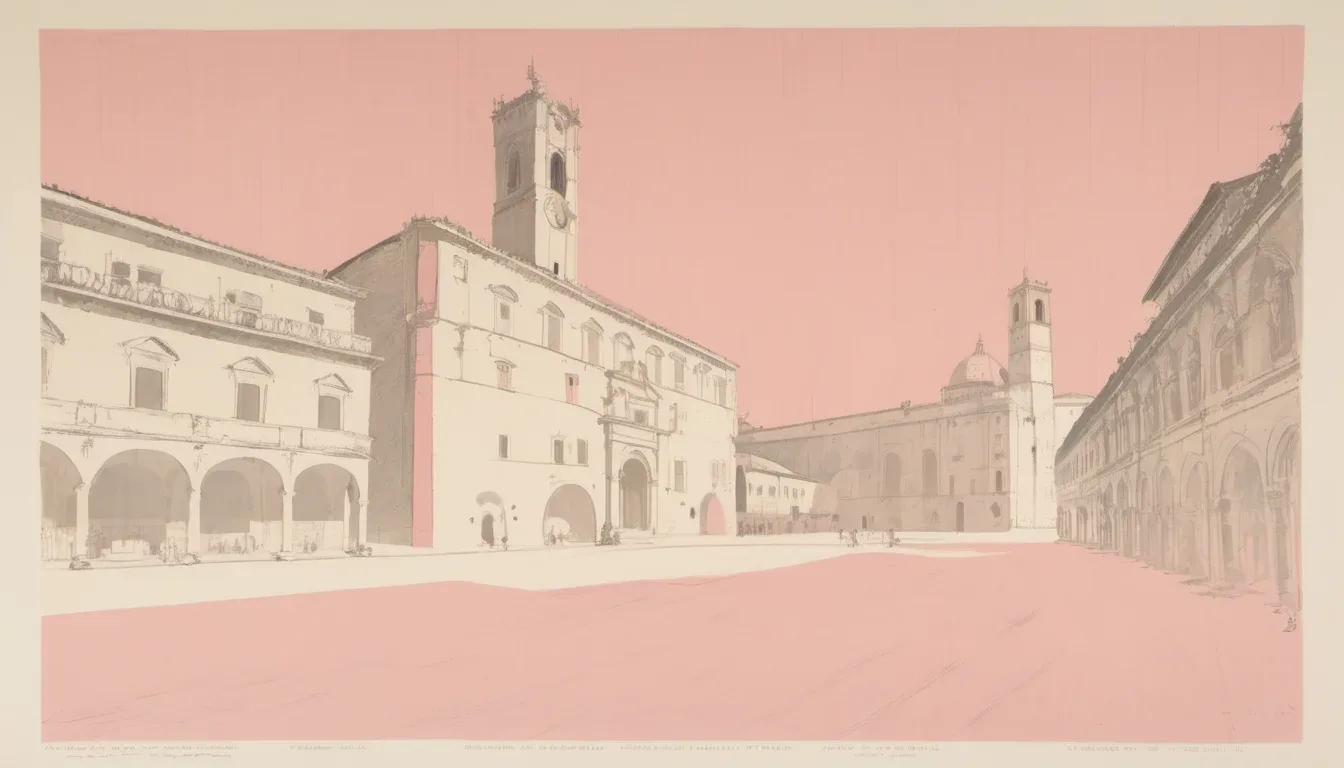
Piazza del Popolo is the city’s travertine stage. Unlike the neighbouring Piazza Arringo, which holds the cathedral and civic palace, this square is the people’s domain – a Renaissance gathering place framed by the Gothic church of San Francesco and the 16th-century Loggia dei Mercanti. The travertine paving glows in the morning light, its warm ochre tone set off by the terracotta roofs above.
The church of San Francesco was begun in 1258, its dome completed in 1549. The central portal is one of the finest examples of local travertine decoration. Beside it, the Loggia dei Mercanti was commissioned by the wool traders’ guild and finished in 1513, its Bramantesque arcade a quiet counterpoint to the church’s Gothic verticality. On the exterior wall of the church, the Edicola di Morelli – a monumental Baroque niche – once housed a venerated image of the Madonna, supposedly designed by a disciple of Gian Lorenzo Bernini.
Across the square stands the Palazzo dei Capitani del Popolo, built in the 13th century from three pre-existing edifices. It served as the seat of the podestà, the people’s captains, and later the Papal governors. A Mannerist façade was added in 1520, and a portal with a monument to Pope Paul III in 1549. The square itself remains the pulse of the city – a place to pause at a café, watch the light shift across the stone, and feel the weight of two millennia of history.
Piazza del Popolo is Ascoli Piceno’s travertine heart – a Renaissance square framed by Gothic stone and ritual. It is not the city’s oldest piazza; that honour belongs to Piazza Arringo, the administrative and religious centre with its cathedral and baptistery. But the Piazza del Popolo has always been the people’s stage, a place where commerce, faith, and civic life converge.
The square is dominated by the Gothic church of San Francesco, begun in 1258. Its dome was completed in 1549, and the central portal is a masterpiece of local travertine carving. To the side, a monument to Pope Julius II marks the entrance. Adjacent to the church is the Loggia dei Mercanti, a 16th-century portico commissioned by the wool traders’ guild and finished in 1513. Its Bramantesque arcade – a nod to the Roman High Renaissance – provides a shaded walkway and a calm counterpoint to the church’s soaring lines.
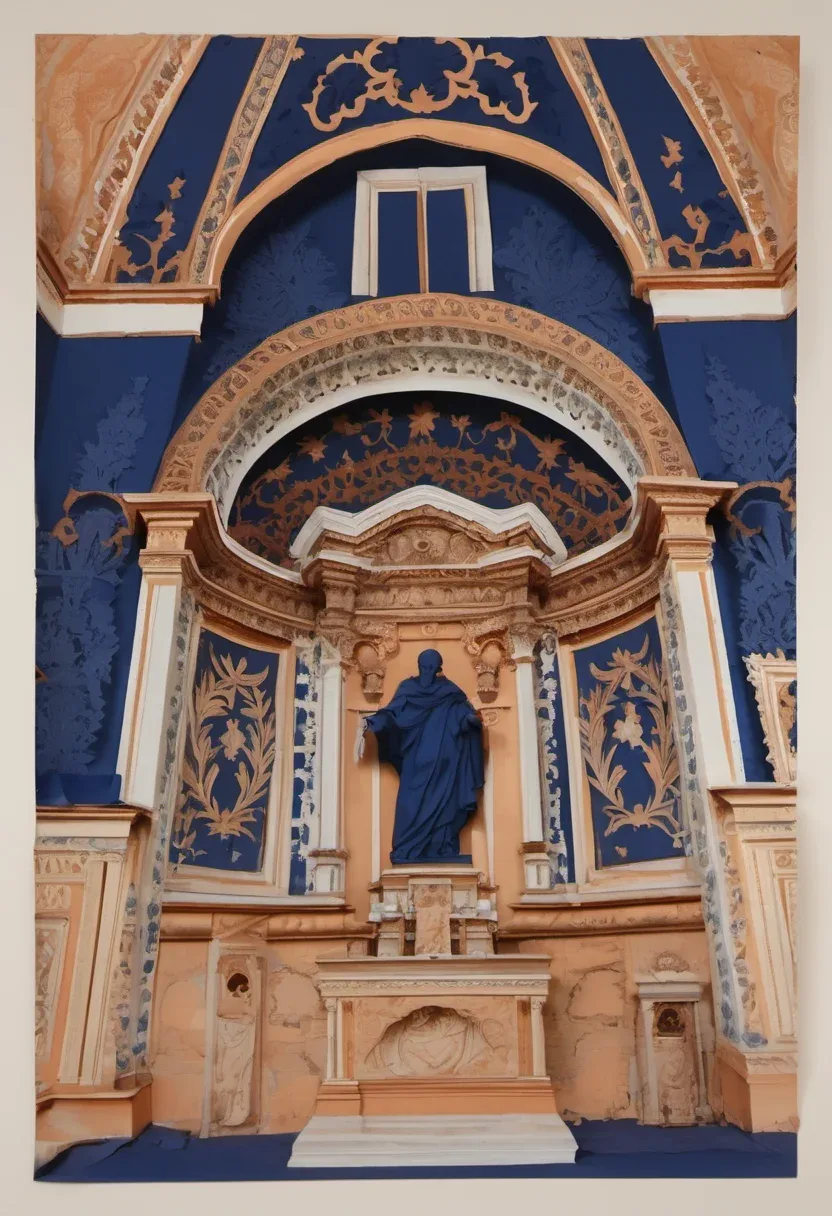
On the exterior wall of San Francesco, at the edge of the square, the Edicola di Morelli stands as a Baroque niche. It once sheltered a venerated image of the Madonna, putatively designed by Lazzaro Morelli, a disciple of Gian Lorenzo Bernini. The niche is a small but telling detail: even in a city of travertine and Gothic stone, the Baroque found a foothold.
Across the square, the Palazzo dei Capitani del Popolo rises from a 13th-century core. It was built by connecting three pre-existing edifices and served as the seat of the podestà and later the Papal governors. In the 15th century the southern side was enlarged, and in 1520 a Mannerist façade was added to the rear. A general renovation in 1535 and a new portal with a monument to Pope Paul III in 1549 completed the transformation. The palace now houses civic offices, but its arcaded ground floor remains open to the piazza.
The city itself is ancient. The settlement was founded by the Italic Piceni and was originally a Sabine city. It became a Roman federated city after 268 BC and was connected by the Via Salaria, the salt road from Latium to the Adriatic. Ascoli was the first Italian city to rise against Rome in the Social War of 91 BC. The siege that followed involved four Roman legions and Gallic and Spanish auxiliaries. Evidence of that conflict lies in the sling bullets excavated from the city. After the war, Ascoli became a municipium and later a colonia.
During the Middle Ages, traditional accounts say the city housed some two hundred towers; about fifty still stand. The travertine stone that defines the historic centre was quarried locally. Streets twist between medieval palaces and Roman remnants – the Porta Gemina, a 1st-century-BC gate with twin passageways, and the ruins of an ancient theatre nearby.
Today, the Piazza del Popolo remains the city’s living room. Early morning, the travertine glows ochre. By evening, the cafés are full, and the loggia casts long shadows. It is a square that asks nothing of you but your presence – a place to sit, watch, and absorb the layered centuries of a city that has always known how to gather.