Sant'Apollinare Nuovo
Theodoric the Great built it to pray in private. In the first quarter of the sixth century, the Ostrogothic king raised this basilica as his own palace chapel, an Arian church dedicated in 504 to Christ the Redeemer. Arianism was already heresy to Rome, but Theodoric ruled Ravenna his own way, and the building he left behind, a long Roman colonnade under two bands of gold mosaic, still argues his case in tesserae.
That argument didn't survive him. When Justinian's Byzantine forces took the city, the emperor suppressed the Arian church outright and passed its property to Rome. The basilica was reconsecrated in 561 to Saint Martin of Tours, a lifelong opponent of Arianism, under the name Sanctus Martinus in Coelo Aureo, Saint Martin in Golden Heaven. Legend holds that Pope Gregory the Great later ordered the mosaics blackened, their gold too dazzling for a congregation meant to pray rather than stare. True or not, someone scrubbed the walls with real thoroughness: look closely at the columns and you can still find stray hands and forearms, the last traces of praying Goths and Theodoric's own courtiers, cut out of the story.
What survived is a Bible told in two registers. Along the upper walls, twenty-six small mosaics once ran the length of the nave, thirteen of Jesus's miracles and parables on the left, thirteen of the Passion and Resurrection on the right, minus the flagellation and crucifixion, both conspicuously absent. They follow the readings assigned for Lent in Theodoric's day. On the left wall Christ is young and beardless, dressed like a Roman emperor; on the right he is older and bearded, a man of sorrows, the Arian church's way of insisting Christ aged and suffered before he was glorified.
Below that runs a wholly different register: Byzantine, anonymous, painted some fifty years after Bishop Agnellus, once the church had already turned orthodox. On the left, twenty-two virgins process from the port of Classe toward the Madonna, led by three magi named here, unusually early for Christian art, as Balthasar, Melchior and Gaspar. On the right, twenty-six martyrs, Saint Martin at their head and Saint Apollinaris among them, process from Theodoric's own palace toward an enthroned Christ. Between the two processions, schematic mosaics of the palace and the port give the clearest surviving picture of what Theodoric's Ravenna actually looked like.
The name on the door came later still. In 856, with pirates raiding the Adriatic coast, the relics of Saint Apollinaris were moved here from the exposed Basilica of Sant'Apollinare in Classe, and the church took his name for good. The apse you see now is a reconstruction, the original destroyed in the Second World War, but the long mosaic walls on either side outlasted an Arian king, a Byzantine purge, a pope's paintbrush, and a war.
Theodoric the Great built it to pray in private. In the first quarter of the sixth century, the Ostrogothic king raised this basilica as his own palace chapel, part of a royal complex he ruled from as an outsider governing an empire's old capital. The church was Arian, dedicated in 504 to Christ the Redeemer rather than to any saint, and it stood for a theology Rome had already condemned. Theodoric didn't care. He built it anyway, a long Roman colonnade under two bands of gold mosaic, and for half a century it was simply his.
The building's second life began with conquest, not conviction. When the Byzantine Empire took Ravenna, Emperor Justinian suppressed the Arian church across the city and transferred its property to the Catholic Church. Sant'Apollinare Nuovo was reconsecrated in 561 to Saint Martin of Tours, a saint chosen, it seems, precisely because he had spent his life fighting heresy. Its new name, Sanctus Martinus in Coelo Aureo, Saint Martin in Golden Heaven, described exactly what worshippers saw overhead. Legend adds a coda: that Pope Gregory the Great later ordered the mosaics blackened, their gold too distracting for a congregation that was supposed to be praying rather than gazing upward.
Whoever did the editing, they were thorough about it. Under Bishop Agnellus, in the mid-sixth century, the band of mosaics above the nave arcade, the one most overtly Arian and most flattering to Theodoric's court, was stripped out and redecorated from scratch. Only the highest registers, the stories of Christ and the ranks of prophets, were left alone. Look at the columns today and the erasure is still visible at the edges: isolated hands and forearms, all that remains of figures that once showed praying Goths and members of Theodoric's household, sawn away when the rest of them was deleted.
What the editors spared is a Bible told in two parallel registers. Along the upper walls, twenty-six small mosaics once ran the length of the nave, executed by at least two different hands. Thirteen on the left depict Jesus's miracles and parables; thirteen on the right depict the Passion and Resurrection, though the flagellation and the crucifixion itself are both missing. Together they follow the readings assigned for Lent under Theodoric, essentially a mosaic lectionary. Each scene is separated from the next by a small decorative panel: a shell-shaped niche, a hanging tapestry, a cross flanked by two doves.
The theology is in the faces. On the left wall, where the miracles and parables unfold, Christ is always young, beardless, dressed as a Roman emperor. On the right, where the Passion plays out, he is older and bearded. For the Arians who commissioned these images, the contrast mattered: Christ aged, Christ suffered, Christ became, in the prophet Isaiah's phrase, a man of sorrows, before any glorification. It is theology built to be read at a glance, from across a nave, by a congregation who had heard the corresponding text read aloud that same week.
Below the narrative scenes runs a row of sixteen haloed figures on each side, saints, prophets and evangelists, alternating with the nave's windows. They date to Theodoric's own time and are more individually rendered than anything else in the church, worked in a Hellenistic-Roman style with real variation of expression. Every figure holds a book, some a scroll, some a codex, and every robe carries its own distinct mark or symbol, a detail repeated throughout the basilica's mosaics and never quite explained.
The lowest and largest band belongs to a different century and a different aesthetic entirely: Byzantine, anonymous, uniform, executed roughly fifty years after Bishop Agnellus died, once the church was fully orthodox. On the left wall, twenty-two virgins move in procession from the port of Classe toward the Madonna and Child, who sit surrounded by four angels. They are led by three magi, named here as Balthasar, Melchior and Gaspar, in what's thought to be the earliest instance in Christian art of the Magi being given exactly these three names.
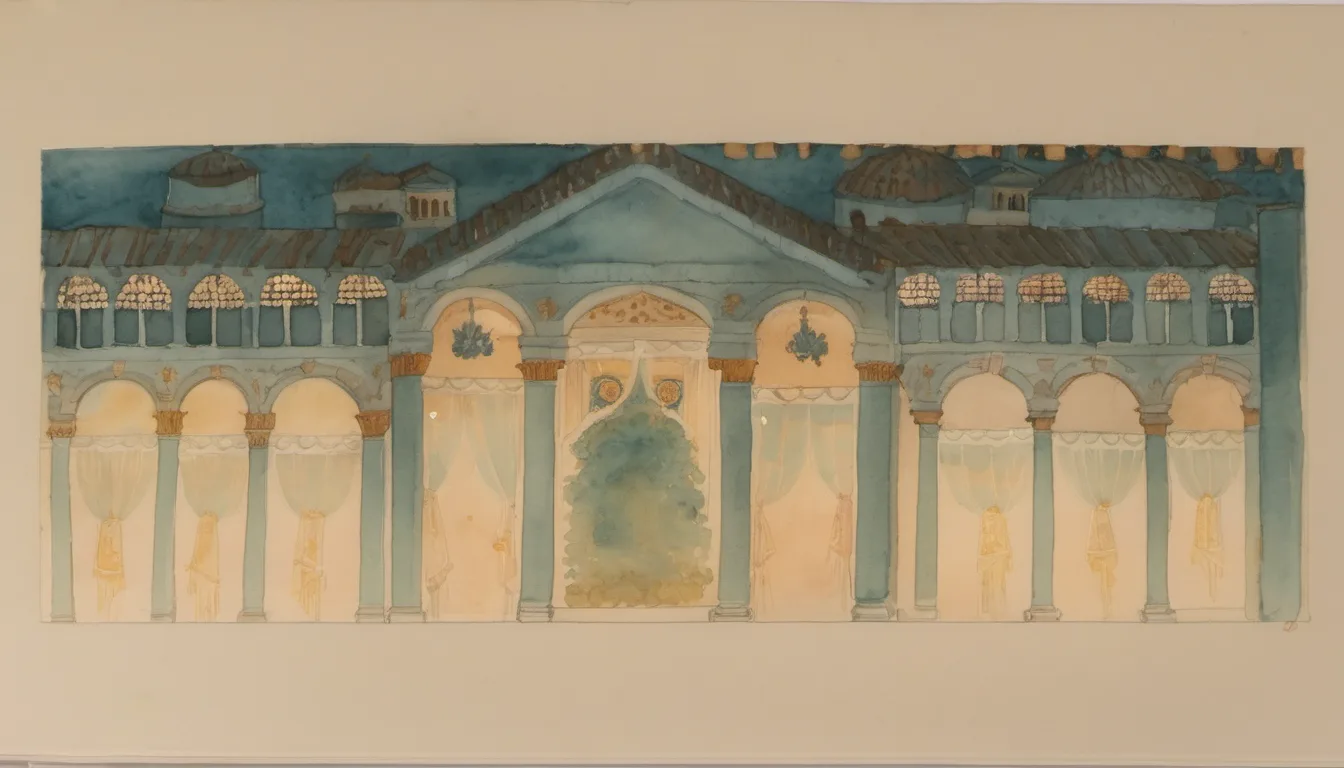
On the right wall, a mirroring procession of twenty-six martyrs moves from the Palace of Theodoric toward Christ enthroned among four angels, led by Saint Martin himself, with Saint Apollinaris among the ranks behind him. Flanking these processions are two schematic mosaics of real places: the Palace of Theodoric on the right, the port of Classe with three ships on the left. Together they're the closest thing that survives to an architectural snapshot of Theodoric's Ravenna. Elsewhere in the church, a cruder, later mosaic shows an aging emperor generally identified as Justinian, though some believe it may originally have depicted Theodoric himself before Byzantine hands reworked it. Some art historians go further, arguing that one mosaic here, a blue angel standing behind three goats in a Last Judgement scene, is the earliest depiction of Satan in Western art.
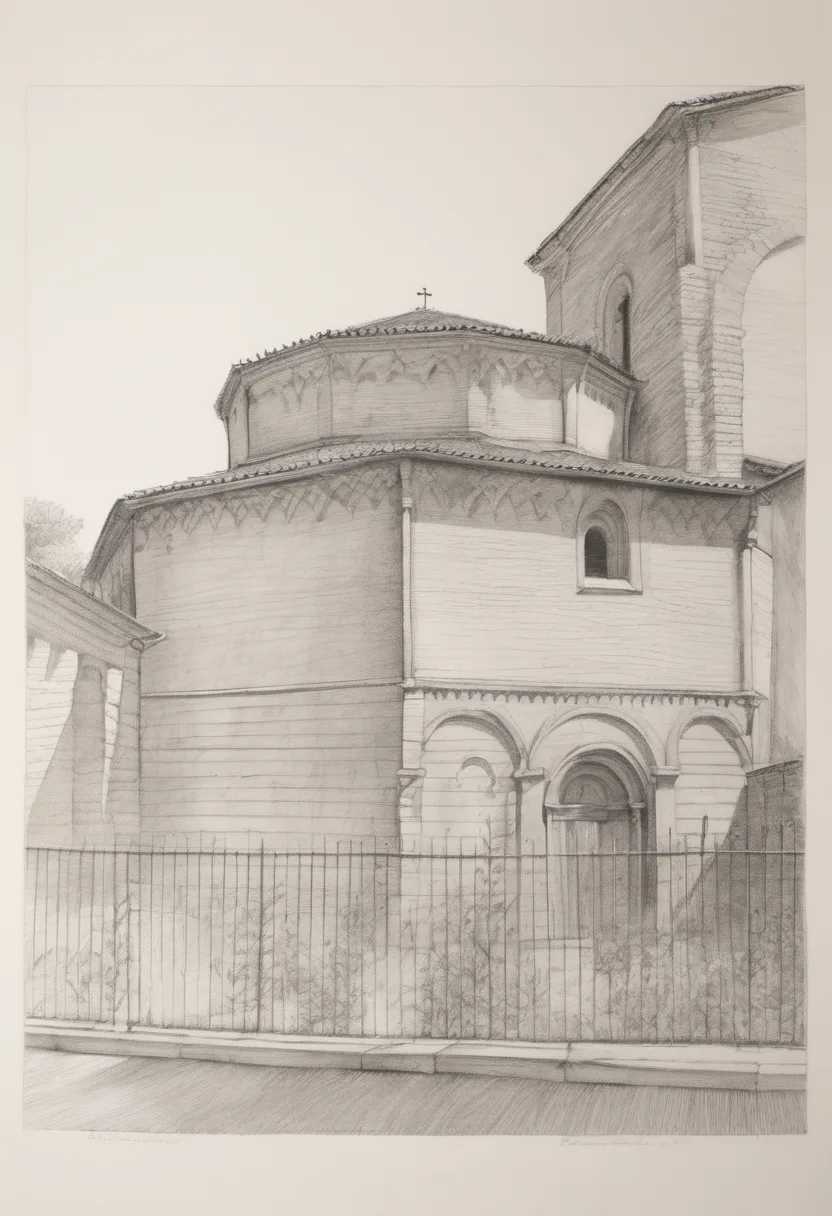
The exterior tells its own, later story. The marble portico across the facade dates to the sixteenth century; both it and the mullioned window at its center had to be rebuilt after a First World War bombing. Beside it stands a round bell tower, raised in the ninth or tenth century, one of the few elements of the complex that owes nothing to either Theodoric or Justinian. In the mid-nineteenth century the restorer Felice Kibel reworked sections of the mosaics again, and the current apse is itself a twentieth-century reconstruction, rebuilt after the original was destroyed in the Second World War.
The church took its present name only in 856, when pirate raids along the Adriatic coast made the exposed Basilica of Sant'Apollinare in Classe too vulnerable to hold the relics of Saint Apollinaris, Ravenna's first bishop. The relics were moved inside the city walls to this church, and Sant'Apollinare Nuovo it has been ever since. UNESCO, inscribing it on the World Heritage List, called it a building whose interior and exterior together illustrate the fusion of western and eastern styles across the late fifth and early sixth centuries, one of the pivotal works of European religious art from a genuinely pivotal moment.