Cârlibaba și Dornișoara
Look at the map of this commune. It is not a single town but a union of seven distinct villages. Căsoi, Dornișoara, Pilugani, Poiana Stampei, Prăleni, Tătaru, and Teșna. You are standing in a place defined by its fragmentation. This is not a central hub. It is a collection of quiet settlements in the district of Suceava.
The region is historically known as Bucovina. Most visitors rush to the painted monasteries. They miss the texture of daily life. Here, the population is small. Only 2,270 people call this entire commune home. The density is low. The pace is slower. You are in a place where the community is the main structure.
There are no grand palaces here. There are no towering cathedrals in the commune center. The significance lies in the union. These seven villages share a local government. They share a history. You are looking at a political entity that prioritizes rural continuity over urban expansion. It is a quiet administrative reality.
Locals might tell you about the specific character of each village. Dornișoara has its own rhythm. Teșna has its own. They are distinct yet united. This is the story of Poiana Stampei. It is a story of coexistence. You are here to witness the quiet strength of these seven communities.
The official site exists. It is a digital footprint for a physical place. poianastampei.ro. It suggests an effort to maintain identity. You are in a place that values its name. It values its structure. Stand still. Listen to the silence of the seven villages. This is the real Bucovina.
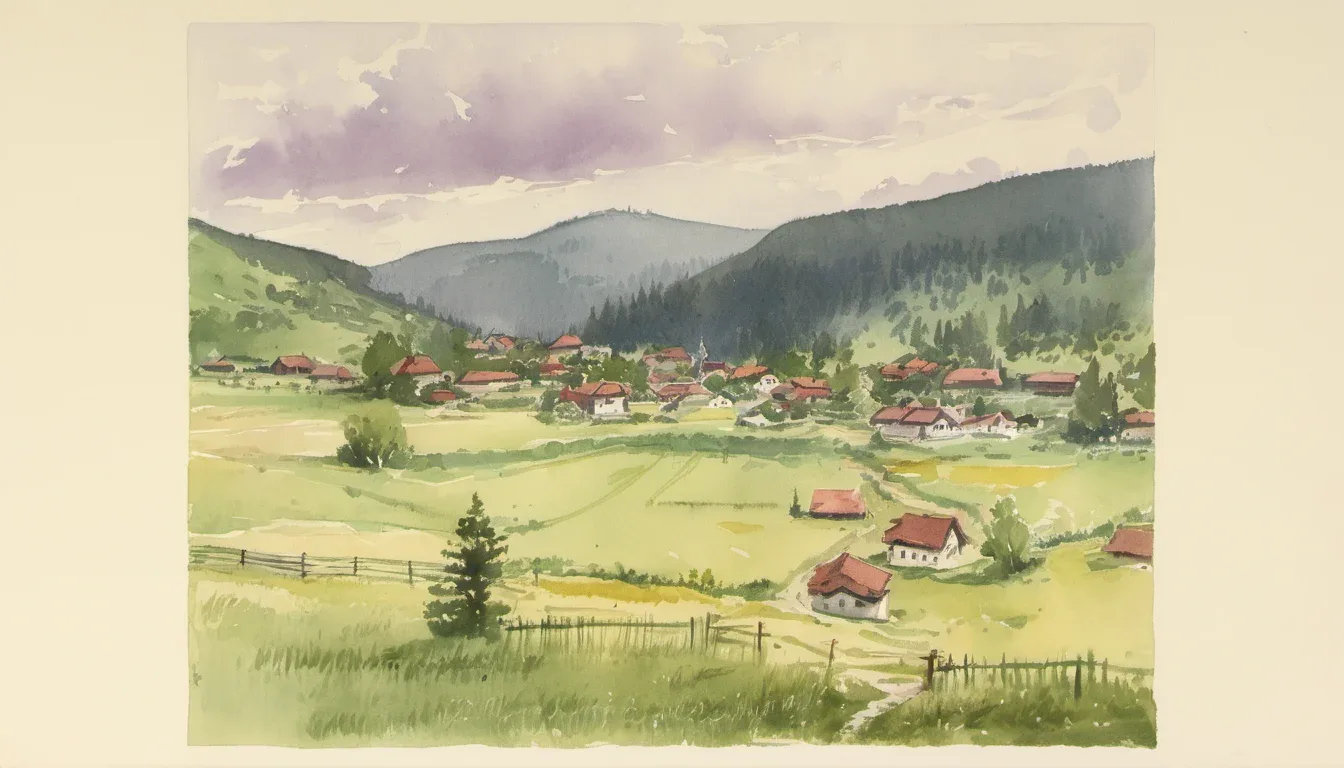
Look at the horizon. It is not dominated by a single spire. It is broken by the roofs of seven villages. Căsoi, Dornișoara, Pilugani, Poiana Stampei, Prăleni, Tătaru, and Teșna. These are not just names on a map. They are the constituent parts of the commune of Poiana Stampei. You are standing in a place where the administrative unit is larger than any single settlement. This is a key distinction. The commune is the entity. The villages are the cells.
The population is 2,270. This number is precise. It comes from the latest census data available in the source. Imagine these people spread across seven distinct locations. The density is remarkably low. You are in a region where space is abundant. The distance between neighbors is measured in fields, not meters. This sparsity defines the character of the place. It is not a place of crowds. It is a place of quiet observation.
The location is in the district of Suceava. This places you in the historical region of Bucovina. Most travelers know Bucovina for its painted monasteries. Neamț, Voroneț, Sucevița. These are the magnets. They draw the tourists. They create the noise. Poiana Stampei is different. It is not on the main circuit. It is a side note. And that is its value. It offers a respite from the pilgrimage route.
Consider the structure of the commune. It is a union. Seven villages joined together. This suggests a level of cooperation. They share resources. They share governance. In a rural context, this union is vital. It allows for services that a single village could not sustain. A school, a clinic, a road. The commune is the backbone. The villages are the limbs. You are looking at a functional organism.
Dornișoara is one of these villages. It is named in the list. It exists. It has its own identity. But it is part of the whole. You cannot understand Dornișoara without understanding Poiana Stampei. They are linked. The history of one is the history of the other. This is a lesson in interdependence. In a world that celebrates individuality, this place celebrates community.
The source mentions a website. poianastampei.ro. This is a small detail. But it is significant. It shows an effort to communicate. To present the commune to the outside world. It is a digital window into a physical place. It suggests that the community cares about its image. It wants to be seen. Not as a tourist trap. But as a real place. With real people.
There are no legends here. No dragons. No saints. Just seven villages. And 2,270 people. This is the reality. It is unadorned. It is honest. You are in a place that does not need to invent a past. It lives in the present. The past is in the names. Căsoi. Pilugani. Prăleni. These names have history. They have weight. They are the anchors.
The geography is mountainous. Bucovina is known for its hills. The villages are likely perched on slopes. Looking out over valleys. The view is not curated. It is natural. You are looking at the landscape as it is. Not as it is sold. This is a rare experience. In a world of staged authenticity, this is real. The silence is real. The distance is real.
The district of Suceava is large. It contains many communes. Poiana Stampei is one of them. It is not the capital. It is not the center. It is a peripheral unit. And that is its strength. It is free from the pressures of the center. It can be itself. Quiet. Rural. Connected. You are in a place that values its position. It does not seek to be the main event. It seeks to be part of the whole.
The seven villages are a microcosm. They represent the diversity of rural life. Each has its own character. Its own rhythm. Its own people. But they are united. This is a model of governance. Of community. Of life. You are standing in a place that proves you do not need grandeur to have significance. You need connection. You need unity. You need seven villages.
The source is simple. It lists the villages. It gives the population. It gives the location. It does not embellish. It does not exaggerate. It is a factual record. And that is enough. You do not need more. You have the facts. You have the place. You have the silence. This is the dispatch. This is the truth of Poiana Stampei.