Mănăstirea Dragomirna
Turn around slowly and look up. You are standing before the tallest and narrowest church in Romania. The Church of the Descent of the Holy Spirit rises more than forty meters from the grass, yet it is only nine meters wide. It was finished in 1609 and its pale yellow sandstone glows against the firs.
Look at the stone, not for paint, but for carving. Unlike the famous painted monasteries of Bucovina, Dragomirna's walls are bare. Every surface is worked: bands of carved arcatures under the cornice, Gothic intersected window bars, geometric and plant motifs cut into the tower. The founder believed the stone itself should speak.
The proportions are the wonder. Nine meters wide, forty-two meters to the cross. Old writers said it narrows like a ship's hull, and the ship is the ancient symbol of the Church. Nicolae Iorga called it a fine casket with holy relics, an architectural jewel adorning the Bucovina woods.
The man behind it was Anastasie Crimca: monk, painter, calligrapher, and from 1608 Metropolitan of Moldavia. In 1602 he built the small graveyard church you see near the entrance, dedicated to Saints Enoch, Elijah and John the Theologian. Seven years later came this towering big sister.
Here Crimca also founded a school of miniaturists and calligraphers, the last flowering of Romanian miniature art. Five manuscripts painted by him and his disciples survive, and you can see them in the museum inside the monastery walls. In 1627 prince Miron Barnovschi ringed the compound with defensive walls and square towers, because Turkish and Tatar raids reached even these quiet hills.
Stand at the west end and trace the silhouette. The plan is a much-elongated rectangle without side apses, built to defy height and seek light. There is no votive inscription anywhere on the church, which is rare: we know the founders only from documents, Metropolitan Anastasie Crimca together with the chancellor Lupu Stroici and the treasurer Simion Stroici.
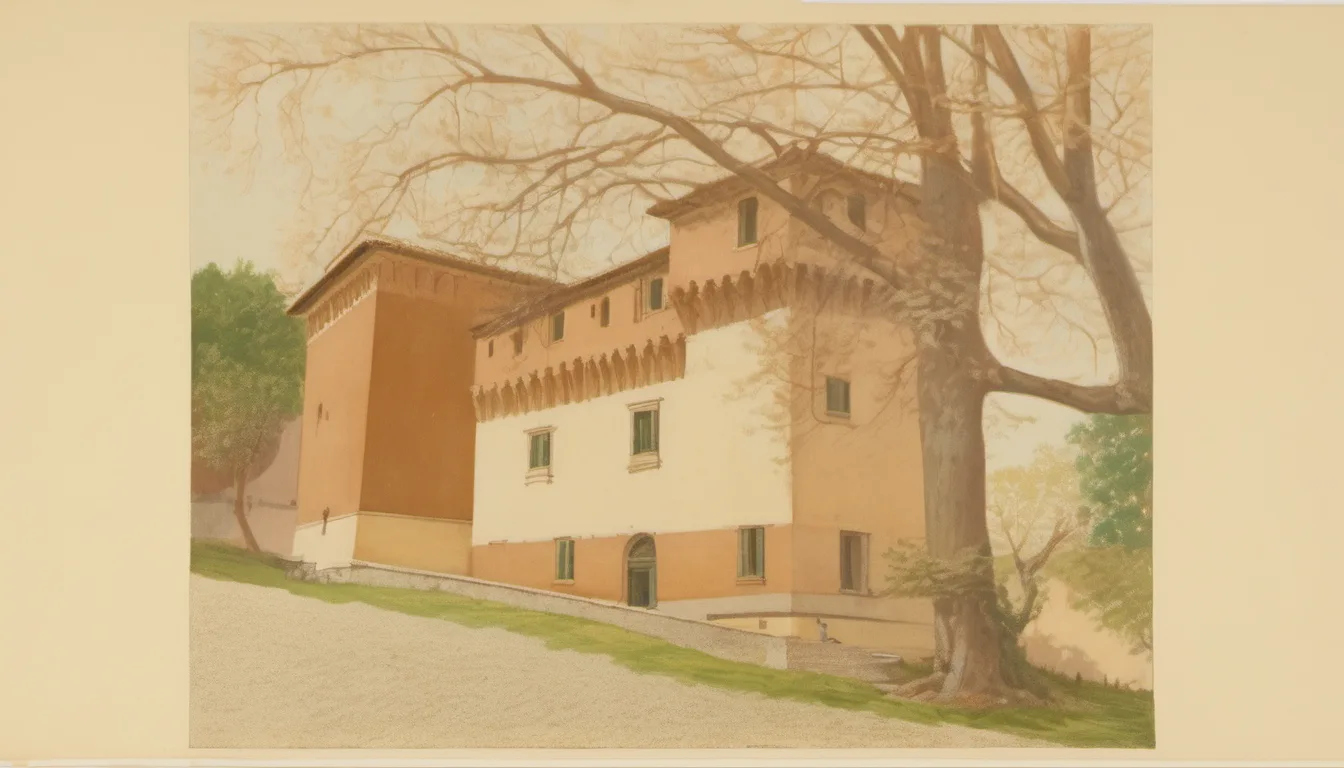
Notice the building material. The walls are rough, unpolished yellow sandstone, and only the pillars and buttresses use dressed stone. Under the cornice run two bands of carved blind arcatures. The windows carry Gothic-style fretwork with intersected bars, a detail more at home in Transylvania or Poland than in Moldavia, and a sign of how far trade routes reached in 1609.
Walk the perimeter wall. The inscription above the gate tower records that in 1627, during the rule of Miron Barnovschi, the monastery was enclosed with a defensive wall because of frequent Turkish and Tatar invasions. Narrow square towers stand at the four corners, and a catwalk runs along the top of the precinct, so the monastery really did serve as a fortress for the monks and villagers.
Inside the gate, on the right, is the vaulted Gothic-style refectory. It now houses the museum of ancient art. The five manuscripts of the Dragomirna school are kept here: two copies of the Four Gospels, two missals, and a psalter, copied and illuminated by Crimca and his disciples. Their gold borders and delicate figures are considered the last glittering of Romanian miniature painting.
Dragomirna has no funerary chamber. Five tombs lie in the portico and one in the bema, and that last one is thought to hold Anastasie Crimca himself, the artist-metropolitan who drew the plans of his own slender ship of stone. He died in 1629, twenty years after his church was finished, in the monastery he had built among the fir and oak hills.
Think about what this place is not. It is not one of the UNESCO painted churches of northern Moldavia; those are Voronet, Humor, Moldovita, Probota, Patrauti, Arbore, Saint John the New in Suceava, Sucevita and the church in Baia. Dragomirna belongs to a later, quieter moment, after the fresco age had passed, when Moldavian builders chased height and carved stone instead of color. That is exactly what makes it the odd, unforgettable one on your route.