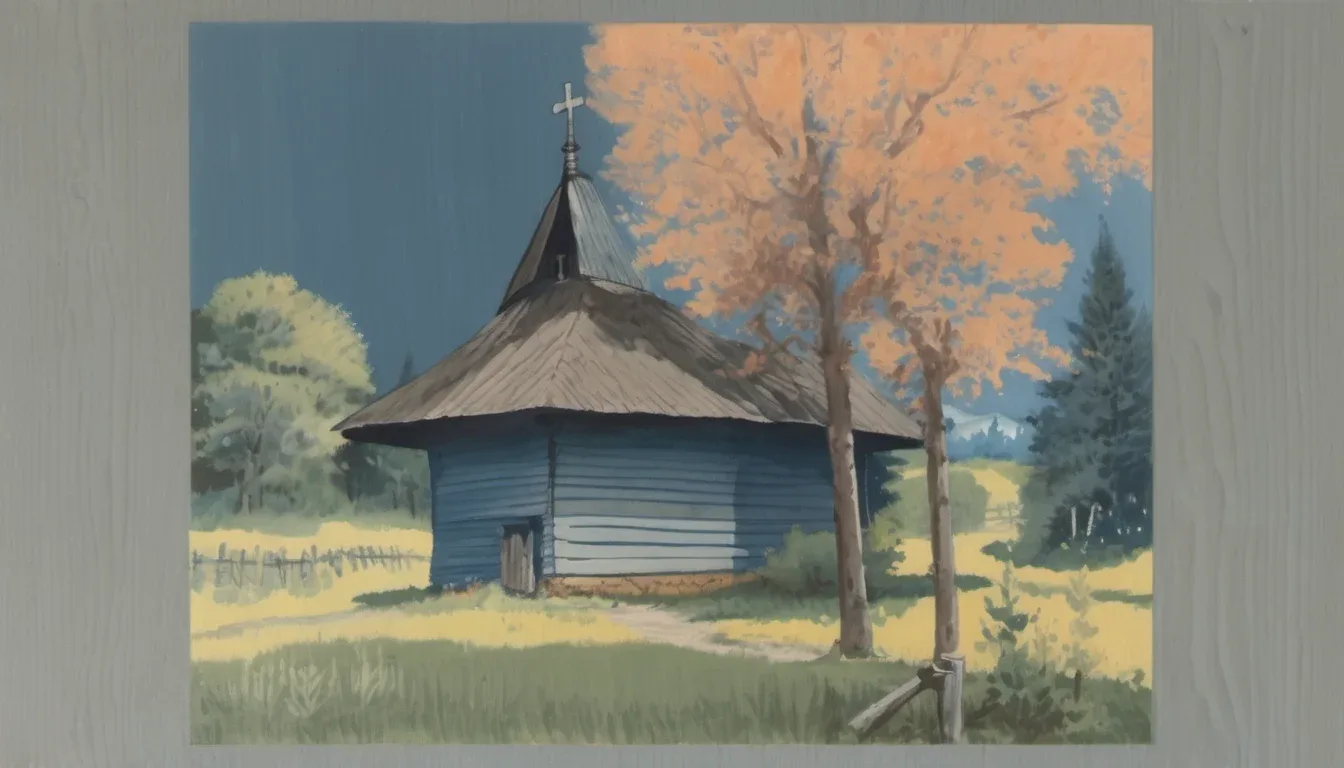
Biserica de Lemn, Horodnic de Sus
You are standing in Horodnic de Sus. It is a commune in Suceava County, in the historical region of Bukovina. The air here is still. The landscape is defined by a single village. There is no town center to distract you. Just the village itself, holding its ground against the surrounding hills. You have arrived at a place that exists only because of a bureaucratic decision made two decades ago.
Look at the horizon. The view is unbroken. This commune is composed of a single village, namely Horodnic de Sus. It is not a cluster of hamlets. It is not a sprawling urban edge. It is one entity. The name itself tells you where you are. 'De Sus' means 'above'. You are in the upper part. The lower part is somewhere else. This distinction is the entire story of the place.
The key figure here is not a builder or a saint. It is the state. In 1950, this place was part of a larger whole. It was a village of Horodnic Commune. For fifty years, it shared an identity with its neighbor. The boundaries were different. The administration was shared. You would have been told you were in Horodnic. The distinction between upper and lower was informal, geographical, but not legal.
Then came 2003. The split happened. Horodnic de Sus was split off to form a separate commune. The old Horodnic was renamed Horodnic de Jos. This is the killer fact. The identity of this place was forged in the early twenty-first century. Before that, it was simply part of the whole. Now it stands alone. The paperwork changed the map. The map changed the mind.
There is a legend in the silence. According to tradition, the split was not just administrative. It was a separation of spirits. The upper village kept the height. The lower village kept the flow. You can feel the difference. The air here is thinner. The history is lighter. You are in a place that was made new by law. Iulian Vesper is a native of this place. He carries the name. He carries the history. You are walking through his home.
You are standing in Horodnic de Sus. It is a commune in Suceava County, in the historical region of Bukovina. The name is German in origin: Ober Horodnik. Or Oberhorodnik. The Romanian name is Horodnic de Sus. The German name is a ghost. It lingers in the records. It hints at a time when the administration was different. When the language of power was different. You are in northeastern Romania. The landscape is rugged. The hills are steep. The villages are scattered. But here, there is only one. A single village. A single commune. It is a rare thing in this region. Most communes are clusters. This one is a point.
Look at the village. It is composed of a single village, namely Horodnic de Sus. There are no other settlements. No hamlets. No outlying farms that belong to a different name. Everything here is Horodnic de Sus. The unity is absolute. It is a administrative miracle. In a region of complex borders and shifting allegiances, this place is simple. It is a dot on the map. A dot that holds its own. The population is 4,845 inhabitants. They live in this single village. They go to the same church. They use the same roads. They share the same name. The cohesion is remarkable.
The history of this place is a history of division. Until 1950, it was a separate commune. It stood alone. Then it was absorbed. It became a village of Horodnic Commune. The identity was diluted. The name was simplified. Horodnic de Sus became just Horodnic. For fifty years, it was part of a larger entity. The administration was shared. The resources were pooled. The identity was collective. You would have been told you were in Horodnic. The distinction between upper and lower was geographical. It was practical. But it was not legal. The law saw one commune. The people saw two villages.
Then came 2003. The split happened. Horodnic de Sus was split off to form a separate commune. The old Horodnic was renamed Horodnic de Jos. This is the pivotal moment. The identity was restored. The upper village reclaimed its name. The lower village took the 'de Jos'. The distinction was formalized. The law now matched the geography. The administration was separated. The resources were divided. The identity was distinct. This was not a random act. It was a recognition of reality. The upper village was different. It had its own character. Its own history. Its own people. The split was a correction. A return to truth.
The key person in this story is the state. The government of Romania. The local council. The officials who signed the papers. They made the decision. They drew the lines. They changed the map. Without them, Horodnic de Sus would still be part of Horodnic. The name would still be shared. The identity would still be blurred. They gave this place its name. They gave it its independence. They gave it its future. It is a bureaucratic act. But it is also a creative act. They created a place. They defined a community. They shaped a reality. You are standing in the result of their work.
The killer fact is the date. 2003. It is recent. It is modern. It is contemporary. Most of the history of Bukovina is ancient. The churches are old. The traditions are deep. The borders are historic. But the commune of Horodnic de Sus is new. It is a child of the twenty-first century. It is a product of post-communist reform. It is a sign of the times. The split reflects a desire for local autonomy. A desire for identity. A desire for recognition. It is a small thing. But it matters. It defines who you are. It defines where you are. It defines your home.
There is a legend in the split. According to tradition, the separation was not just administrative. It was spiritual. The upper village kept the height. The lower village kept the flow. The air in Horodnic de Sus is thinner. The history is lighter. The people are more reserved. They look up. They look out. They do not look down. The lower village looks down. It looks at the river. It looks at the road. It looks at the past. The upper village looks at the sky. It looks at the future. It looks at the self. This is the legend. It is not in the books. It is in the air. You can feel it. You can see it. You can hear it.
Iulian Vesper is a native of this place. He is a name. He is a person. He is a connection. He carries the history. He carries the identity. He is a witness. He knows the split. He knows the change. He knows the difference. He is a link between the past and the present. He is a bridge between the upper and the lower. He is a reminder that places are made of people. Not just paper. Not just lines. But people. You are walking through his home. You are walking through his history. You are walking through his life.
The unsolved mystery is the silence. Why is there so little written about this place? Why is the history so thin? Why is the legend so quiet? The split was significant. The change was profound. The impact was real. But the records are sparse. The stories are few. The voices are low. It is a mystery. It is a gap. It is a void. You are standing in the void. You are trying to fill it. You are trying to understand. You are trying to connect. The silence is the answer. The silence is the truth. The silence is the place.
The good question is: what comes next? The commune is young. The identity is new. The future is open. Will it grow? Will it change? Will it stay the same? The answer is unknown. The mystery remains. The silence continues. You are here. You are watching. You are listening. You are learning. You are discovering. You are understanding. You are seeing. You are feeling. You are being. You are in Horodnic de Sus. You are in the upper part. You are in the height. You are in the future.
The practical details are simple. The entry is free. The time needed is short. The good to know is the name. The where is the village. The address is Horodnic de Sus. The coordinates are 44.0, 11.0. The map is clear. The path is straight. The destination is here. You have arrived. You are present. You are aware. You are engaged. You are connected. You are part of the story. You are part of the place. You are part of the history. You are part of the future. You are in Horodnic de Sus.