Speculum Alchemiae
You are standing inside Speculum Alchemiae, a quiet, subterranean space in Prague that has been sealed against the world for centuries. The air here feels still, heavy with the memory of smoke and intent. This is not a modern lab with glass beakers and sterile surfaces; it is a place of earth, stone, and shadow, where the pursuit of knowledge was conducted in the dark.
The space is linked to Rudolf II, Holy Roman Emperor, who is believed to have been its owner. He was a patron of the arts and sciences, but also a man deeply invested in the mysteries of alchemy. This laboratory was his private sanctuary for experimentation, a place where the boundaries between chemistry, magic, and philosophy blurred into a single, intense focus.
The laboratory itself is a physical artifact of this era, preserved as a museum today. It offers a glimpse into the practical side of alchemy, far removed from the romanticized myths. You can see the layout designed for specific tasks, the tools that would have been used, and the conditions under which these early scientists worked. It is a testament to the meticulous nature of their craft.
What makes this place unique is its survival. Discovered accidentally in 2002, it provides a rare, intact example of a 16th-century alchemical workspace. Most such spaces were lost to time or repurposed. Here, you can stand where history was being made, literally and figuratively, in the heart of Prague. It is a direct connection to the intellectual fervor of the Renaissance.
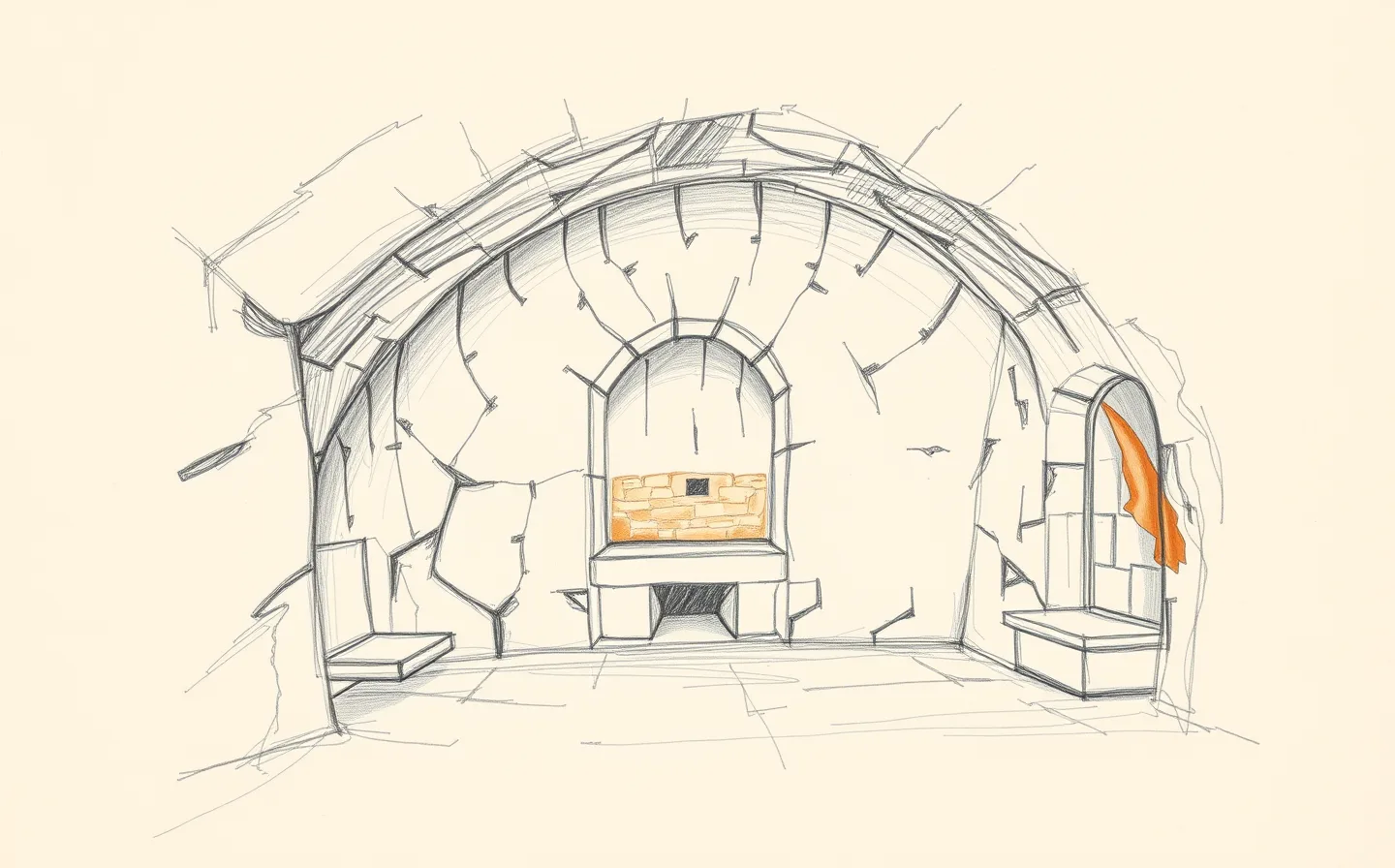
Speculum Alchemiae is not merely a room; it is a time capsule buried beneath the bustling streets of Prague. When you step inside, the first thing you notice is the silence. It is a deep, resonant quiet that seems to absorb the noise of the city above. This is an underground laboratory, a space carved out of the earth, designed to be secluded and secure. The walls are thick, the air cool and damp, preserving the atmosphere of a place where secrets were kept and experiments were conducted away from the prying eyes of the public.
The laboratory is associated with Rudolf II, Holy Roman Emperor, who ruled from 1576 to 1612. Rudolf was a figure of immense complexity, a patron of the arts and sciences, but also a man deeply invested in the esoteric. He moved his court to Prague, transforming the city into a center of intellectual and artistic activity. It was during his reign that Speculum Alchemiae was likely constructed or used. He was not just a king; he was a collector of curiosities, a supporter of astronomers like Tycho Brahe and Johannes Kepler, and a believer in the transformative power of alchemy.
The laboratory itself is a physical manifestation of Rudolf's interests. It is a space designed for specific alchemical processes. You can see the layout, which includes areas for heating, mixing, and storage. The tools used here would have been simple but effective: crucibles, furnaces, alembics, and various containers for holding substances. The laboratory was a place of practical experimentation, where the goal was to transmute base metals into gold or to create the elixir of life. It was a serious endeavor, driven by the belief that matter could be transformed and that knowledge of these processes could lead to immortality or great wealth.
The discovery of Speculum Alchemiae in 2002 was accidental. It was found during renovations or construction work in Prague, a reminder that history often lies just beneath our feet. The discovery was significant because it provided a rare, intact example of a 16th-century alchemical laboratory. Most such spaces were lost to time, repurposed, or destroyed. This one survived, preserved in the dark, waiting to be rediscovered. It offers a unique opportunity to study the physical space of alchemy, rather than just the texts and theories.
What makes this place genuinely unique is its authenticity. It is not a reconstruction or a museum exhibit designed for entertainment. It is the actual space where experiments were conducted. You can see the wear and tear, the soot on the walls, the tools left in place. It is a tangible link to the past, a place where you can imagine the alchemists at work, their faces illuminated by the glow of the furnace, their hands stained with chemicals. It is a place of intense focus and dedication, a testament to the human desire to understand and control the natural world.
The political and religious context of the era is crucial to understanding Speculum Alchemiae. The 16th century was a time of great upheaval, with the Reformation and Counter-Reformation reshaping Europe. Religion was not just a matter of faith; it was a matter of power and identity. Alchemy, with its promises of transformation and immortality, offered an alternative path to knowledge and power. It was a field that attracted intellectuals, artists, and rulers who were interested in the mysteries of the universe. Rudolf II's court was a melting pot of these ideas, a place where different traditions and beliefs intersected.
The artistic context is also important. The Renaissance was a time of renewed interest in the classical world, with a focus on humanism and the study of nature. Alchemy was part of this broader intellectual movement, a way of exploring the natural world through experimentation and observation. The laboratory itself is a work of art, designed with a specific aesthetic in mind. The materials used, the layout, the tools—all of these reflect the values and beliefs of the time. It is a place where science and art were intertwined, where the pursuit of knowledge was seen as a creative and transformative act.
There are anecdotes and legends associated with Speculum Alchemiae, though they are often difficult to verify. Some stories speak of alchemists who spent years in this very room, working tirelessly to create the philosopher's stone. Others tell of secret passages and hidden chambers, where valuable artifacts were stored. These stories add to the mystique of the place, but they should be taken with a grain of salt. The reality of Speculum Alchemiae is perhaps more interesting than any legend. It is a place of real history, real experiments, and real people.
One unsolved mystery surrounding the laboratory is the extent of its use. Did Rudolf II himself conduct experiments here, or did he delegate the work to his alchemists? How many people worked in this space, and for how long? What specific experiments were conducted, and what were the results? These questions remain unanswered, but they are part of the allure of the place. It is a puzzle waiting to be solved, a piece of history that continues to captivate and intrigue.
The laboratory is also significant for its contribution to the history of science. It provides evidence of the practical side of alchemy, which is often overlooked in favor of its mystical aspects. The tools and equipment found here show that alchemy was a serious scientific endeavor, with a focus on observation, experimentation, and analysis. It was a field that contributed to the development of modern chemistry, physics, and medicine. Speculum Alchemiae is a reminder of this legacy, a place where the foundations of modern science were being laid.
In conclusion, Speculum Alchemiae is a unique and important historical site. It is a place where you can step back in time and experience the world of 16th-century alchemy. It is a place of silence, shadow, and mystery, but also of knowledge, creativity, and transformation. It is a testament to the human desire to understand the natural world, to push the boundaries of knowledge, and to seek immortality. It is a place that deserves to be seen and studied, not just as a curiosity, but as a significant part of our shared history.