Castelul Iulia Jula, Cacica
You stand in Cacica, a commune in Suceava County. The skyline is unremarkable. The history is subterranean. Look down. The ground here is not just soil; it is a repository of salt that shaped the region’s economy and demographics for centuries. You are looking at the entrance to a history that is literally underground.
The story begins in 1780, when salt was discovered here. Production started in 1791. This was during the Habsburg period. The mine attracted miners and technicians from various provinces of the Austro-Hungarian Empire. Many were Catholic. The demographic shift was significant. The commune now has a notable Polish minority, descendants of settlers who arrived around the turn of the 19th century.
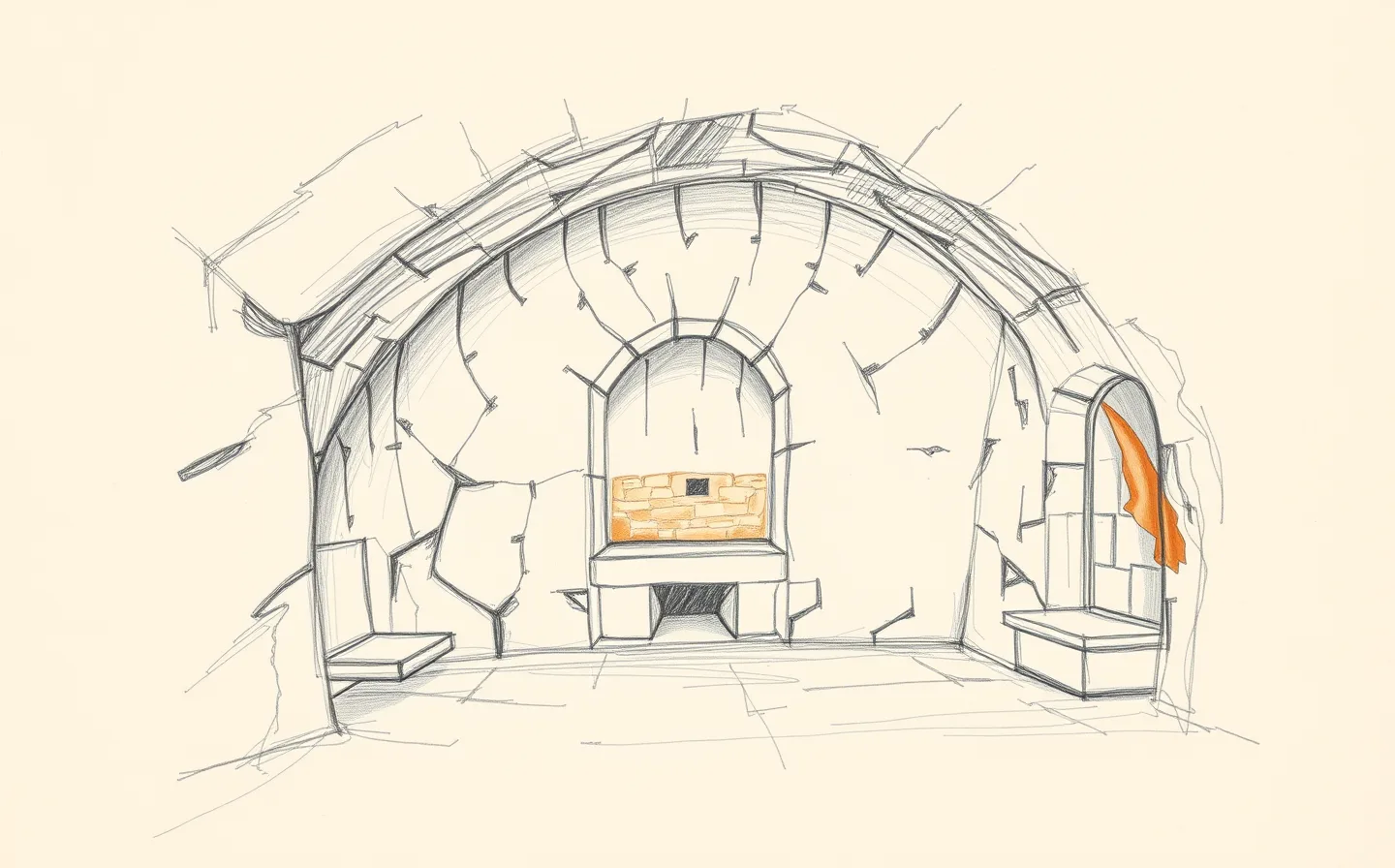
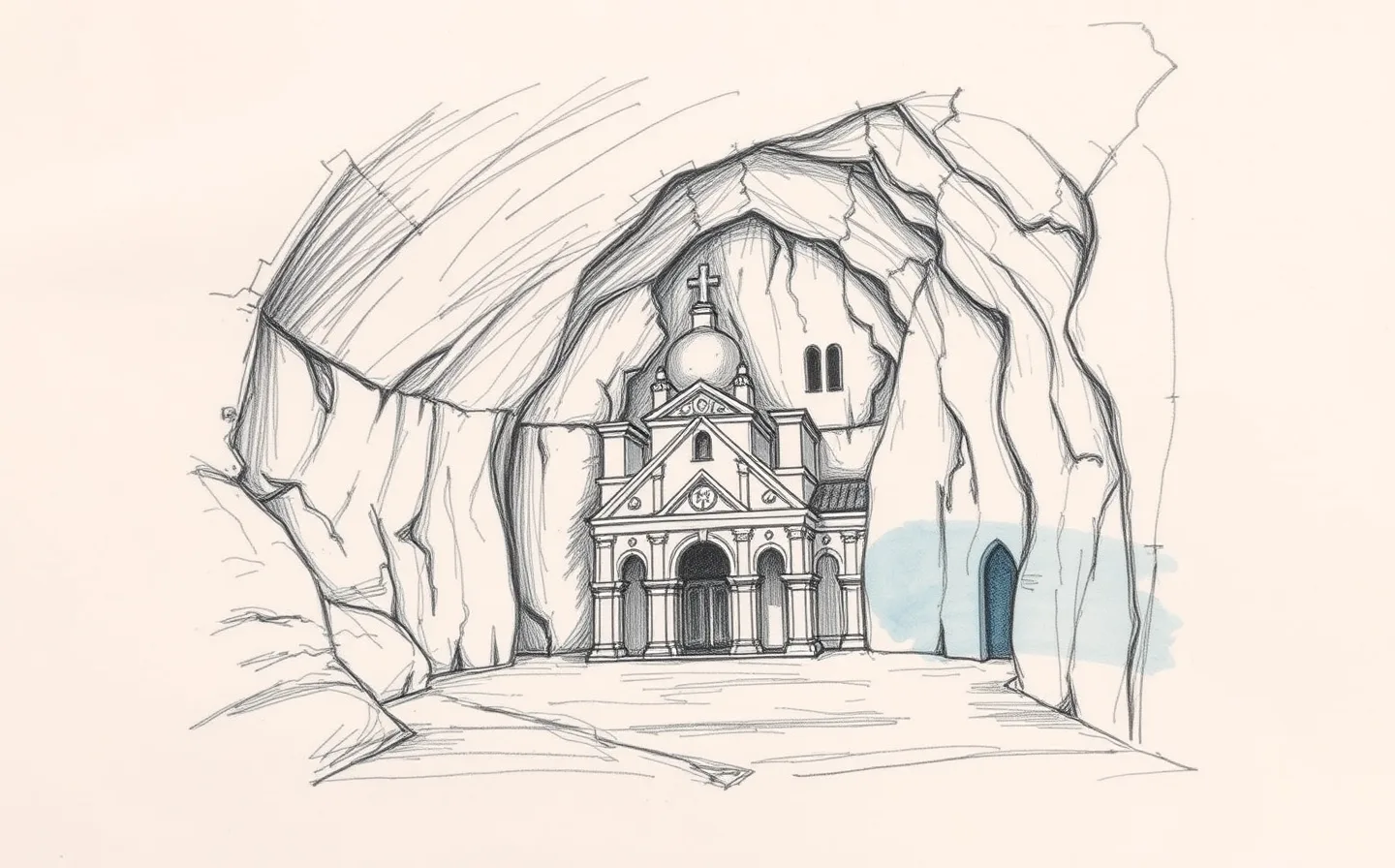
The central feature is the church. It is not built on the surface. It is carved into the rock walls of the mine. Dedicated to Saint Barbara, the patron saint of miners, it serves as a testament to the faith of those who worked in the dark. There was no Catholic place of worship in Cacica at the time, so they created one within the workplace itself. It is a rare example of industrial architecture meeting religious devotion.
The old mine has ceased production. It has been transformed into a tourist attraction. You can take a guided tour. You will see the church. You will also see a salt lake and a ballroom. The juxtaposition is striking. A place of worship and a place of leisure, both carved from salt. Meanwhile, salt production continues nearby through a modern vacuum crystallizer, capable of producing 100,000 tonnes a year at full capacity.
The community retains its distinct character. In the village of Solonețu Nou, established in 1834 by 30 Polish families, a Catholic school was founded in 1870. After 1945, 523 people were deported to Poland, and the school closed. Some settled in Złotnik. After the 1989 revolution, the school reopened. The Polish community here, along with others in the region, maintains a strong Catholic identity, rooted in this subterranean history.
You stand in Cacica, a commune in Suceava County, in the historical region of Bukovina. The surface tells little. The ground is flat, the sky open. But the significance of this place lies beneath your feet. This is not a castle. It is a salt mine. And within that mine, there is a church. To understand Cacica, you must look down.
The history begins in 1780. Salt was discovered here. It was a valuable resource, a white gold that drove economies. Production began in 1791. This was the late 18th century, a time of imperial expansion and industrialization. The Habsburg Empire controlled the region. They needed salt for preservation, for trade, for power. Cacica became a site of extraction.
The mine attracted workers from far and wide. Miners and technicians arrived from various provinces of the Austro-Hungarian Empire. Many were Catholic. The local population was predominantly Orthodox. This created a religious divide. The Catholics needed a place to worship. There was no Catholic church in Cacica. The solution was pragmatic and profound. They built one inside the mine.
The church is dedicated to Saint Barbara. She is the patron saint of miners. Her presence in the rock is symbolic. She protects those who work in the dark, those who face the dangers of the earth. The church is carved from the salt itself. It is a rare example of a place of worship integrated into an industrial site. It reflects the deep connection between the workers and their environment.
The demographic impact was significant. The Polish community in Cacica is a direct result of this industrial activity. Settlers arrived at the turn of the 19th century. In the village of Solonețu Nou, 30 Polish families established a settlement in 1834. They built a school in 1870. This community maintained its Catholic faith and Polish identity for generations.
The 20th century brought upheaval. After 1945, 523 people from Solonețu Nou were deported to Poland. The school was closed. Some families settled in Złotnik. The community was fractured. But after the Romanian Revolution of 1989, the school reopened. The Polish community, including those in Solca, Pleșa, Racova, and Arbore, has 365 families with 1,046 Roman Catholics of Polish ethnicity. The faith survived the displacement.
Today, the old mine is a tourist attraction. It has been transformed. You can take a guided tour. You will see the church of Saint Barbara. You will also see a salt lake. The water is saline, a remnant of the mining process. There is also a ballroom. The juxtaposition of a church, a lake, and a dance floor in a salt mine is unique. It speaks to the adaptive reuse of industrial heritage.
Salt production continues in Cacica. It is no longer done by hand in the old workings. A modern vacuum crystallizer is used. It has a capacity of 100,000 tonnes per year at full capacity. It is fed by wells drilled into the mine body. The technology has changed, but the resource remains the same. The salt that built the church still flows.
The commune is composed of five villages: Cacica, Maidan, Pârteștii de Sus, Runcu, and Solonețu Nou. The population is diverse. At the 2011 census, 74.8% were Romanians, 20.2% Poles, and 4.4% Ukrainians. The Polish minority is a significant feature of the region. It is a legacy of the Habsburg period and the salt industry.
The story of Cacica is one of adaptation. From a salt mine to a tourist site. From a place of labor to a place of leisure and worship. The church of Saint Barbara remains a powerful symbol. It is a reminder of the people who worked here, their faith, and their resilience. It is a hidden gem, literally and figuratively.
As you leave, consider the layers. The salt, the rock, the church, the people. Cacica is more than a commune. It is a testament to the enduring impact of industry and faith. The ground beneath you holds centuries of history. It is a story written in salt.