Mănăstirea Sucevița
Stand before the six-metre walls of Sucevița Monastery and feel the weight of 1585. This is not merely a place of prayer; it is a fortress built by the Movilă brothers—Ieremia, Gheorghe, and Simion. They raised these three-metre-thick barriers not just to keep enemies out, but to keep their legacy in. You are standing in the southern Bukovina, near the Sucevița River, eighteen kilometres from Rădăuți. The air here is still heavy with the ambition of princes who knew their time was short.
Look up at the exterior walls. The frescoes date from around 1601. They are the final gasp of the famous Moldavian style of exterior paintings. While other monasteries had already turned inward, Sucevița insisted on displaying its devotion to the world. The biblical episodes from the Old and New Testament are not mere decoration; they are a statement of power. The architecture fuses Byzantine rigour with Gothic flair, creating a structure that is as defensive as it is devotional. You are looking at the last great example of this tradition.
Inside the almost square courtyard, measuring 100 by 104 meters, the scale is imposing. Four towers stand guard at the corners, silent sentinels of a time when monasteries were also princely residences. The thick walls now shelter a museum, but the true treasure lies in the tombs of Ieremia and Simion Movilă. Their tomb covers are rich portraits embroidered in silver thread. These are not simple shrouds; they are testaments to a family that ruled through ink and iron. The silver catches the light, a quiet reminder of the wealth that built this sanctuary.
Sucevița was more than a spiritual centre; it was a workshop of words. The museum presents an outstanding collection of ecclesiastical silverware, books, and illuminated manuscripts. This was a place where manuscripts were copied and books were printed, a hub of intellectual life in a turbulent region. The Movilă brothers understood that stone walls crumble, but words endure. They invested in the printing press as much as in the mortar. Today, the silence of the courtyard speaks of that industrious past, where the scratch of the quill competed with the clang of the hammer.
In 2010, UNESCO inscribed Sucevița as part of the Painted Churches of Moldavia World Heritage Site. It is also the second major attraction on the Via Transilvanica long-distance trail, following Putna Monastery. For the walker, this is a pause in a long journey. For the historian, it is a pivot point. The monastery stands as a bridge between the medieval fortifications of the past and the cultural heritage of the present. You leave with the image of silver threads and faded frescoes, a testament to the Movilă brothers’ enduring grip on history.
The Sucevița Monastery rises from the southern Bukovina like a stone argument. Built in 1585, it is a fortified convent that defies the gentle categorization of a simple religious site. Commissioned by the Movilă brothers—Ieremia, Gheorghe, and Simion—it stands eighteen kilometres from Rădăuți, near the Sucevița River. The location is strategic, nestled in the northwestern Moldavia region, yet it feels isolated, a self-contained world of stone and faith. The architecture is a hybrid, blending Byzantine elements with Gothic details, typical of the painted churches of northern Moldavia. But the true story of Sucevița is not in its style; it is in its survival.
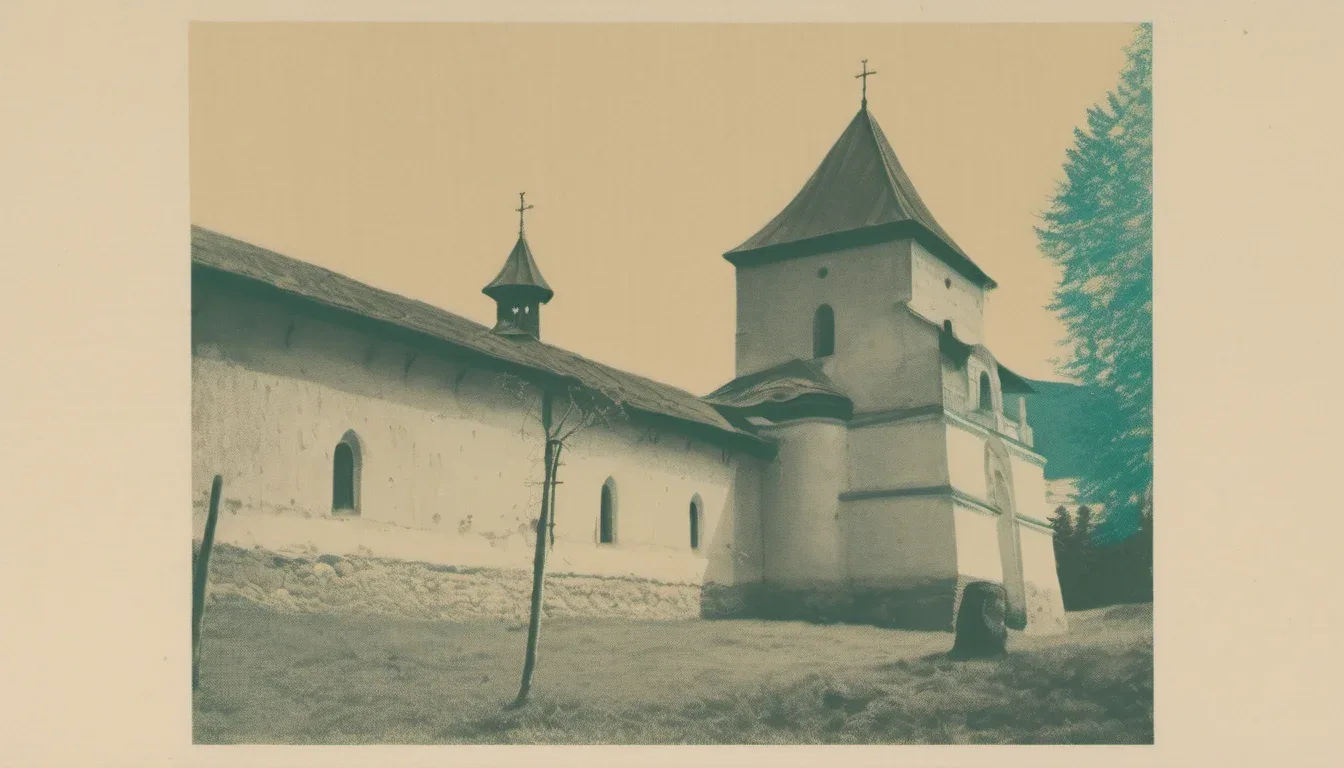
The walls are the first thing you notice. They are six metres high and three metres wide, forming an almost square interior court of 100 by 104 meters. This is a fortress. Four towers occupy the corners, each a bastion of defence. In the late 16th century, the Movilă brothers were not just pious patrons; they were princes navigating a treacherous political landscape. Sucevița served as a princely residence as well as a monastic complex. The thickness of the walls speaks to the volatility of the era. These were not walls built for contemplation alone, but for protection against the shifting tides of Ottoman and Polish influence. You stand in a place where prayer was a form of statecraft.
The exterior frescoes, dating from around 1601, are the visual climax of the site. They depict biblical episodes from the Old and New Testament, rendered in the famous Moldavian style. Sucevița is one of the last monasteries to be decorated in this manner. By 1601, the tradition of painting the outside of churches was waning, replaced by a focus on interior decoration. The Movilă brothers, however, insisted on the exterior display. The paintings are of great artistic value, vibrant even after centuries. They serve as a catechism for the illiterate, but also as a proclamation of the patrons’ piety and power. The colours, though faded, still command attention against the grey stone.
Inside the walls, the atmosphere shifts from defensive to devotional. The monastic ensemble houses a museum that presents an outstanding collection of historical and art objects. The highlight is the tomb covers of Ieremia and Simion Movilă. Rich portraits embroidered in silver thread, they are exquisite examples of craftsmanship. Ieremia, who died in 1606, and his brother Simion are interred here, their effigies a permanent reminder of their legacy. The silver thread catches the light, creating a shimmering effect that contrasts with the somber stone. These tombs are not just burial sites; they are monuments to the family that built the monastery. The ecclesiastical silverware and illuminated manuscripts in the museum further testify to the wealth and cultural sophistication of the Movilă court.
Sucevița was a centre of intellectual activity. It began as a manuscript workshop and evolved into a printing center. The presence of books and illuminated manuscripts in the museum underscores this role. In an era when knowledge was power, the Movilă brothers invested in the production of texts. The monastery was a place where scribes worked, copying and creating books that would circulate throughout the region. This intellectual output was as important as the military defence provided by the walls. The combination of a printing press and a fortress is rare. It suggests a vision of a principality that valued both the sword and the pen. The legacy of this dual focus is evident in the surviving artifacts.
The political context of the Movilă brothers is crucial to understanding Sucevița. Ieremia Movilă was a Voivode of Moldavia, a ruler who navigated the complex relationships between the Ottoman Empire, Poland, and the Holy Roman Empire. The construction of Sucevița in 1585 coincides with the rise of the Movilă family to power. The monastery was a statement of their legitimacy and piety. By building a fortified residence, they asserted their control over the region. The choice of Sucevița, in the southern Bukovina, was strategic. It was a place where they could retreat, pray, and plan. The brothers’ rivalry and cooperation are etched into the stone. Gheorghe, Ieremia, and Simion worked together to create this legacy, but their individual ambitions also shaped the site.
The artistic context of the era is one of transition. The Moldavian style of exterior paintings was reaching its zenith and then its decline. Sucevița represents the tail end of this tradition. The frescoes from 1601 are among the last of their kind. This makes the monastery a unique document of artistic history. The fusion of Byzantine and Gothic elements in the architecture reflects the broader cultural exchanges of the time. The region was a crossroads of influences, and Sucevița absorbed and adapted these styles. The result is a building that is distinctively Moldavian, yet open to external influences. The paintings are not just religious images; they are a reflection of the cultural milieu of the late 16th and early 17th centuries.
Locals know Sucevița as a place of quiet reverence. It is the second major attraction on the Via Transilvanica long-distance trail, after Putna Monastery. For hikers, it is a stop on a journey through the Carpathians. The trail connects the cultural heritage of Transylvania and Moldavia, and Sucevița is a key node. The monastery’s location near the Sucevița River adds to its appeal. The sound of the water provides a backdrop to the silence of the courtyard. Visitors often speak of the peace they find here, a contrast to the turbulent history of the site. The legend of the silver-thread tombs is a common topic of conversation. The idea that the brothers are wrapped in silver is a powerful image, one that lingers in the memory of those who visit.
There is an unsolved mystery surrounding the exact nature of the Movilă brothers’ collaboration. While history records their joint commission, the individual contributions of each brother are less clear. Did Ieremia, as the Voivode, take the lead? Did Gheorghe and Simion provide the financial and logistical support? The silver-thread tombs of Ieremia and Simion suggest a close bond, but the absence of a tomb for Gheorghe raises questions. Did he die elsewhere? Was his legacy less central to the monastery? These questions remain unanswered, adding a layer of intrigue to the site. The museum’s collection offers clues, but the full story is lost to time. The silence of the walls does not reveal all secrets.
In 2010, UNESCO inscribed Sucevița as part of the Painted Churches of Moldavia World Heritage Site. This recognition highlights its global significance. The inscription acknowledges the artistic value of the frescoes and the historical importance of the site. It also ensures its preservation for future generations. The monastery is a testament to the resilience of cultural heritage in the face of political upheaval. The Movilă brothers built Sucevița to last, and it has. The stone walls, the silver-thread tombs, and the faded frescoes are a legacy that endures. For the visitor, Sucevița is a place to reflect on the intersection of faith, power, and art. It is a reminder that even in the most fortified places, the human spirit finds a way to express itself.
As you leave Sucevița, the image of the square courtyard and the corner towers stays with you. The six-metre walls, the three-metre thickness, the 100 by 104 meter court—these dimensions define the space. The silver-thread tombs of Ieremia and Simion Movilă are a focal point, a symbol of the family’s ambition. The frescoes from 1601 are a final flourish of the Moldavian style. The monastery is a fortress, a residence, a workshop, and a place of prayer. It is a complex site that defies simple categorization. The Movilă brothers created a legacy that is both defensive and devotional, intellectual and artistic. Sucevița stands as a monument to their vision, a place where the past is preserved in stone and silver.