Casa Rossini
Gioachino Rossini was born on 29 February 1792 in a four-storey house on what is now via Rossini, 34. In 1892, a century later, the city of Pesaro bought the building and turned it into a museum. A royal decree of 1904 declared it a national monument.
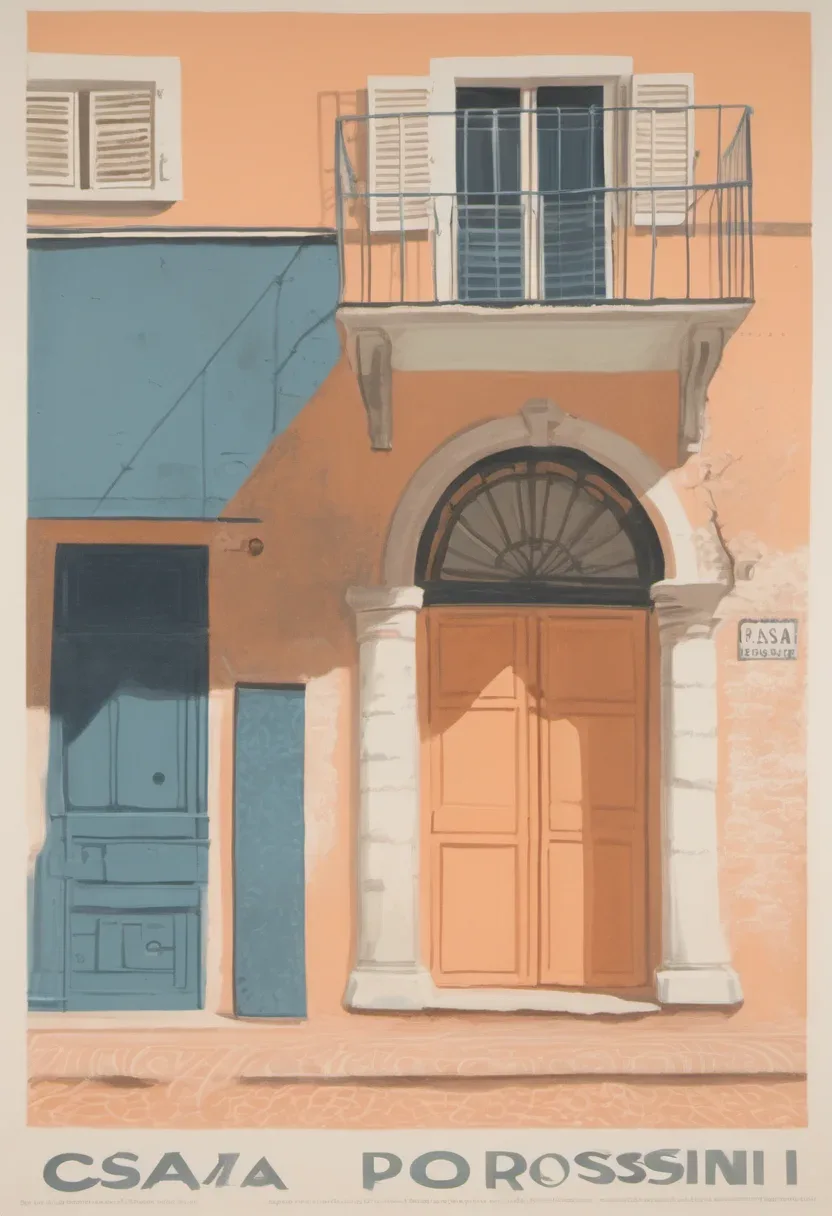
The exterior is modest, especially next to the patrician palaces that line the street. The building was assembled between the 15th and 18th centuries, with later alterations. Pesaresi appreciate its peculiar structure. Inside, a major renovation in 2015 expanded the spaces and brought in new technology.
The museum follows a biographical-creative itinerary. The core collection comes from Parisian collector Alphonse Hubert Martel: prints of Rossini’s operas and their famous interpreters – Adelina Patti as Rosina, Giovan Battista Rubini as Otello, Giuditta Pasta as Tancredi, Gilbert-Louis Duprez as Arnold in Guillaume Tell. Also on display: thirty printed portraits of Rossini from youth to old age, and a drawing by Gustave Doré of the composer on his deathbed.
Caricatures include a statuette by Jean Pierre Dantan. The music room holds a fortepiano built in Venice in 1809 and several autograph manuscripts. Touch screens let you consult digitised scores and letters; listening stations bring the documents to life. The second floor now hosts documents of interpreters and temporary exhibitions.
Gioachino Rossini was born on 29 February 1792 in a four-storey house on what is now via Rossini, 34. In 1892, a century later, the city of Pesaro bought the building and turned it into a museum dedicated to the composer who dominated Italian opera in the first half of the 19th century. A royal decree of 25 February 1904 made it a national monument.
The exterior is modest, especially next to the patrician palaces that line the street. The building was assembled between the 15th and 18th centuries, with later alterations. Pesaresi appreciate its peculiar structure; it has four floors and a basement. Inside, a major renovation completed in 2015 expanded the spaces and brought in new technology, making the museum feel contemporary while honouring the past.
Rossini wrote 39 operas between 1806 and 1829, adopting the opera buffa style of Cimarosa and Paisiello. His critical edition is published in Pesaro by the Fondazione Rossini and Casa Ricordi. This editorial work underpins the museum’s scholarly approach, and the Fondazione has lent new documents for the permanent collection.
The museum follows a biographical-creative itinerary. The core collection comes from the donation of Parisian collector Alphonse Hubert Martel: prints of Rossini’s operas and portraits of their famous interpreters – Adelina Patti as Rosina in Il barbiere di Siviglia, Giovan Battista Rubini as Otello, Giuditta Pasta as Tancredi, Gilbert-Louis Duprez as Arnold in Guillaume Tell. Also on display: thirty printed portraits of Rossini from youth to old age, and a drawing by Gustave Doré of the composer on his deathbed.
Beyond the official portraits, a series of caricatures reveals a lighter side. Among them is a statuette by Jean Pierre Dantan that mocks Rossini and other musical figures of the 19th century. In the music room, a fortepiano built in Venice in 1809 sits beside several autograph manuscripts of the maestro. The room is a quiet space to contemplate his creative process.
With the 2015 renovation, the museum expanded its holdings through collaboration with the Fondazione Rossini. New documents include letters, autograph scores, original librettos of Rossini’s operas, and digitalisations of complete scores. Touch screen stations along the route let you browse these materials, while listening posts allow you to hear recordings of the letters, offering insight into Rossini’s life and work.
The second floor was added to the exhibition surface, now hosting documents of interpreters and Rossini’s operas, as well as temporary thematic shows. The ground floor holds a store devoted entirely to the composer. Despite its unassuming facade, Casa Rossini offers a deep, interactive encounter with the man who changed opera.