Mănăstirea Voroneț
You are standing before the 'Sistine Chapel of the East.' Look up at the exterior walls. They are not merely painted; they are saturated in an intense, vivid shade of blue known in Romania as 'Voroneț blue.' This azurite background holds hundreds of well-preserved figures. It is the reason this medieval monastery in the Voroneț River valley commands global attention.
The structure was raised with impossible speed. Stephen the Great, the Voivode of Moldavia, ordered its construction in May 1488. He completed it in September of the same year. The entire project took three months and three weeks. He built it to commemorate his victory at the Battle of Vaslui against the Ottoman Turks. The inscription above the church records this timeline with precise dates.
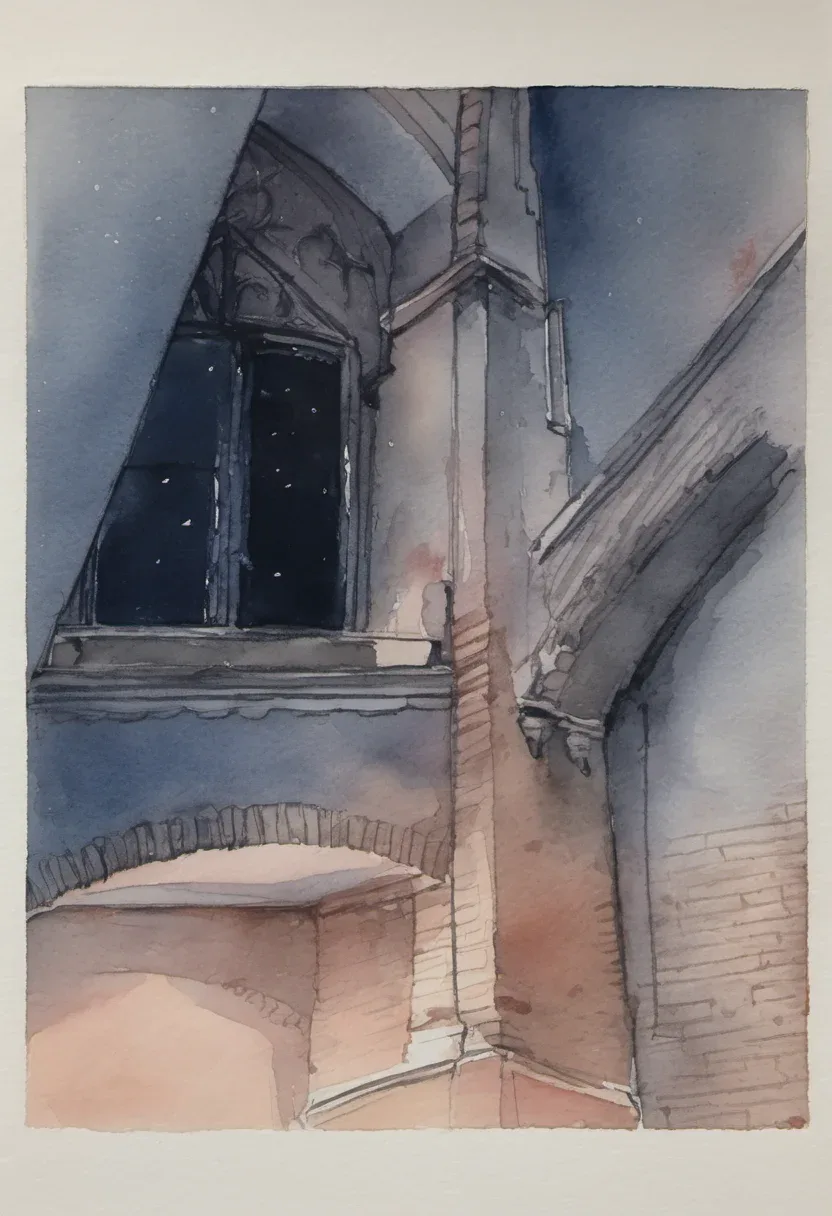
The architecture is a study in transition. You see Gothic elements: small windows with rectangular frames of crossed rods, and receding pointed arches. But look to the exonarthex, added in 1547 by Metropolitan Bishop Grigorie Roșca. The doors here have rectangular frames, signaling a shift toward Renaissance style. Yet above them, tall windows retain flamboyant Gothic arches. The west façade has no openings, reserved entirely for frescoes.
Legend binds this place to two men. Stephen the Great came here in a moment of crisis during the war. He sought advice from Saint Daniil the Hermit, the first abbot. Daniil told him not to surrender. He promised that after victory, Stephen must build a monastery dedicated to Saint George. Stephen kept his word. Daniil’s tomb lies within these walls.
This was also a center of learning. The monastery hosted a school of calligraphy where monks learned to read, write, and translate religious texts. It produced the Codex of Voroneț, discovered in 1871, and the Psalter of Voroneț, found in 1882. These books are now at the Romanian Academy. The community deserted the site after 1775, when the Habsburgs annexed the region. They returned in 1991, rebuilding housing, chapels, and stables for the resident nuns.
You stand in the valley of the Voroneț River, south of Gura Humorului. Before you is a medieval monastery that defies the usual timeline of religious architecture. It is one of the famous painted monasteries of southern Bukovina, listed as a UNESCO World Heritage Site. But its fame rests on a specific visual intensity. Look at the exterior walls. They are covered in frescoes of bright, intense colors. The background is not white or stone. It is an azurite blue so vivid and distinctive that it has been named 'Voroneț blue.'
The speed of its creation is the first thing to grasp. Stephen the Great, the Voivode of Moldavia, son of Bogdan, started the monastery in May 1488. He finished it in September of the same year. The inscription above the church, now in the exonarthex, records this precisely: 'I had it finished the same year, in September, 1488.' The entire construction took three months and three weeks. This was not a gradual accumulation of stone. It was a rapid, decisive act of commemoration for the victory at the Battle of Vaslui against the Ottoman Turks.
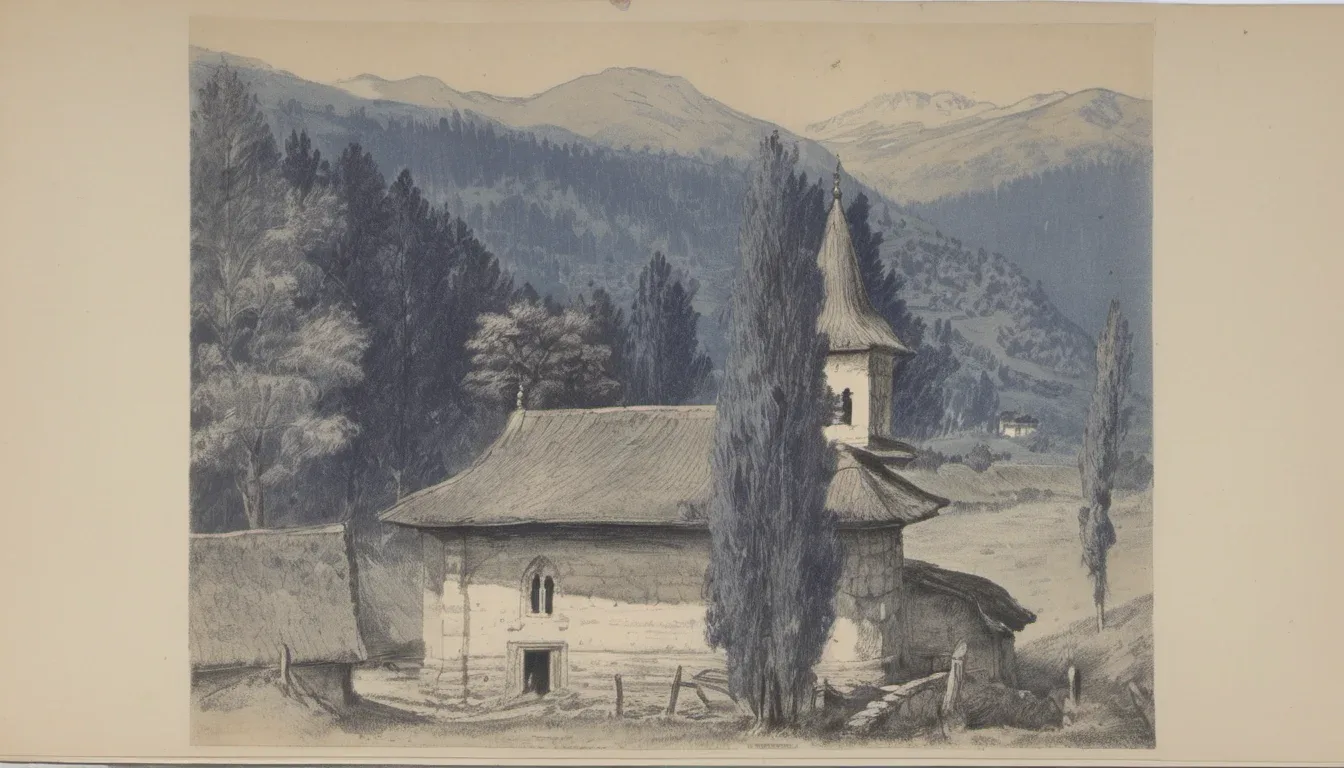
Examine the architectural hybridity. The church follows a triconch plan, with three apses. It includes a chancel, a naos with its tower, and a pronaos. The original Gothic character is visible in the small windows. Their rectangular frames are made of crossed rods. The interior doorframes feature receding pointed or shouldered arches. These details speak to the medieval craftsmanship of the late 15th century. The tower is decorated with sixteen tall niches. Four of these contain windows. A row of small niches encircles the tower above them. The fragmented roof likely follows the shape of the original shingled roof.
The narrative of the building continues in 1547. Metropolitan Bishop Grigorie Roșca added the exonarthex to the west end. He also commissioned the painting of the exterior walls. His contribution is recorded on the left of the entrance door. He wrote of the 'great pains taken by the faithful Kir Grigorie.' He added the title porch and painted the exterior for the sake of his soul. The south and north doors of this exonarthex have rectangular frames, indicating a transition period from Gothic to Renaissance. Yet, above them, tall windows with flamboyant Gothic arches remain. The entire west façade is without openings. Roșca intended from the beginning to reserve this wall for frescoes.
Look closely at the north façade. Here you can still see the original decoration of the church. It consists of rows of ceramic enamelled discs. They are yellow, brown, and green, decorated in relief. These are not just decorative tiles. They include heraldic motifs. You will see the rampant lion and the aurochs' head of the Moldavian coat of arms. You will also see creatures inspired by Western European medieval literature, such as two-tailed mermaids. This mix of local heraldry and Western fantasy illustrates the cultural cross-currents of the era.
The spiritual foundation of the site is tied to a legend involving two central figures of Romanian history. Stephen the Great and Saint Daniil the Hermit. The legend tells us that Stephen, in a moment of crisis during the war against the Ottoman Turks, came to Daniil at his skete in Voroneț. He asked for advice. Daniil told him not to surrender the fight. He instructed Stephen that after victory, he must build a monastery dedicated to Saint George. Stephen kept this vow. The monastery is dedicated to Saint George, the great and victorious martyr. Daniil’s tomb is located within the monastery complex.
Beyond its visual and political significance, Voroneț was a hub of intellectual life. It was known for its school of calligraphy. Here, priests, monks, and friars learned to read, write, and translate religious texts. This school produced two notable copies of Romanian translations of the Bible. The Codex of Voroneț was discovered in 1871. The Psalter of Voroneț was found in 1882. These manuscripts are now held at the Romanian Academy. They represent a tangible legacy of the literacy and theological work that occurred within these walls.
The history of habitation is marked by a long silence. The monastery was deserted soon after 1775. This was when the Habsburg monarchy annexed the northern part of Moldavia. The monastic community left. For over two centuries, the site stood empty. The community returned in 1991. Since their return, the residents have reconstructed the living quarters. They built housing for the resident nuns, a chapel, fountains, stables, barns, and a house for pilgrims. The site is once again a living community, not just a museum.
The tombstones within the monastery commemorate the patrons and noblemen who supported the church. You will find markers for Saint Daniel the Hermit and Grigorie Roșca. These stones anchor the physical structure to the human lives that sustained it. The book 'Byzantium After Byzantium' by Nicolae Iorga provides further context for this era. The site remains a testament to the resilience of the region's cultural and religious identity.
As you leave, consider the layers of time. The rapid construction of 1488. The additions of 1547. The abandonment of 1775. The return in 1991. The 'Voroneț blue' remains, a constant against the shifting political tides. The ceramic discs, the Gothic arches, and the calligraphy school’s legacy all persist. You have seen the 'Sistine Chapel of the East,' but you have also seen a place of enduring, quiet continuity.
The legend of Stephen and Daniil offers a moral framework for the site. It is not just a victory monument. It is a fulfillment of a promise made in crisis. The blue walls serve as a reminder of that vow. The two-tailed mermaids and the aurochs' heads remind you of the diverse influences that shaped this corner of Europe. The return of the nuns in 1991 marks a new chapter in a story that began with a hermit’s advice and a ruler’s gratitude.