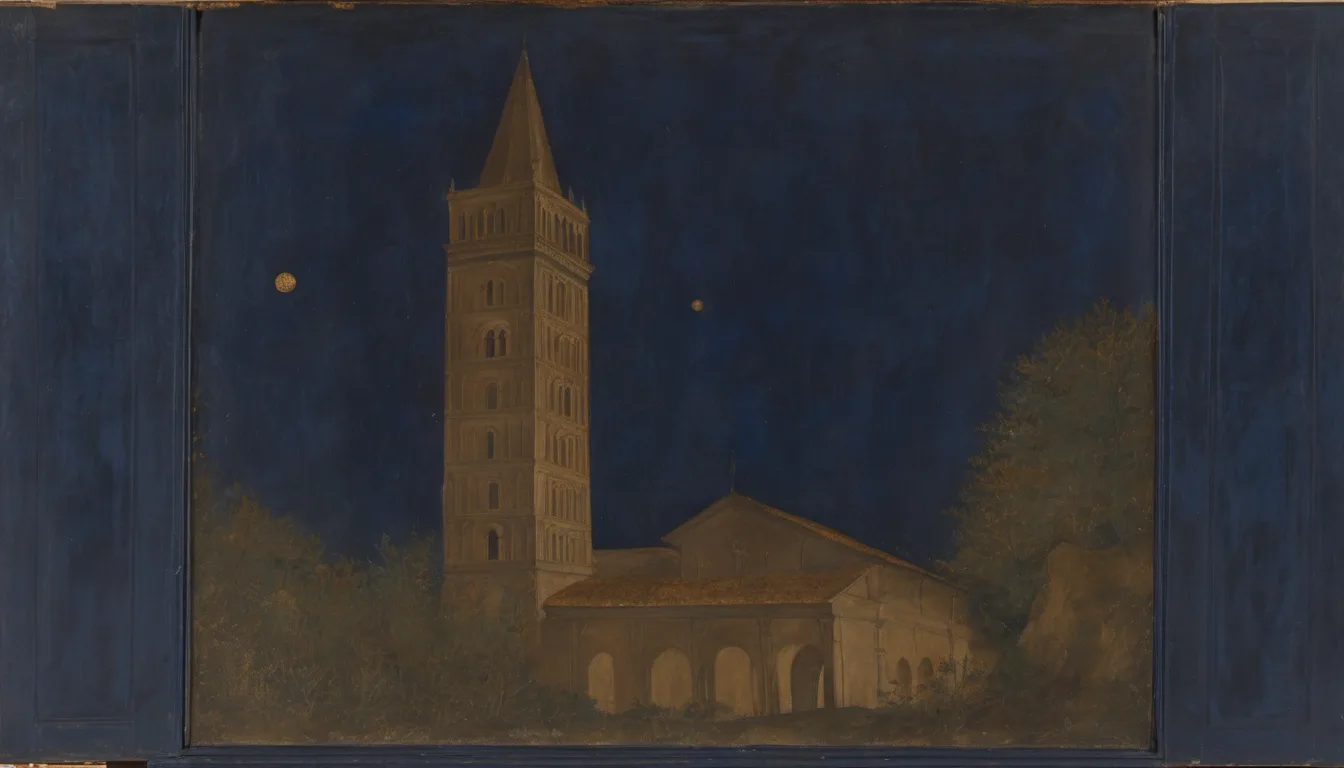
Codigoro, Italy
Codigoro does not announce itself. It waits at the eastern extremity of the Ferrara province, a quiet municipality where the Po delta folds into the Adriatic. To find it, one must look past the industrial hum of the sugar refinery and the rhythmic clatter of the railway, stepping instead into a landscape defined by water management and Benedictine history. This is not a place of grand gestures, but of subtle, enduring presence. The air here carries the scent of brackish water and ancient stone, a reminder that this territory was once a marshy island, now reclaimed through centuries of relentless human effort.
The city’s significance lies in its geological and historical pivot point. For centuries, Codigoro was the fulcrum of the Po river’s shifting courses. The Rotta di Ficarolo in 1152 drained the life from the original settlements, forcing a migration of power and people. What remains is a testament to resilience. The Abbey of Pomposa, with its 9th-century origins, stands as a silent witness to the monastic communities that once thrived here. It is a place where the boundary between land and sea was once fluid, and where the political control shifted from the Exarchate of Ravenna to the Este family, and eventually to the Papal States.
Walking through Codigoro is an exercise in reading the landscape’s scars and repairs. The Finance Tower, rebuilt after a 1729 storm, watches over the Volano river, a structure that has survived erosion, war, and the slow creep of time. The Bishop’s Palace, restored in the Venetian style, hints at a more opulent past, now housing the Giorgio Bassani library. Here, literature and history intersect; Bassani set parts of his novel The Heron here, capturing the melancholy beauty of a town caught between the past and the industrial present. The walk rewards those who look closely at the interplay of water, stone, and silence.
There is a singular quality to this place: the persistence of memory in a landscape constantly rewritten by water. The channels that once served for irrigation now mark the boundaries of a reclaimed world. The Pineta dell’Abbazia di Pomposa offers a glimpse of the ancient deltizio padano, a remnant of the forests that once surrounded the monastery. To walk Codigoro is to understand that this is not merely a town, but a negotiation between nature and human will. It is a place where the past is not buried, but submerged, waiting to be uncovered by the careful observer.
Codigoro, or Codgòr in the Ferrarese dialect, occupies a unique position in the geography of Emilia-Romagna. It is the easternmost comune of the Province of Ferrara, situated approximately 70 kilometers northeast of Bologna and 40 kilometers east of Ferrara. This location places it at the very edge of the Po Plain, where the land meets the sea. It is one of only three coastal communes in the historical region of Emilia, sharing this distinction with Comacchio and Goro. The territory is traversed by the Po di Volano, a river that flows west to east until its mouth, shaping the life and history of the area. Until the 1960s, the landscape was dominated by vast marshlands, which were gradually drained through extensive reclamation works. Today, only small remnants of the ancient wetlands, such as the Valli di Caneviè and Porticino, remain, alongside traces of the original deltizio forests and pine woods.
The origins of Codigoro are steeped in the shifting waters of the Po. The name itself derives from 'Caput Gauri,' referring to the Po di Goro, one of the river's branches. In Vulgar Latin, this became 'Caput gauri,' and later 'Medium gauri,' evolving into Mezzogoro. The history of the town is inextricably linked to the Abbey of Pomposa, founded in the 6th or 7th century by Benedictine monks. At that time, Pomposa was situated on an island surrounded by the Adriatic Sea and the branches of the Po di Volano and Po di Goro. The monks established a community that grew in prominence, thanks to fertile agricultural lands and the establishment of the Bishop’s Palace, which became the center of political and commercial governance. This area remained part of the Exarchate of Ravenna until the year 1000, a period that laid the foundation for Codigoro’s historical significance.
The 12th century brought turmoil and transformation. Towards 1150, the Este family, lords of Ferrara, began to exert pressure over the territory, seeking control over the lucrative lands. However, the prosperity of Codigoro was severely disrupted by the Rotta di Ficarolo in 1152, a catastrophic flood that caused the Po river to shift its course northward. This event drained the waters of the Volano, leading to the abandonment of the Abbey of Pomposa by the Benedictines. The town was left in a state of decline, its strategic importance diminished by the changing geography. Yet, this disaster also spurred a new era of human intervention. Starting in 1464 and continuing until 1580, the Dukes of Este initiated extensive land reclamation projects. These efforts, though only partially successful, began to make the territory more habitable, laying the groundwork for the agricultural landscape that would define the region for centuries.
The 17th century introduced further complexities to the region’s hydrology. Between 1600 and 1604, the Republic of Venice modified the flow of the Po di Levante, directing it to flow further south into Ferrarese territory. This engineering feat rendered much of the previous reclamation work by the Este family obsolete. However, with the transfer of Ferrara to the Papal States in 1598, reclamation efforts resumed. These works continued into the mid-19th century, when the first pumping stations were constructed, and the surrounding Polesine area of Ferrara was fully reclaimed. This period marked a significant shift in the region’s infrastructure, transforming the marshlands into productive agricultural land and establishing the network of channels that still crisscross the territory today.
The industrial age brought a new chapter to Codigoro’s history. In 1899, the 'Società Anonima Codigoro,' a company owning large tracts of land in Romagna, played a key role in founding the Genoese sugar company Eridania. That same year, the first industrial sugar refinery was inaugurated in Codigoro. This development marked the town’s integration into the broader industrial landscape of Italy, bringing economic activity and population growth. The presence of the refinery and the associated railway line, which terminates in Codigoro and branches off to the Pomposa industrial zone, underscore the town’s role as a logistical and industrial hub, even as it retains its historical character.
Architecturally, Codigoro is defined by its religious and civic structures. The Abbey of Pomposa, dating back to the 9th century, stands as one of the most important religious monuments in Northern Italy. Built on a pre-existing Lombard foundation, it served as the residence of the Benedictines and a center of spiritual and cultural life. The Duomo of San Martino Vescovo and the Church of Saints Peter and Paul in Mezzogoro further enrich the town’s religious landscape. The Sant’Eurosia, now an auditorium, was originally an oratory known as Corte Vecchia, reflecting the town’s layered history of religious devotion and community gathering.
Among the civic structures, the Bishop’s Palace holds particular significance. Originally built at the behest of the Benedictines, it served as the administrative seat of Codigoro and Pomposa. Known historically as the Domus Dominicata, the palace was restored in the Venetian style in 1732. It was later ceded to the Bishop of Comacchio, from whom it derives its current name. Today, it houses the Giorgio Bassani municipal library and serves as a venue for cultural events, bridging the past and present through its use. The Finance Tower, constructed in the early 18th century, was designed to control trade routes along the banks of the Po di Volano. Built by the Papal Government, it was destroyed by a storm in 1729 and rebuilt between 1739 and 1741. It served as a barracks for the Guardia di Finanza until the early 20th century, standing as a sentinel over the river’s changing flows.
The Chiavica dell’Agrifoglio, located on the left hydraulic bank of the Po di Volano near the Abbey of Pomposa, is another testament to the town’s engineering history. Built in the 17th century and expanded in the following century, it was designed to transfer water from the Pomposian territory into the Po di Volano. Due to natural and artificial changes in the landscape over the last three centuries, the structure is no longer functional. However, it remains visible from the road leading to Volano, a silent reminder of the constant battle between land and water that has shaped the region.
Culturally, Codigoro has been a muse for writers and historians. The novelist Giorgio Bassani set much of his 1968 novel, The Heron, in this town. Bassani’s work captures the melancholy and beauty of a place caught between its industrial present and its monastic past. The town’s demographic evolution reflects broader trends, with a population of around 10,953 residents. As of December 31, 2022, 982 residents were foreign, representing 8.22% of the population, indicating a gradual diversification of the community. The town’s symbols, granted by a presidential decree in 1997, include a white rectangular banner, reflecting its simple yet dignified identity.
To walk through Codigoro is to traverse a landscape of contrasts. It is a place where the industrial hum of the sugar refinery coexists with the serene beauty of the Abbey of Pomposa. It is a town where the past is not merely remembered but physically present in the stone of its buildings and the channels of its rivers. The reclamation of the land, the shift of the Po’s course, and the persistence of the Benedictine legacy all contribute to a unique sense of place. Codigoro is not a destination for the hurried traveler; it is a place for those who seek to understand the intricate relationship between nature, history, and human endeavor. It is a town that rewards the patient observer, offering insights into the resilience of communities and the enduring power of memory in a world of constant change.
Do not miss around Codigoro
1 placeEvery place below is a ten-to-fifteen minute walk from the last.