Camera di San Paolo
That ceiling above you is a lie, and a beautiful one. It looks like an open-air pergola — leafy trellis, pale sky, cherubs leaning through oval windows to peer down at you. Every inch of it is flat plaster. Antonio Allegri, known as Correggio, painted it in 1519, just shy of thirty, for a Benedictine abbess who wanted her private dining room to look nothing like a convent.
Her name was Giovanna da Piacenza, and she ran this monastery like a small Renaissance court — cultured, well connected, unwilling to be walled in by the stricter rules pressing down on convents everywhere. So she hired an unproven young painter and told him: no saints, no crucifixes, nothing pious at all. Above the fireplace, Diana, goddess of the hunt and chastity, rides a chariot pulled by stags. Her own coat of arms, three crescent moons, echoes the goddess overhead — the closest thing the Renaissance offers to a nun's self-portrait told through myth.
The Church was not amused. In 1524, stricter enclosure rules sealed the convent to outsiders, and this pagan, playful, entirely unreligious room vanished from view for roughly two and a half centuries. It resurfaced only in 1774, when the German painter Anton Raphael Mengs talked his way inside and called what he saw Correggio's miracle. A Latin motto still runs along the crest below, an old philosopher's warning: do not stir the fire with a sword. Nobody has fully explained what an abbess meant by putting it there. Some mysteries, it turns out, are better left burning quietly.
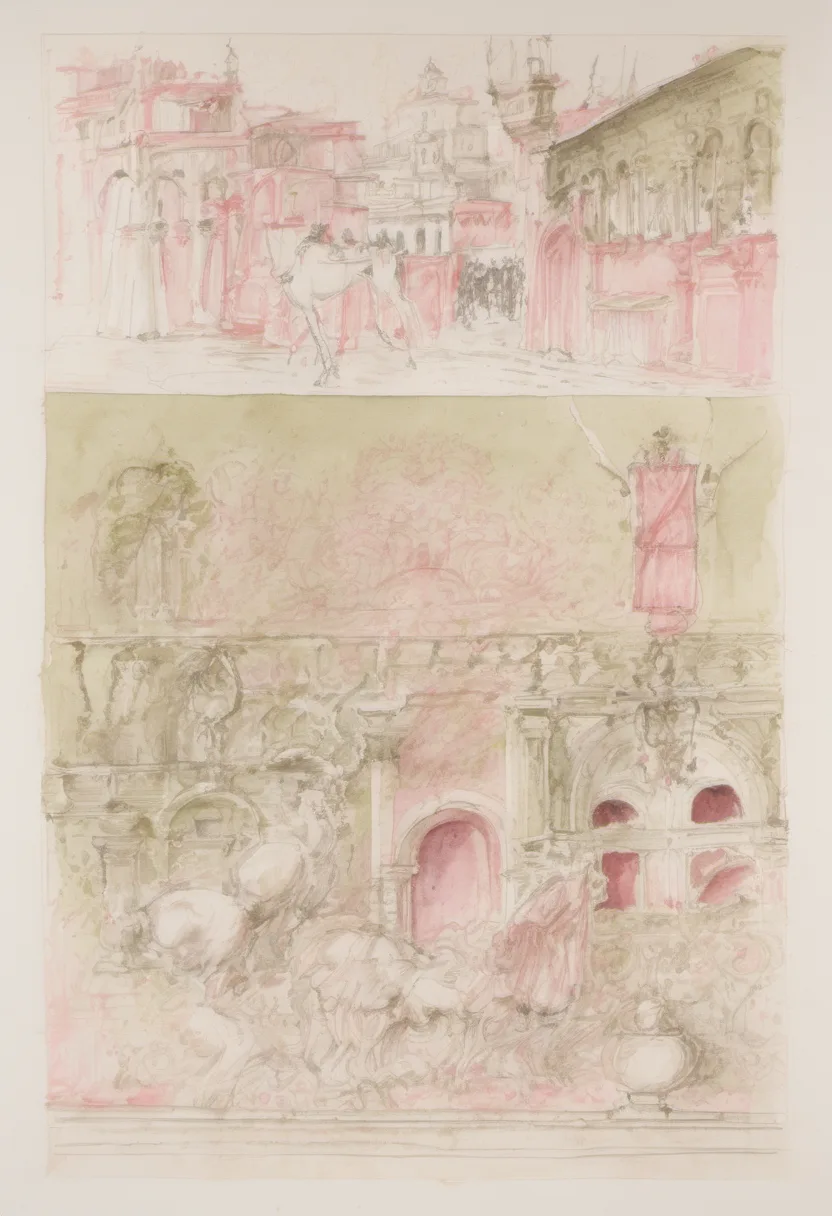
Look up at that vault for a moment before anything else. It seems to dissolve into a leafy pergola open to a pale sky, ribs of trelliswork meeting at a hidden point overhead, ovals cut into the plaster where cherubs lean out to look back down at you. None of it is real. It is paint on a curved ceiling barely seven metres across, finished in a matter of months in 1519 by a painter not yet thirty, working for a woman who had very particular ideas about what a nun's private room should look like.
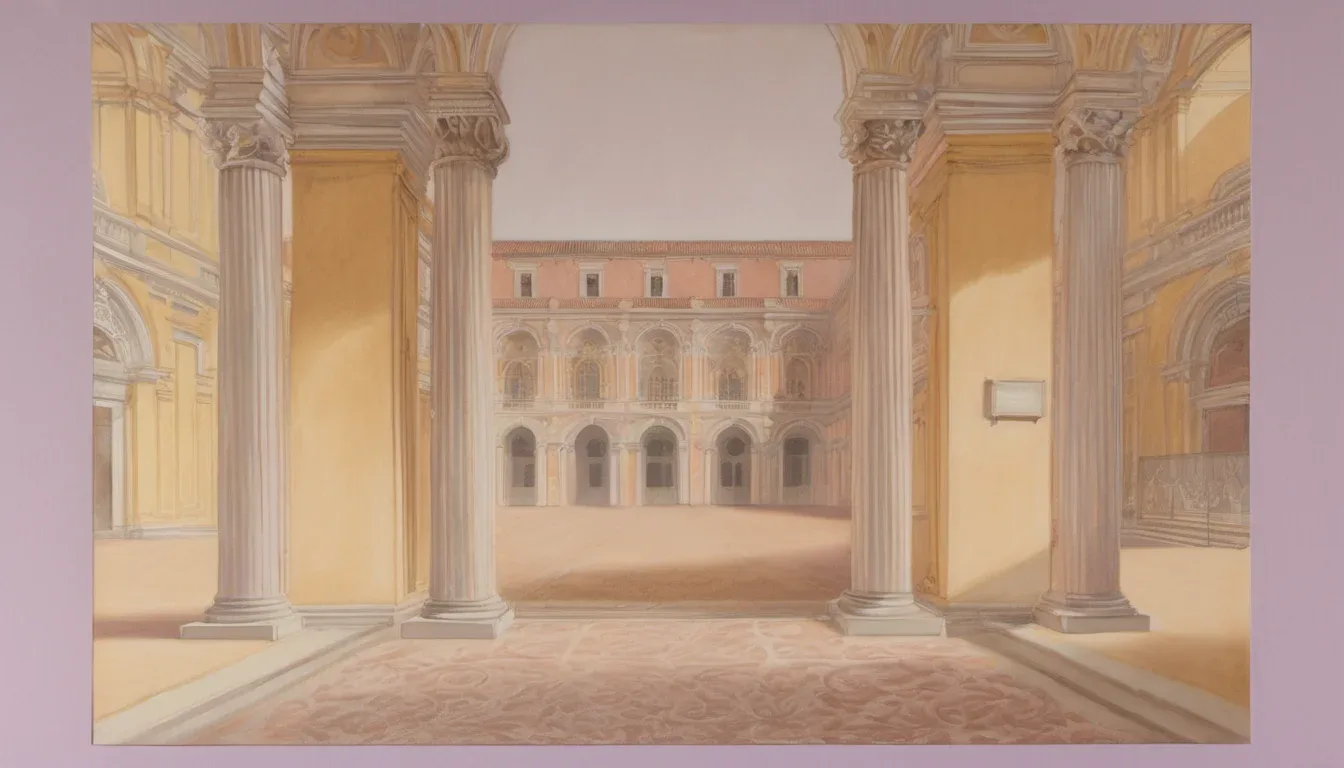
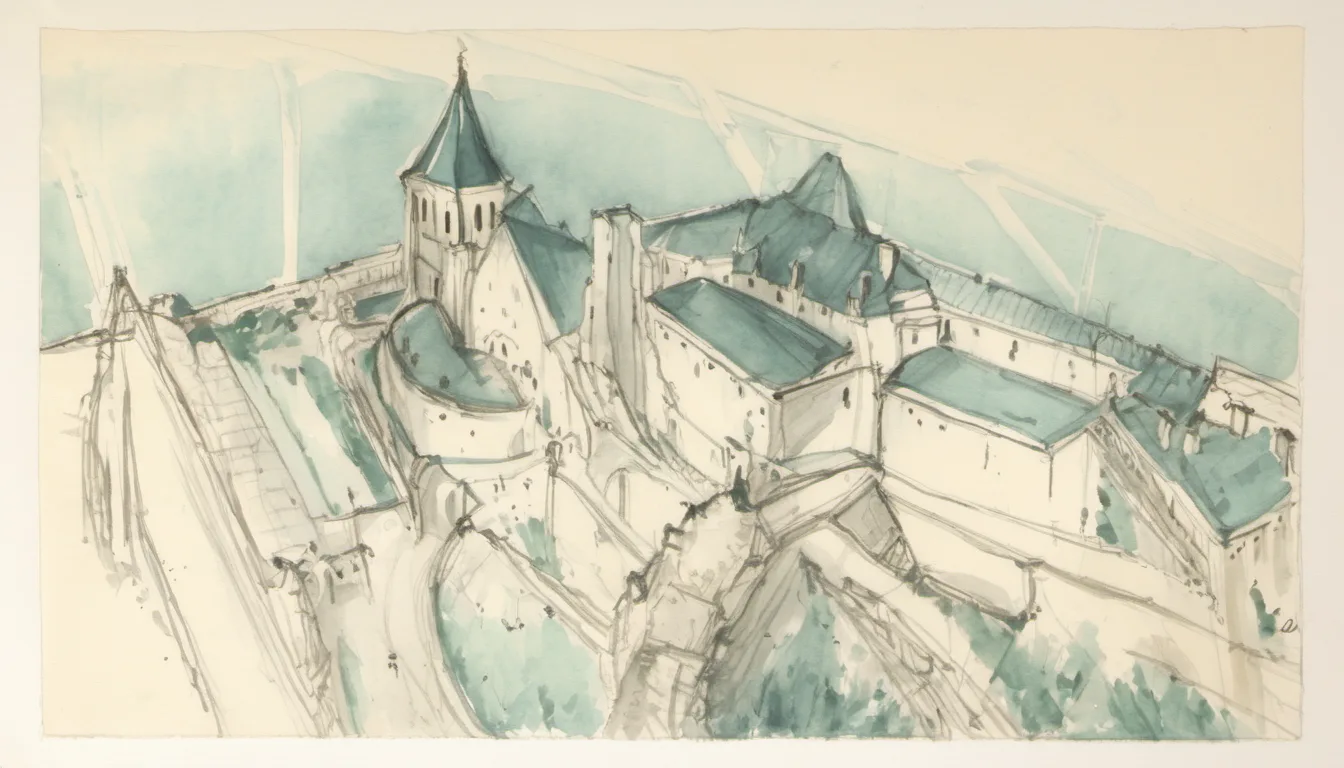
Her name was Giovanna da Piacenza, abbess of this Benedictine convent of San Paolo from 1507 until 1524. She came from a noble Piacenza family, ran the convent's considerable wealth with a free hand, and had little patience for the tightening rules of monastic enclosure being pushed across Italy at the time. This chamber was her private dining room, a space for her own table and her own guests, away from the choir and the cloister. She had already had an adjoining room frescoed, in 1514, by the local painter Alessandro Araldi. For this one, she wanted someone better.
That someone was Antonio Allegri, better known by the name of his hometown: Correggio. He had just arrived in Parma, already near thirty, with no major commission to his name. Hiring him was a gamble, and it is the gamble that made his career. The vault he painted here, between February and September of 1519, became the training ground for the illusionistic ceiling technique he later scaled up hugely for the dome of Parma Cathedral and the church of San Giovanni Evangelista, work that would go on to shape Baroque ceiling painting a century later, from Rome to Rubens's Antwerp.
What he painted here has almost nothing to do with religion. Above the fireplace hood, Diana, Roman goddess of the hunt and of chastity, rides a chariot drawn by stags, her tunic hitched for the chase. Below the sixteen ribs of the vault, grisaille lunettes painted to imitate carved marble show mythological figures in monochrome. Giovanna's own coat of arms, three gilded crescent moons knotted with pink ribbon, sits among them, the same crescent that crowns Diana's head. Whether that was Giovanna quietly casting herself as the goddess is a question historians still argue over; the most famous study of the room, by the art historian Erwin Panofsky in 1961, reads the whole scheme as an allegory of virtue, and not everyone agrees with him even now.
Along the crest below the coat of arms runs a Latin phrase, an old Pythagorean maxim quoted by Horace centuries earlier: ignem gladio ne fodias, do not stir the fire with a sword. Why an abbess chose a warning against provocation for her own dining room, nobody has convincingly explained. It sits there, half warning, half riddle, exactly the kind of detail that makes scholars argue at conferences and gives guidebooks nothing tidy to say.
The Church was less charmed than modern visitors tend to be. Not a single saint, crucifix or biblical scene appears anywhere in the room, remarkable for any convent space, let alone the private chamber of its abbess. In 1524, a stricter rule of clausura was imposed on the convent, closing it to outside visitors, and Giovanna died not long after, in her mid-forties. The room, and its very unreligious ceiling, effectively disappeared behind convent walls for roughly two and a half centuries. It resurfaced only in 1774, when the German Neoclassical painter Anton Raphael Mengs secured special access and pronounced it Correggio's miracle, the phrase that reintroduced the room to art history.
Stand under it now and it is easy to forget how close it came to being lost for good, sealed by piety, saved by a stubborn abbess's taste and a foreign painter's curiosity two and a half centuries later. Look up once more before leaving. The sky was never really there. That is rather the point.