Rundetaarn
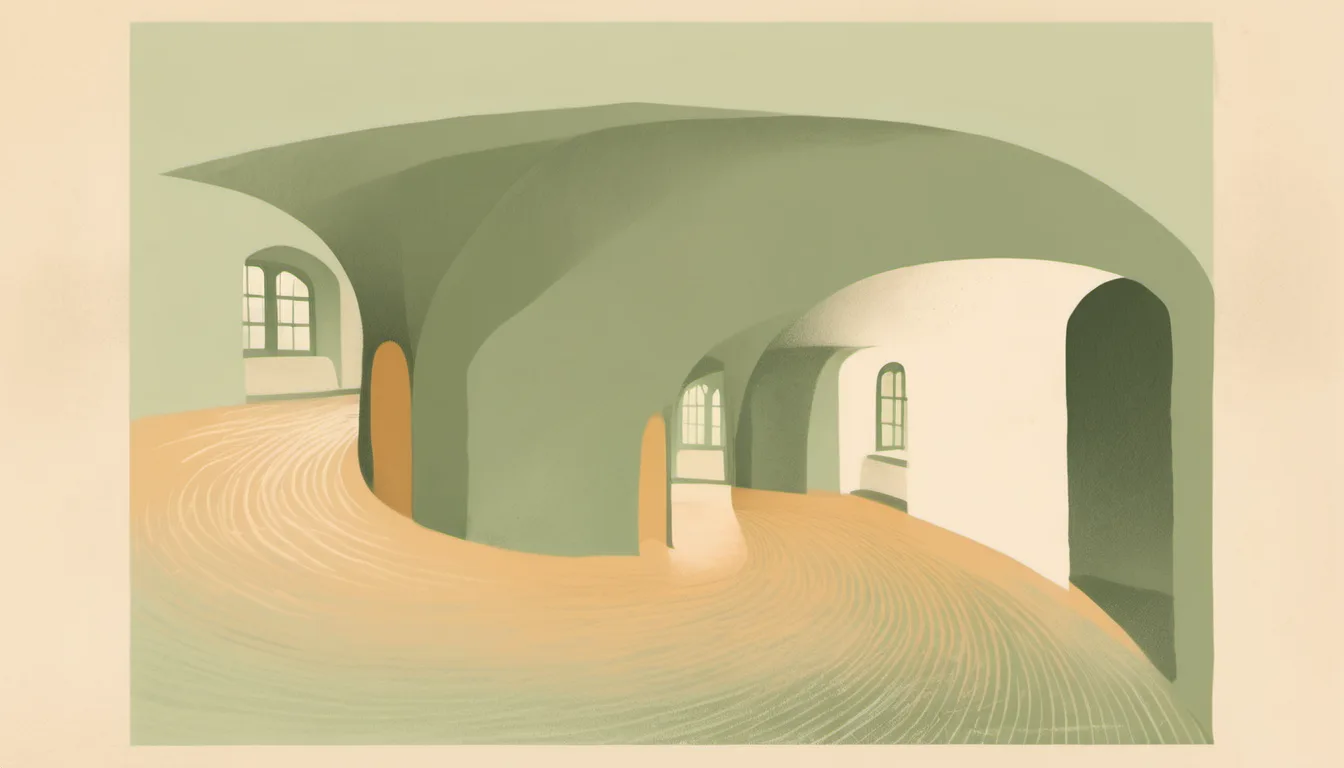
The Round Tower is a 17th-century cylindrical tower in Copenhagen, built as an astronomical observatory by Christian IV. Instead of stairs, a 7.5-turn spiral ramp runs 210 metres from ground to top. This equestrian staircase allowed horses to carry books to the library and delicate instruments to the observatory. The tower is part of the Trinitatis Complex, which also includes Trinitatis Church and an academic library – the first facilities of the Copenhagen University Library, founded in 1482.
The tower was suggested by Christian Longomontanus, the king's astronomer, after Tycho Brahe's observatory was demolished. Construction began in 1637, with bricks imported from the Netherlands. The tower was completed in 1642, though the church and library followed in 1657. The complex suffered damage in the Great Fire of 1728 but was rebuilt.
The architecture is restrained Dutch Baroque, with alternating red and yellow bricks – the colours of the Oldenburgs. The spiral ramp turns 7.5 times around a hollow masonry core, climbing 3.74 metres per turn. Along the outer wall, the corridor has a length of 210 metres. Notable ascents include Peter the Great on horseback in 1716, and bicycle races in later centuries.
By the early 19th century, the tower became outdated for astronomy due to light pollution and street vibrations. A new observatory was built in 1861. Today, the Round Tower remains open to visitors, offering a view over Copenhagen from its platform 34.8 metres above ground.
The Round Tower is a 17th-century cylindrical tower in Copenhagen, built as an astronomical observatory by Christian IV. Its most unusual feature is a 7.5-turn spiral ramp that runs 210 metres from ground to top, designed for horses and carriages. The tower is part of the Trinitatis Complex, which also includes Trinitatis Church and an academic library – the first facilities of the Copenhagen University Library, founded in 1482.
Astronomy grew in importance in 17th-century Europe as nations competed for colonies and needed accurate navigation. National observatories were established, the first in Leiden in 1632. Only five years later, the Round Tower Observatory followed, first referred to as STELLÆBURGI REGII HAUNIENSIS. Christian Longomontanus, the king's astronomer, suggested building a new tower after Tycho Brahe's Stjerneborg was demolished.
Longomontanus initially proposed building on Solbjerget hill, but plans for a new students' church and university library led to merging the three buildings into one complex. Christian IV bought the land in 1622, near Regensen dormitories and the university. The design is generally accepted to be by Hans van Steenwinckel the Younger, though no clear proof exists. He died in 1639, and Leonhard Blasius took over, dying four years later.
Construction began with foundation stones brought from the city ramparts and Roskilde. High-quality bricks were ordered from the Netherlands, as local manufacturers could not meet the standards. A contract was signed in 1637 for delivery of bricks in multiple shiploads. The site had to be cleared of half-timbered houses – 200 men demolished them in April 1637. The foundation stone was laid on 7 July 1637. Funding shortages caused delays; churches in Denmark and Norway contributed earnings. The tower was completed in 1642, the church and library in 1657.
The architecture is restrained Dutch Baroque, with alternating red and yellow bricks – the colours of the Oldenburgs. The bricks are a hard-burned, slender type known as muffer or mopper. Unlike Steenwinckel's other ornate buildings, the Trinitatis Complex is focused and restrained, reflecting the new Dutch Classicism style influenced by Palladio and Vignola. The spiral ramp turns 7.5 times around a hollow masonry core, climbing 3.74 metres per turn. It provides access to the Library Hall and the Bell-Ringer's Loft.
The tower served as an observatory for about two centuries. The first director was Christian Longomontanus. In the Great Fire of 1728, the complex was severely damaged but rebuilt. The first inhabitants were likely astronomers; the earliest recorded resident was observer Peder Horrebow in 1753. But by the early 19th century, the tower became outdated. Instruments grew larger, light pollution from the city increased, and traffic vibrations made observations inaccurate. A new observatory, Østervold, was inaugurated in 1861.
The tower saw many notable ascents. In 1716, Czar Peter the Great rode a horse up the spiral ramp, and his wife Catherine I followed in a carriage. In 1902, a Beaufort car was the first motorised vehicle to ascend. Bicycle races were held: an 1888 race possibly during the Nordic exhibition, a 1911 race down the tower, and later competitions in 1971 (Ole Ritter in 55.3 seconds) and 1993 (Henrik Djernis in 50.05 seconds). In 1989, Thomas Olsen went up and down on a unicycle in a world-record 1 minute 48.7 seconds.
Today, the Round Tower stands as a monument to 17th-century science and architecture. It remains a distinctive feature of Copenhagen's skyline, offering visitors a chance to walk the same spiral ramp that once carried horses, books, and astronomers.