Idrija Mercury Mine
A bucket maker working at a spring in 1490 noticed something that had no business being there: a bead of liquid metal, quick and silver, pooling in the wood grain. That's the story Idrija tells about its own founding, and it's worth holding loosely — other records put the discovery in 1492 or 1497. What isn't in dispute is what the find set in motion. It was mercury, and Idrija turned out to be one of only a few places on earth where the metal occurs both in its pure, liquid state and locked inside cinnabar ore. A market town became a mine, and the mine became indispensable.
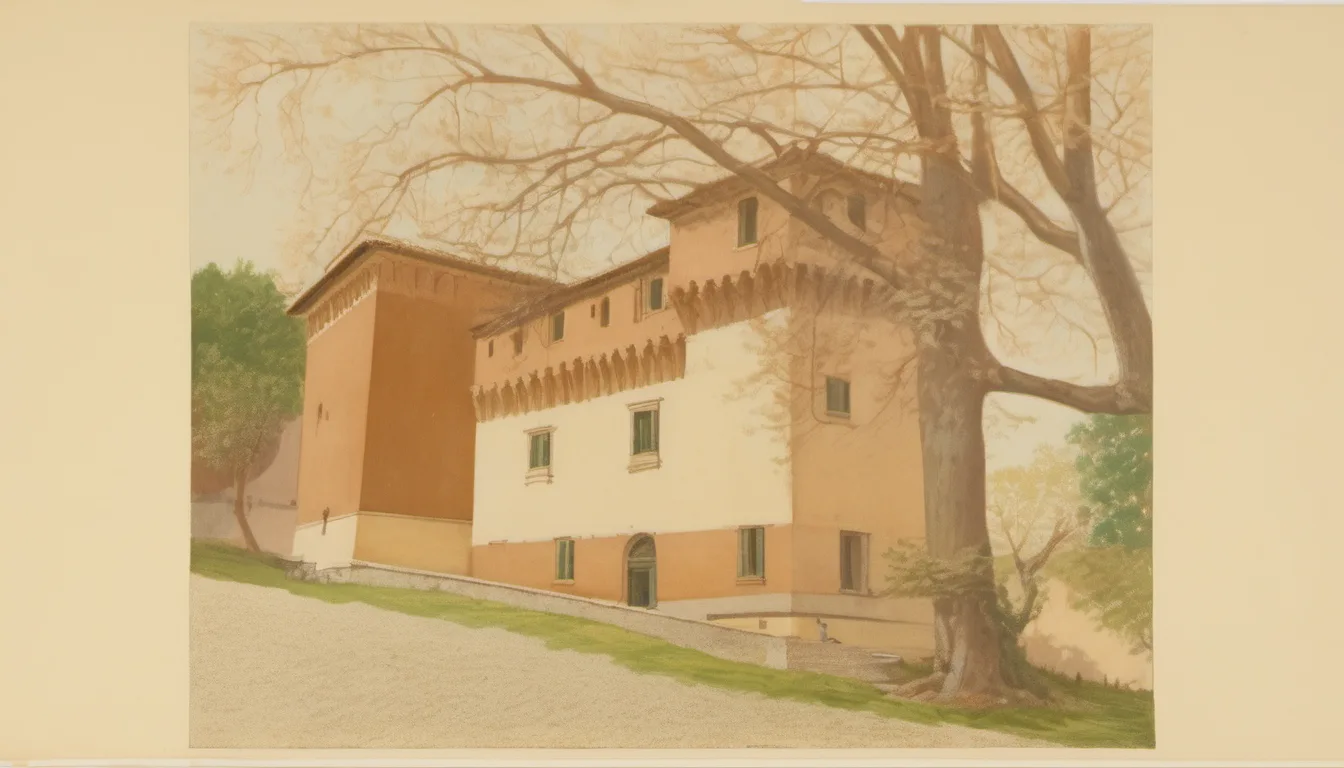
For centuries Idrija belonged first to the Patriarchate of Aquileia and the Counts of Gorizia, then, from 1500, to the House of Habsburg — save for one strange year, 1508, under Venetian rule. In March 1511 an earthquake struck hard enough to be remembered by date alone. The mine's owners answered by building Gewerkenegg Castle between 1522 and 1533, a fortified seat for an enterprise too valuable to leave exposed. By 1580 the crown had taken the works directly into its own hands.
That mattered well beyond Slovenia. When the Spanish Empire's own mercury sources, Almadén in Spain and Huancavelica in Peru, faltered, it was Idrija's ore that kept the silver mines of the Americas running, since refining silver depended on mercury. Two mines, an ocean and a continent apart, propping up the same imperial ledger. It's a fitting irony that Idrija and Almadén now share a single UNESCO World Heritage listing, granted in 2012 — former rivals in a trade the world has moved past, filed together in the record instead.
You can still go underground. Anthony's Shaft, the old subterranean entrance, now leads tours through the mine's upper levels, where life-sized figures stand in for generations of miners at their work. The lower levels tell a different story: they drop to nearly 400 meters, they haven't been worked in years, and they're currently being cleaned up rather than opened to visitors. Above ground, the mineral idrialite, identified here in 1832, carries the town's name into mineralogy textbooks — a small, permanent footnote.
Idrija's other export was gentler. Lace-making, recorded here as far back as 1696, became a serious trade by the late 1800s: a shop opened in 1860, a school followed in 1876 to train qualified lacemakers, and by 1905 an export cooperative was shipping Idrija lace to Europe, America, and Egypt. The town itself changed hands more than most — Austrian, briefly Venetian, Italian after 1920, occupied, bombed in 1945, then Yugoslav — before joining an independent Slovenia in 1991. In 2011 it was named Alpine Town of the Year. The mine gave Idrija its purpose; the lace gave it its grace.
A bucket maker knelt at a spring in 1490 and found something that had no business being there: a bead of liquid metal, quick and silver, pooling in the grain of the wood. That's the story Idrija tells about its own founding, and it's best held loosely — other records place the discovery in 1492, others in 1497. What's certain is what the find set in motion. It was mercury, and the town built around it would spend the next five centuries as one of the most important mercury sources on the planet.
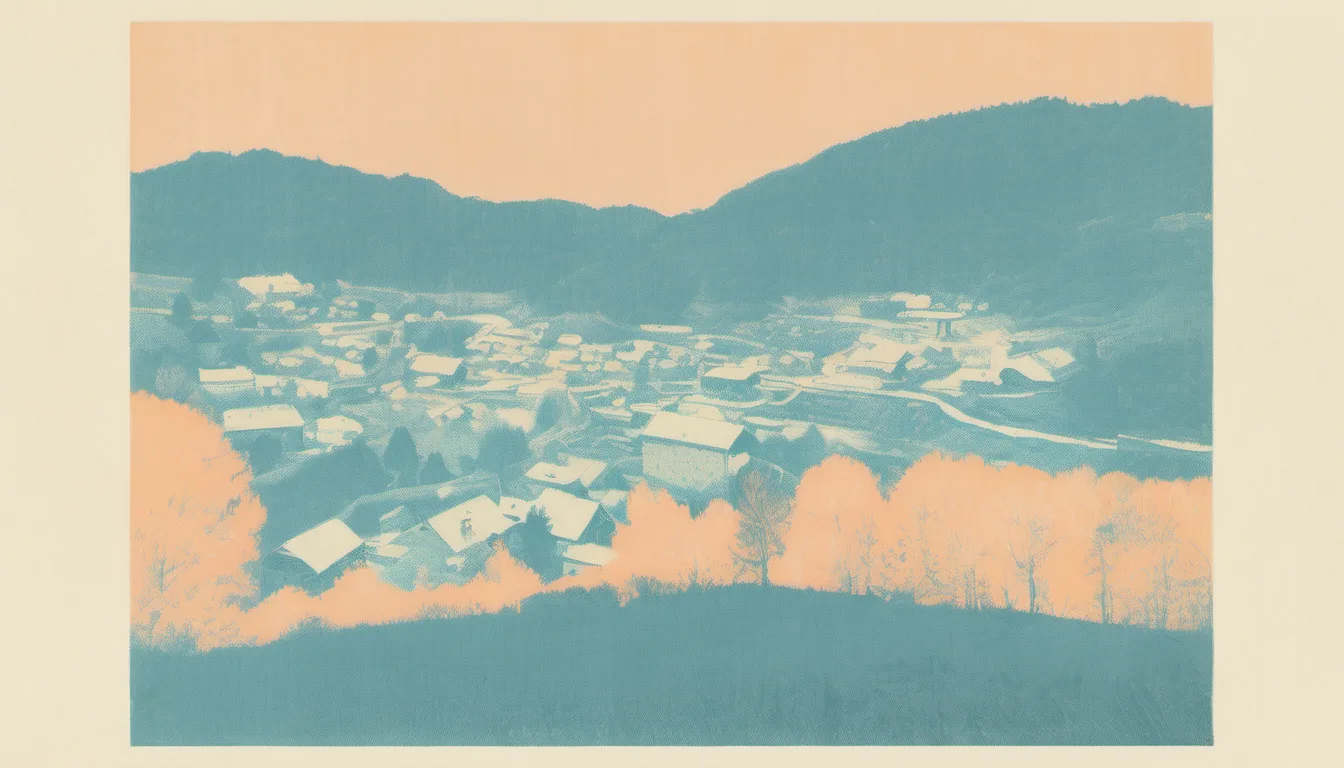
Idrija is one of only a handful of places where the metal occurs in two forms at once: as native, liquid mercury, and locked inside cinnabar ore. The town sits in the Idrija Basin, ringed by the Idrija Hills, where the Idrijca River takes in Nikova Creek — water that would later turn the wheels of the Marof hydroelectric plant downstream. It's a modest, enclosed geography for a place that once supplied much of the world's silver trade with the one ingredient it couldn't do without.
Before it was Habsburg territory, Idrija belonged to the Patriarchate of Aquileia and the Counts of Gorizia, administered as part of the Governorate of Tolmin, which broke free in the 15th century. From 1500 the House of Habsburg held it, with one interruption: a single year, 1508, under the Republic of Venice. Governance, like the ore beneath it, changed hands more than the town would have liked.
In March 1511, an earthquake struck hard enough to be remembered by date alone. The mine's owners answered not with retreat but with permanence: Gewerkenegg Castle, built between 1522 and 1533, a fortified seat for an enterprise too valuable to leave exposed. By 1580 the government had taken the mine directly into its own hands, and by the 18th century Idrija had grown enough to earn the rights of a market town.
The stakes were imperial. When the Spanish Empire's own mercury supplies — Almadén in Spain, Huancavelica in Peru — fell short, it was Idrija's ore that kept the silver mines of the Americas in production, mercury being essential to refining the silver itself. From 1783 into the 1910s the town sat within the Inner Carniola Kreis, its mine still the reason anyone drew the administrative lines that way. In 1832, a new mineral was identified here and named idrialite — a small, permanent credit in the geological record.
Lace tells a quieter version of the same story: skilled, exacting, exportable work. The earliest written record of lace-making in Idrija dates to 1696, but it was the late 19th century that turned it into trade. Karolina Lapajne opened the town's first lace shop in 1860, Franc Lapajne entered the market in 1875 and pushed it across Europe and America, and in 1876 Ivanka Ferjančič founded the Idrija Lace School to train the makers demand required. By 1905, the Idrija Lace Cooperative was shipping the work to Europe, America, and Egypt — until the First World War severed the trade routes that had carried it.
The 20th century moved the town between flags. Idrija passed to Italy under the 1920 Treaty of Rapallo, then to Nazi Germany in September 1943, and was heavily bombed by the South African Air Force in 1945. After the war it became part of the Socialist Republic of Slovenia within Yugoslavia, and in June 1991 it entered an independent Slovenia — a market town that had, by then, survived every regime with its mine and its lace pillows intact.
Recognition followed, in stages. The Slovenian Intellectual Property Office granted Idrija lace a protected geographical indication in 2000; the Idrija Lacemakers Association formed in 2003 to safeguard the craft; by 2013 it sat on the national list of intangible cultural heritage, and in 2016 Slovenia named it a living masterpiece of national importance, ahead of its 2018 inscription on UNESCO's Representative List of the Intangible Cultural Heritage of Humanity. The mine had already made its own UNESCO case in 2012, listed jointly with Spain's Almadén — the two great historic sources of the world's mercury, filed side by side. In 2011, Idrija was named Alpine Town of the Year.
You can still descend. Anthony's Shaft, the historic subterranean entrance, now leads tours through the mine's upper levels, where life-sized figures stand in for miners across the centuries — less museum diorama than a walk through the job itself. The lower levels are a different matter: they reach almost 400 meters down, they're no longer worked, and rather than being opened for visitors they're currently being cleaned up, the mine's long afterlife still very much in progress.
Above ground, the parish church of Saint Joseph the Worker anchors the town, part of the Diocese of Koper, alongside three smaller churches dedicated to the Holy Trinity, Saint Anthony of Padua, and Our Lady of Sorrows. Idrija's roll of notable residents is stranger than a mining town's ought to be: it includes the Baroness Eva Kraus, once a lover of Napoleon; the chess grandmaster Vasja Pirc; and, briefly, the Italian filmmaker and poet Pier Paolo Pasolini.
The name traveled further than the town ever did. New Idria, a mercury-mining ghost town in California, was named after this one during the 19th-century Gold Rush — a Slovenian market town's word for itself, still marked on a map on the far side of the world.