Palazzo Apostolico di Loreto
Loreto sits on Monte Prodo, 127 metres above the Musone river, 22 kilometres south of Ancona. From its piazza the view runs from the Apennines to the Adriatic – a landscape of olive groves and distant blue. The town is a single, quiet statement around a single, improbable relic.
The Basilica della Santa Casa encases the home where, tradition holds, the Virgin Mary was born, received the Annunciation, and lived until her marriage to Joseph. The structure is said to have been lifted by angels in May 1291 from Nazareth, set down first in Tersatto (near present-day Rijeka), then moved across the Adriatic to the Marche, stopping at Posatora, then Banderuola, and finally on a laurel-covered hill – Lauretum, Loreto – in December 1294. The town built itself around this stone.
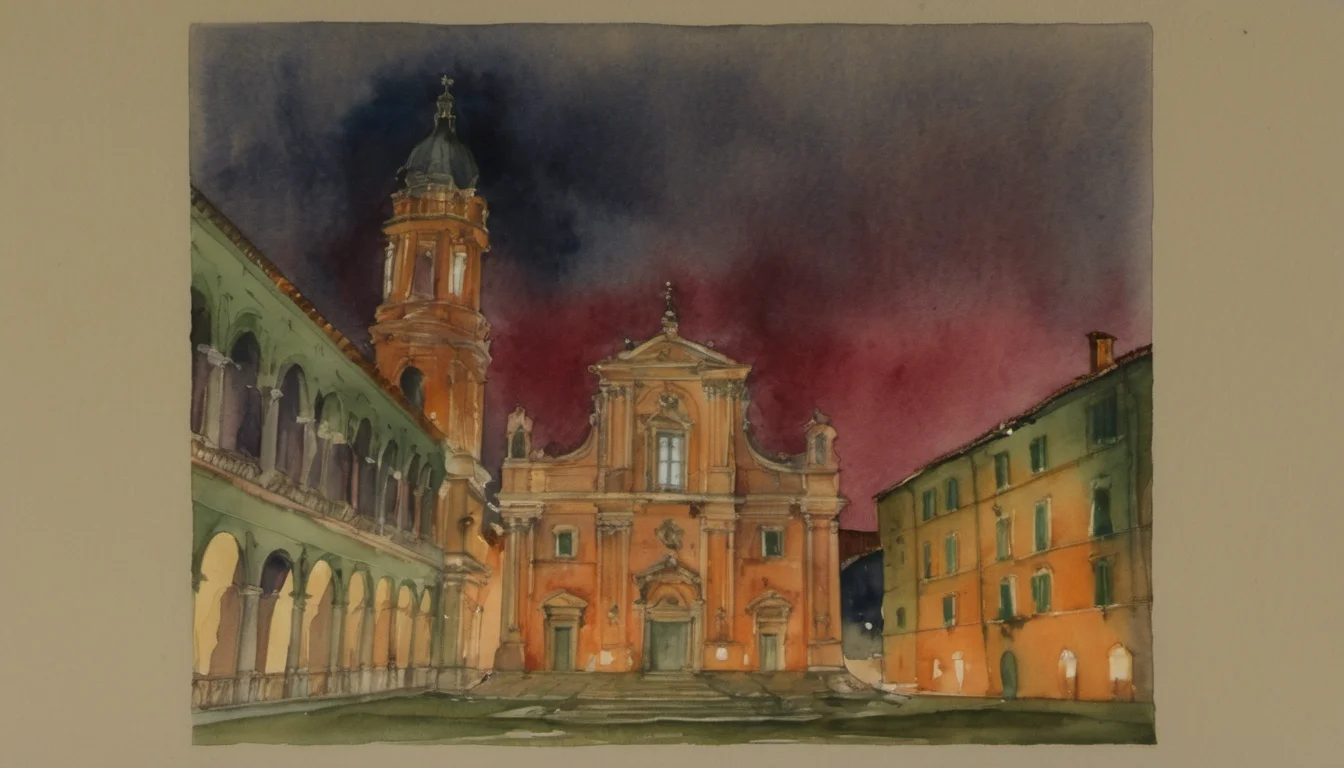
The piazza’s other sides hold the Jesuit college and the Palazzo Comunale, designed by Bramante and once the Palazzo Apostolico. Inside, an art gallery holds works by Lorenzo Lotto, Vouet and Annibale Carracci, along with a collection of maiolica. The walls that ring the town were begun in 1518 by Antonio da Sangallo the Younger and reinforced in the 17th century – a practical defence for a place that draws faith and curiosity alike.
The legend is not without its counterpoints. Geologist Antonio Veggiani argued that all the stone types in the Santa Casa can be found in the Umbria-Marche Apennines. But the graffiti of Eastern saints and the house’s dimensions, which match a void in Nazareth, keep the story alive. On the night of 9 December, locals still light fires – the focaracci – to ‘light the way’ for the returning house, and the feast of the Madonna di Loreto on 10 December doubles as the regional day of the Marche.
Loreto is a hill town that makes a single monumental statement. It rises on Monte Prodo, 127 metres above the Musone river, 22 kilometres south-southeast of Ancona. From its central piazza the eye travels from the Apennines to the Adriatic – a broad, quiet sweep of olive groves and sea light. The town’s reason for being is contained within the Basilica della Santa Casa: a small stone house said to be the Nazareth home of the Virgin Mary.
According to tradition, the house was carried by angels in May 1291 from Nazareth, then under Mameluke rule, to Tersatto near Fiume (now Rijeka, Croatia). It remained there three years and seven months. Then the angels lifted it again, crossing the Adriatic and setting it down near Ancona at a place called Posatora – from posa-et-ora, ‘stop and pray’. It stayed nine months. Detractors of Ancona whispered that the cosmopolitan port city held too many Jews and unbelievers, so the angels moved the house again, first to Banderuola near Porto Recanati (eight months), then to Monte Prodo on the land of the brothers Stefano and Simone Rinaldi. When those brothers began profiting from pilgrims, the angels shifted the house one last time, placing it on a public road between Recanati and its port, on a hill covered in laurel – Lauretum, Loreto.
That final landing, at the end of 1296, fixed the town’s destiny. The relic was enclosed in a shrine, then a basilica. The piazza that grew around it now holds three other structures: the Jesuit college, the Palazzo Comunale (designed by Bramante, originally the Palazzo Apostolico), and the massive defensive walls begun by Antonio da Sangallo the Younger in 1518 and strengthened in the 1600s. Inside the Palazzo Comunale, an art gallery preserves paintings by Lorenzo Lotto, Vouet and Annibale Carracci, and a fine collection of maiolica.
The scientific story is more contested. Multiple analyses of the house’s architecture and construction materials have suggested an origin in the Levant: stone types not typical of Italy, graffiti of Eastern saints, and dimensions that correspond to a cavity left in Nazareth. But the geologist Antonio Veggiani argued that every lithological type found in the Santa Casa’s walls also occurs in the Umbria-Marche Apennines, leaving the question open. Scholars do agree on the timeline: the structure left Nazareth in 1291, stayed three years in Tersatto, and arrived in Loreto in December 1294.
An alternative hypothesis lays the house’s movement not at the hands of angels but of the Angeli Comneno family, a branch of the imperial dynasty of Constantinople. This theory, too, remains under discussion, largely because of the lack of a single, airtight explanation.
The legend endures in local practice. On the night of 9 December, the Marche and Umbria are dotted with bonfires – the focaracci or fogarò della Venuta – lit to ‘brighten the road for the Holy House’. The feast of the Madonna di Loreto falls on 10 December, which is also the Day of the Marche. And on 12 September 1920, Pope Benedict XV proclaimed the Madonna di Loreto Patroness of Aviators, a fitting honour for a house that arrived by air.
To walk Loreto’s piazza is to stand at the centre of a story that refuses to settle into fact or fable. The walls, the works of art, the view over the olive groves – all of it frames a question that has drawn visitors for seven centuries. You come for the mystery, stay for the calm, and leave wondering whether angels still carry stones.