Kloster Lorsch (Torhalle)
Only the Torhalle remains at Lorsch – a 9th-century gatehouse, the most intact relic of a once-mighty Carolingian abbey. Founded in 764 on a small island in the Weschnitz, the monastery was soon moved to an Ice Age dune after a dispute resolved by Charlemagne. Today its ruins are a UNESCO World Heritage Site.
In its golden age, Lorsch was a centre of culture and politics. Its library and scriptorium produced the Codex Aureus and the Lorsch Pharmacopoeia. Kings were buried in its burial chapel. The abbey amassed lands from the Alps to the North Sea and became a sovereign principality, until a fire in 1090 led to decline.
The Reformation and the Thirty Years' War sealed its fate. The library was removed to Heidelberg, then to the Vatican. Spanish troops pillaged the buildings in 1621; later, the wars of Louis XIV left them as a quarry for the region. Now the gatehouse stands alone, with part of the church and sections of wall.
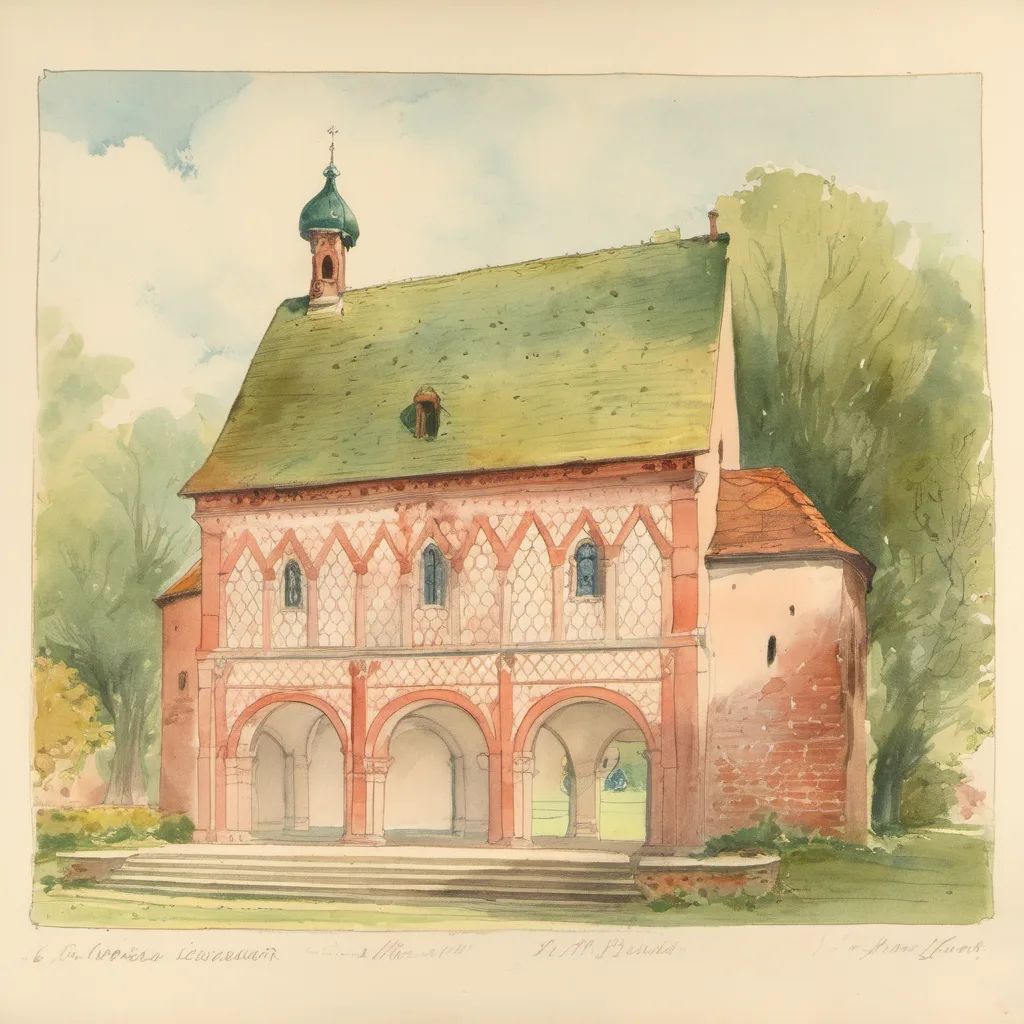
Allow a quiet half-hour to walk the grounds. The Torhalle, with its symmetrical arches, is the highlight – a rare survivor of Carolingian ambition and craftsmanship. Stand before it and imagine the vanished monastery.
The Torhalle at Lorsch is the sole standing remnant of a once-sprawling imperial abbey. A 9th-century gatehouse, it is among Germany's most important pre-Romanesque Carolingian structures. The abbey itself was founded in 764 by Count Cancor and his mother Williswinda on their estate, Laurissa. They entrusted its government to Chrodegang, Archbishop of Metz, who became its first abbot.
To make the abbey a pilgrimage site, Chrodegang obtained the body of Saint Nazarius from Pope Paul I. The relics arrived on 11 July 765 and were deposited in the basilica. A dispute about property rights soon forced the monastery to move a few hundred metres to an Ice Age dune. Charlemagne himself ruled in favour of the abbot in 772, and the abbey became a royal foundation. In 774, the main church was consecrated in Charlemagne's presence.
Many miracles were said to be wrought through Saint Nazarius, drawing pilgrims from across Europe. Over the 9th century, the library and scriptorium made Lorsch a cultural centre. Its four surviving 9th-century catalogues show a rich collection of Classical and Christian texts. The Codex Aureus of Lorsch, a lavishly illuminated gospel book, is now divided between the Vatican and Alba Iulia. The Lorsch Pharmacopoeia, a famous medical book, was written here around 800.
The abbey also became a royal burial ground. Ludwig der Deutsche (Louis the German) was buried here in 876, followed by his son and grandson. The burial chapel later received Kunigunde, wife of Konrad I. Throughout the 11th century, Lorsch flourished, gaining privileges and estates from the Alps to the North Sea. It was declared a reichsabtei, a sovereign principality subject directly to the emperor. Pope Leo IX consecrated an altar in the burial chapel in 1052.
A fire ravaged the abbey in 1090, and extensive rebuilding followed. But after 46 Benedictine abbots, the last abbot was deposed in 1226. The abbey passed to the Archbishop of Mainz, ending its political independence. Cistercians occupied it from 1232 to 1248, then Premonstratensian canons took charge. In 1461, the abbey was mortgaged to the Electoral Palatinate.
The Reformation brought dissolution. In 1556, Elector Otto Heinrich removed the library to Heidelberg, forming the Bibliotheca Palatina, just before Lorsch was dissolved in 1557/1563. The religious community was pensioned off. In 1623, after the capture of Heidelberg, the library – 196 cases of manuscripts – was presented to Pope Gregory XV and incorporated into the Vatican Library. A digitization project launched in 2010 has reunited many manuscripts online.
During the Thirty Years' War, Spanish troops pillaged the abbey in 1621, pulling down most buildings. The Archbishopric of Mainz regained possession in 1623, but the abbey remained a ruin, serving as a source of building materials. The wars of Louis XIV brought further destruction. What remained was the Torhalle, part of the abbey church, segments of the wall, and other adapted structures.
Today, the Torhalle stands as a calm, vivid testament to Carolingian ambition. Its symmetrical arches and stonework are best viewed on foot. The site is quiet, surrounded by grass and the faint outline of the former church. It is a place to pause and reflect on the power of early medieval Europe – a singular survivor of a vanished world.