Sant'Apollinare in Classe
The sea left this basilica behind by nine kilometres, but its gold mosaics never noticed. Classe was once Ravenna's naval harbor, home port of the Roman fleet that gave the town its name, until silt pushed the shoreline east and stranded the basilica inland. Work began in the early 6th century, ordered by Bishop Ursicinus and funded by the Roman banker Iulianus Argentarius. Bishop Maximian consecrated the finished church on 9 May 549, dedicating it to Saint Apollinaris, Ravenna and Classe's first bishop, the same years that saw the Basilica of San Vitale rise across town.
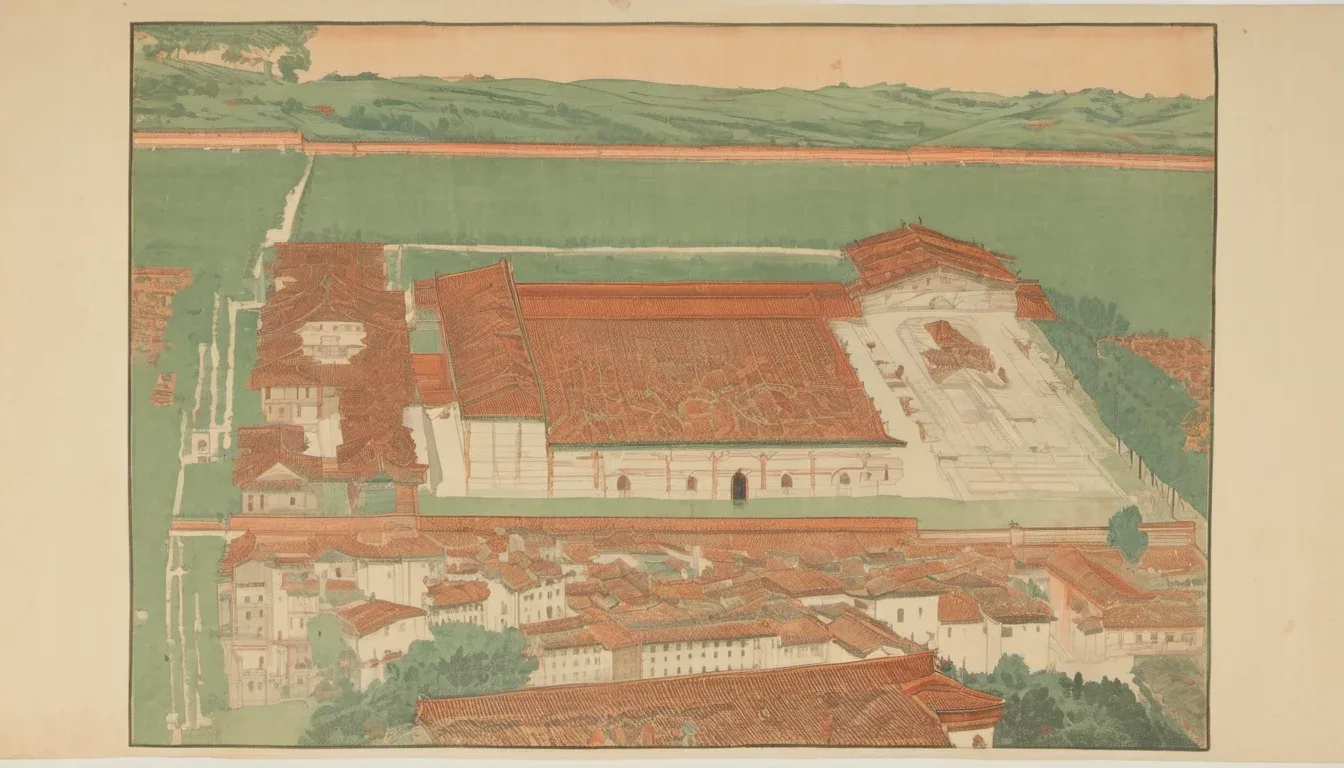
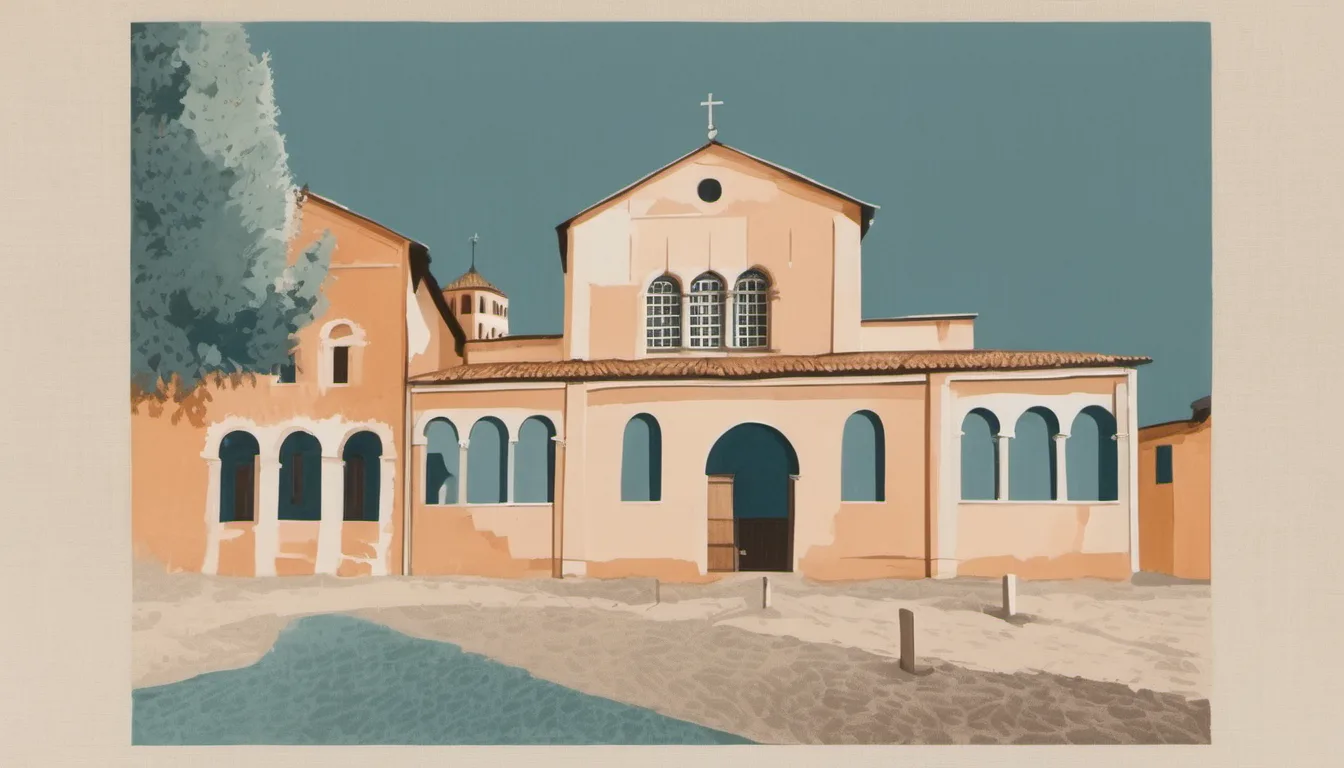
From outside, the basilica keeps its distance. The facade is plain: two simple brick uprights and a single mullioned window with three openings, austere by design. Look right and you're looking at later additions, a narthex and an attached building tacked on well after the original build. The round bell tower is a 9th-century addition too, its tiers pierced with mullioned windows, though it's dwarfed by nothing else here: added in the late 10th century, it became Ravenna's tallest campanile, visible over the flat Romagna countryside long before the church itself comes into view.
Inside, the plan is textbook basilica: a central nave flanked by two side aisles, ending in a polygonal apse with a chapel-apse on either side. Twenty-four columns of Greek marble carry the nave, their acanthus-leaf capitals carved as though caught mid-gust, unlike most such carving, where the leaves sit still. An ancient altar at the nave's center marks, by tradition, the site of Saint Apollinaris's martyrdom. The side walls are bare plaster now, but were certainly once sheathed in mosaic; the most plausible account has Venetian raiders stripping them in 1449, sparing only the apse and the triumphal arch.
That apse is why people come. In its upper half, a jeweled cross sits inside a starry disc, a hand reaching from the clouds above it, the Hand of God, flanked by Elijah and Moses, with three lambs below recalling Peter, James and John at the Transfiguration. Below, a green valley opens out: rocks, birds, scrub, and at its center Saint Apollinaris, arms raised in prayer, surrounded by twelve white lambs standing in for his flock. Insisting on Christ's divine and human nature answered Arianism directly, and placing Apollinaris among the apostles backed Maximian's own claim to be Ravenna's first bishop.
The basilica has been picked over since. In the 15th century, Sigismondo Malatesta stripped the marble wall-facing from the side aisles to build his Tempio Malatestiano in Rimini. What's left lines the walls with sarcophagi spanning the 5th to 8th centuries, a record of style drifting from Roman figurative relief toward Byzantine abstraction. In 1996, UNESCO listed the basilica with seven other Ravenna monuments, citing the purity of its design and the sheer excess of what decoration survived.
The sea left this basilica behind by nine kilometres, but its gold mosaics never noticed. Classe was Ravenna's harbor once, the ancient home port of the Roman fleet that gave the settlement its name, sitting right on the shore. Centuries of silt did the rest: the coastline crept east until the town, and eventually the basilica within it, ended up stranded well inland.
The basilica began as a martyrial sanctuary, raised in honor of Apollinaris, the first bishop of Ravenna and the man credited with founding its earliest Christian community, a martyr whose remains it was built to house. Bishop Ursicinus commissioned the project shortly after the death of King Theodoric, and the Roman banker Iulianus Argentarius financed the construction, the same patron behind several of Ravenna's other great churches. Bishop Maximian, the city's first archbishop, consecrated the finished basilica on 9 May 549, the same years that saw the completion of the Basilica of San Vitale across town, its Byzantine contemporary.
It was built beside an existing Christian cemetery, and quite possibly on top of an older pagan one: some of the ancient tombstones reused in its walls hint at ground that had already been used for burial long before Christianity arrived in Classe. That's inference more than record, but the reused stone is real enough.
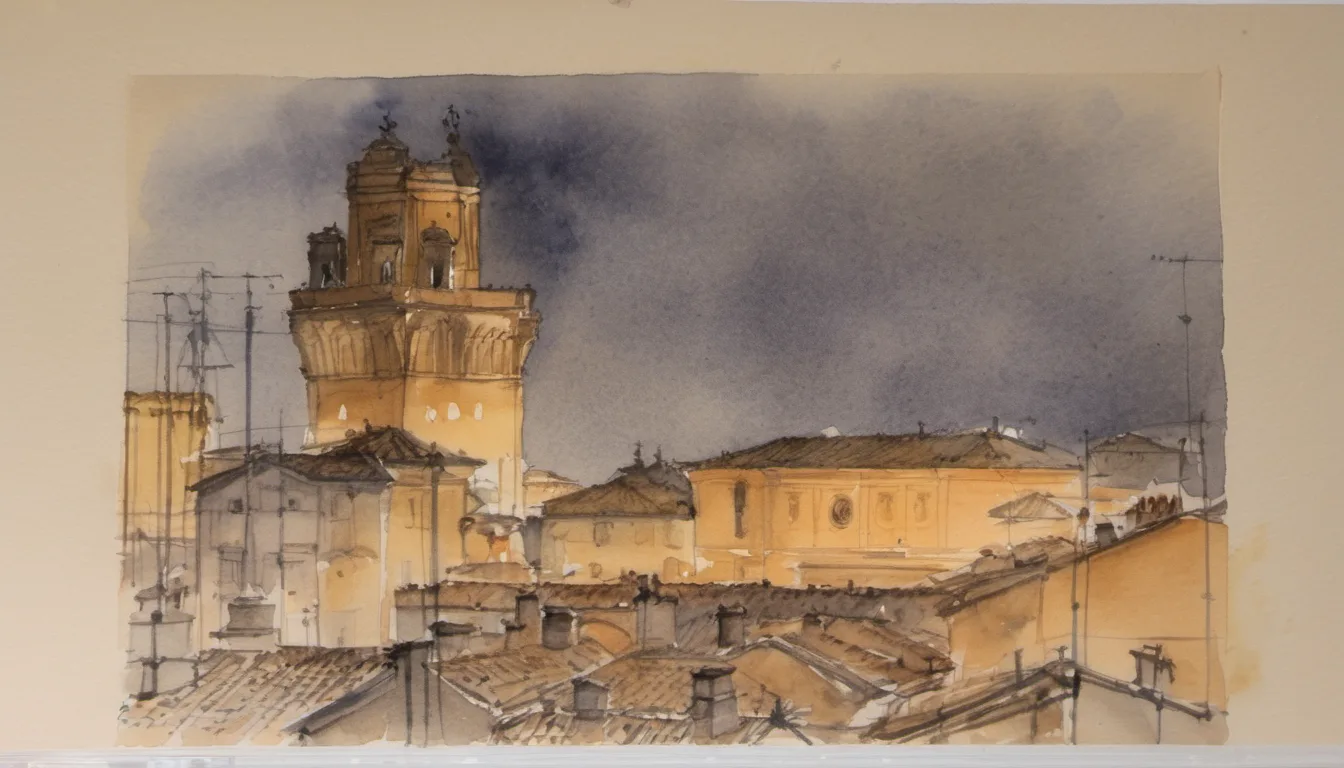
The exterior gives little away. The facade is plain, two simple brick uprights, one three-part mullioned window, nothing more. The narthex and the building attached to its right came later, as did the round 9th-century bell tower, its stages pierced by mullioned windows. Rising above all of it is a campanile added in the late 10th century that became, by this account, the tallest in Ravenna, visible for a long way across flat Romagna farmland before the basilica itself appears.
Inside, the design follows disciplined basilica logic: a central nave, two side aisles, a polygonal apse flanked by two smaller chapel-apses. Twenty-four columns of Greek marble march down the nave, each capital carved with acanthus leaves that lean and twist as if caught by wind, an unusual treatment; most such capitals keep their leaves still. At the center of the nave, an ancient altar marks, according to tradition, the spot of Saint Apollinaris's martyrdom, though that association rests on legend rather than anything the building itself can confirm. Faded frescoes of Ravenna's archbishops line the nave too, but they're much later work, painted in the 18th century.
The side walls today are bare plaster, and that's a loss: they were certainly once covered in mosaic, to judge by everything else in the church. The most likely account blames Venetian raiders, thought to have stripped them in 1449, sparing, whether by choice or oversight, the apse and the triumphal arch, which remain the building's two genuinely great survivals.
The arch is dense with symbol. A medallion of Christ sits at its peak, flanked by the four Evangelists in animal form, eagle for John, winged man for Matthew, lion for Mark, calf for Luke, floating in a painted sea of clouds. Lower down, jeweled walls part to release twelve lambs, standing for the twelve apostles. At the arch's outer edges, two palm trees, justice, in biblical symbolism, frame the archangels Michael and Gabriel, alongside a bust of St. Matthew and one other saint whose identity has been lost.
The apse mosaic, sixth-century and mostly original, works in two registers. Above, a jeweled cross floats inside a starry disc, a hand extending from the clouds toward it, the Hand of God, with Elijah and Moses standing to either side and three lambs below invoking Peter, James and John at the Transfiguration on Mount Tabor. Below that, the register drops into a green valley of rock, scrub and birds, where Saint Apollinaris stands praying at the center, arms raised, twelve white lambs arrayed around him as his flock. Flanking the windows are four bishops credited with founding Ravenna's principal basilicas, Urscinus, Ursus, Severus and Ecclesius, each holding a book. Two seventh-century panels sit at the apse's sides: one, heavily restored, shows the Byzantine emperor Constantine IV granting privileges to an envoy of Ravenna's archbishop; the other shows Abraham, Abel and Melchizedek gathered at an altar, offering sacrifice.
None of this was decorative accident. Insisting on Christ's divine and human nature, disc and cross both, was a pointed rebuttal to Arianism, which denied Christ's divinity. And setting Apollinaris among the apostles did double duty: it also legitimized Maximian's own position as Ravenna's first archbishop, tying the new church leadership to the martyr who had founded the community in the first place.
For centuries the basilica doubled as a burial ground for Ravenna's archbishops, a practice that began with Giovanni Romano in the late 6th century and continued at least until Grazioso in the late 8th, first in the narthex and later inside the church proper, many of their monumental sarcophagi are still visible along the walls. Late in the 9th century, Bishop Domenico Ublatella had a crypt built specifically to hold Apollinaris's own remains, which until then had been kept elsewhere in the building; they remain in the basilica today. From the 8th century on, the church was cared for by resident monks, after Archbishop Sergio ordered a monastery built alongside it. Camaldolese monks lived there until Napoleon's invasion in 1798 scattered them; the monastery itself later fell into ruin and nothing of it remains.
The building didn't escape later centuries unscathed. In the 15th century, Sigismondo Malatesta pulled the marble facing from the side-aisle walls to build his Tempio Malatestiano in Rimini, leaving the plaster bare in a church already stripped of mosaic. What lines the walls now instead is a run of sarcophagi from the 5th through the 8th centuries, tracking a visible drift in style, from figurative Roman relief toward Byzantine symbol, and finally toward the flatter, more abstract carving that followed. The basilica was raised to the rank of minor basilica in 1960, and in 1996 UNESCO inscribed it, alongside seven other Ravenna monuments, for the purity and simplicity of its design and the sumptuousness of what decoration survived; by 2015 it was, of everything in Emilia-Romagna, the single most visited monument in the region.