Museum Plantin-Moretus
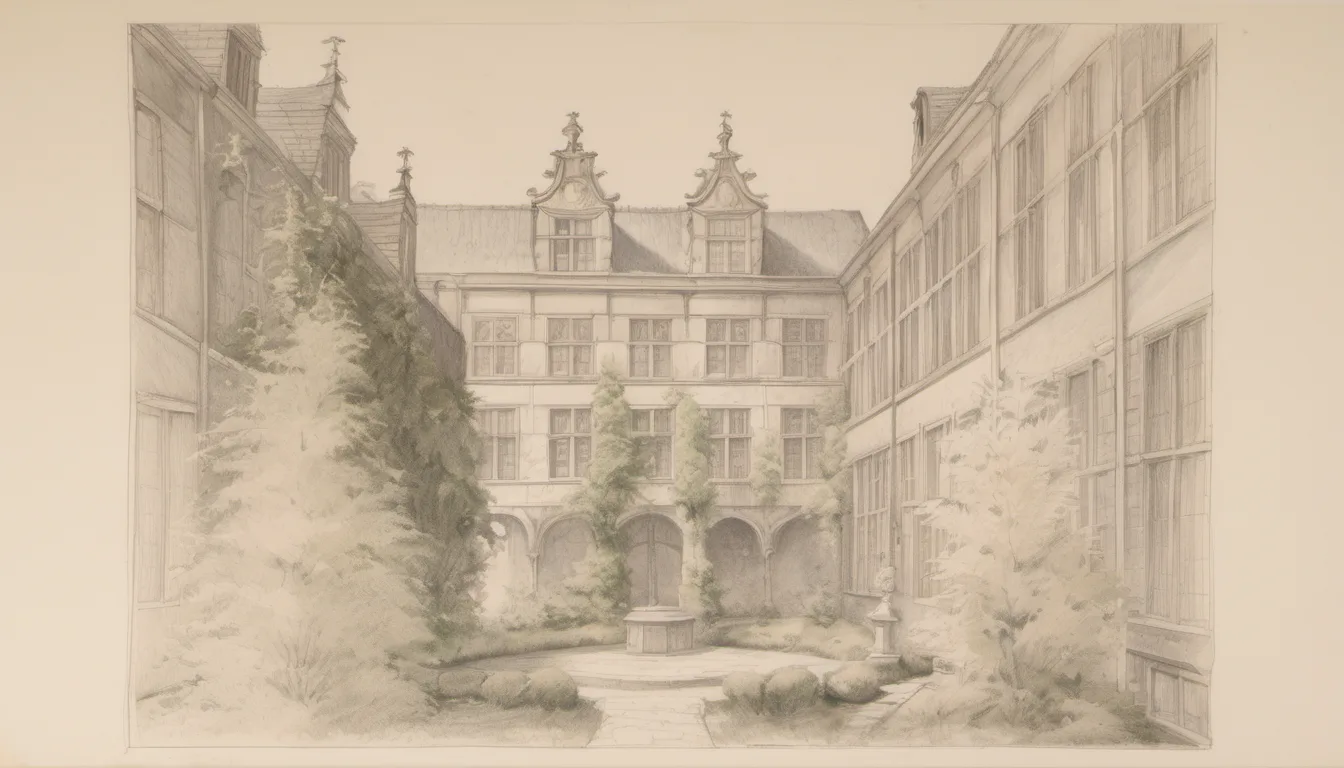
Step off the Vrijdagmarkt into a courtyard that smells of paper and age. This is the former home and workshop of Christophe Plantin, the 16th-century printer whose eight-volume Polyglot Bible was one of the most complex productions of its time. The building has been a UNESCO World Heritage site since 2005.
Inside, you'll find the two oldest surviving printing presses in the world, complete with original type matrices and dies. The museum also owns a 36-line Gutenberg Bible, paintings by Rubens, and the study of humanist Justus Lipsius. The archive, inscribed on UNESCO's Memory of the World register, provides an unbroken record of the business from the 16th century.
Plantin's story includes a shadow: he was suspected of connection to the heretical Familists, and may have spent time in exile in France. After his death, his son-in-law Jan Moretus took over, and the company piously preserved its old typefaces. Four women ran the printing house across three centuries – Martina Plantin, Anna Goos, Anna Maria de Neuf and Maria Theresia Borrekens.
The museum reopened in 2016 after a thorough renovation, with a new reading room whose facade recalls a letterbox. It remains a working research centre, but for the visitor it offers a quiet, unhurried walk through the golden age of print.
Antwerp's Vrijdagmarkt has always been a place of trade. At number 22, behind a modest facade, lies the world's most complete surviving printing house from the 16th century. The Plantin-Moretus Museum is both a residence and a workshop, preserved almost exactly as it was when Christophe Plantin printed his monumental Polyglot Bible.
That Bible, the Biblia Polyglotta, remains the museum's centrepiece. Eight volumes in five languages – Hebrew, Aramaic, Greek, Syriac and Latin – it was printed under the patronage of King Philip II of Spain. The museum displays a complete copy next to the actual type characters cast for the project, a rare chance to see the physical bones of a masterpiece.
But the collection goes far beyond one book. The museum holds two of the oldest surviving printing presses in the world, with their original wooden screws and platens still operable. Complete sets of dies and matrices line the drawers, untouched by the 18th-century trend to discard old type. This is typography's golden age, perfectly preserved.
The archive tells a human story. Plantin himself was a figure of suspicion: scholars now believe he had ties to the heretical Familists, which may have forced him into exile in his native France. After his death, his son-in-law Jan Moretus took over, and the company remained in family hands for centuries. Remarkably, four women – Martina Plantin, Anna Goos, Anna Maria de Neuf and Maria Theresia Borrekens – ran the printing house at different points across the 16th, 17th and 18th centuries.
The building itself is a time capsule. The living quarters are richly decorated, with paintings by Peter Paul Rubens (a friend of the Moretus family) and the study of humanist Justus Lipsius, filled with books and period instruments. The 36-line Gutenberg Bible sits in a quiet room, a reminder of the revolution that Plantin himself advanced.
The museum underwent a thorough renovation that finished in 2016. A new building opened onto Holy Ghost Street, housing a reading room and a paper heritage depot. The facade of this reading room is shaped like a letterbox – a subtle nod to the museum's enduring connection to the written word.
Research continues here. Historians have used the Plantin archives to study Renaissance typography, and the collection remains in perfect condition. For the visitor, the museum offers a rare intimacy: you can stand at the same presses, touch the same type, and imagine the noise and ink of a working 16th-century print shop.