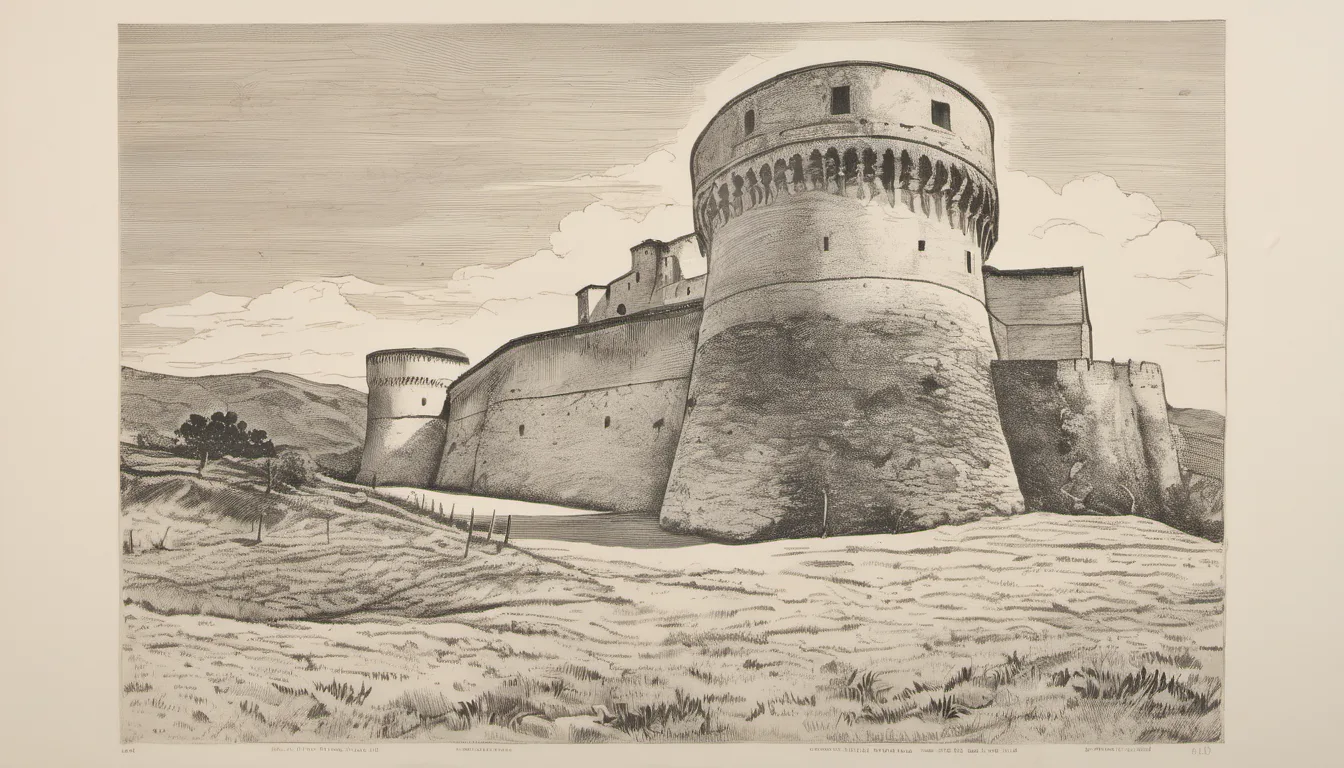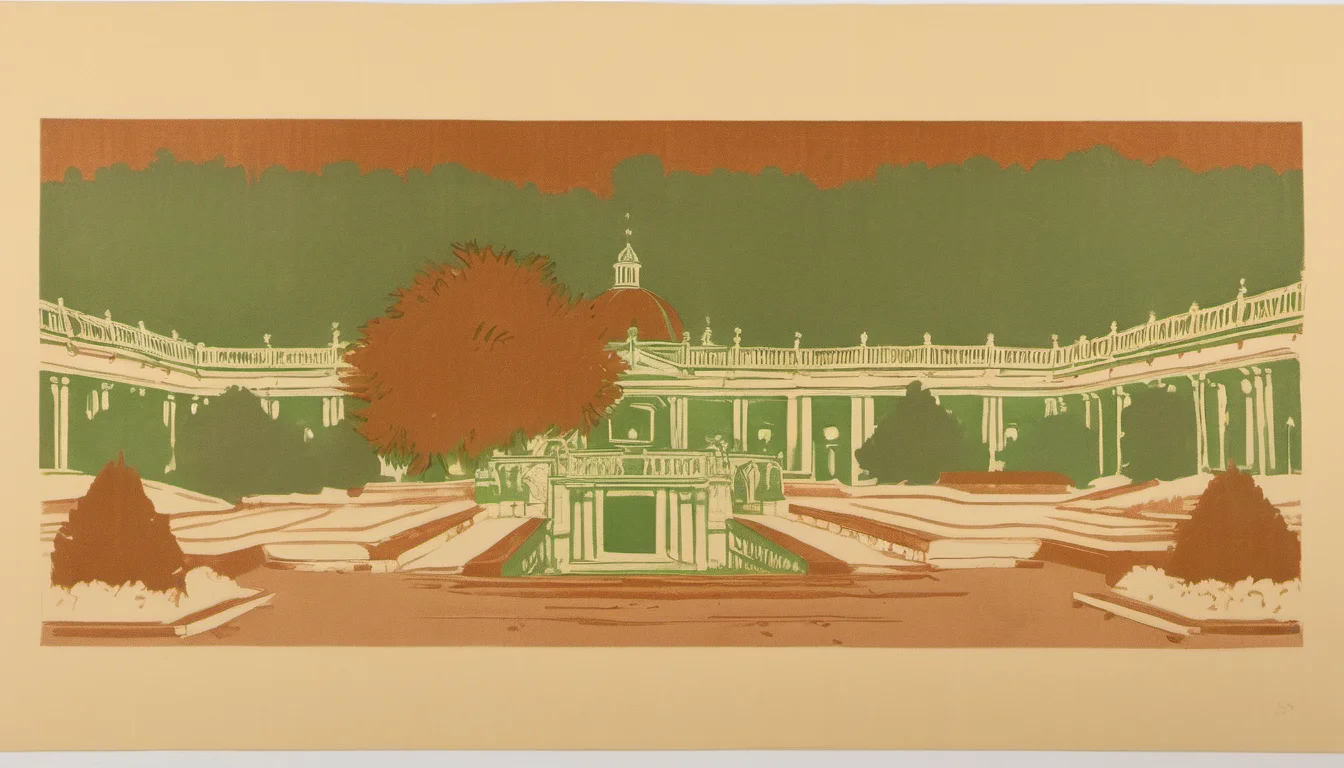
Certosa di Bologna
Just outside Bologna's old walls, at the foot of Monte della Guardia, a Carthusian monastery closed by Napoleon in 1797 was given an afterlife nobody could have planned for. In 1801 the city turned the empty charterhouse into its Monumental Cemetery, and the arrangement stuck: monks' cloisters became galleries of tombs, and a place built for silence became one of the most visited cemeteries in Europe.
The monastery's church survives at the center of it, still dedicated to Saint Jerome. Bartolomeo Cesi's Crucifixion hangs over the high altar, flanked by his own Prayer in the Garden of Gethsemane and Deposition. The choir stalls are older than the paintings and carry a rougher story: Landsknechts serving Charles V set fire to the church, and in 1538 Biagio De' Marchi rebuilt the wooden inlay from scratch. Later Bolognese painters added a full cycle of Christ's life in canvases nearly five meters across, by the Sirani, Francesco Gessi, Lorenzo Pasinelli, and others, alongside portraits of Carthusian martyrs, four of them Englishmen.
What Napoleon didn't leave behind, he took: Vivarini, Carracci, and Guercino canvases from the church went to Paris, and on their return were kept in Bologna's Pinacoteca Nazionale rather than sent back to the Certosa. But the cemetery that replaced the monastery's daily life became an attraction in its own right. Bolognese nobility built family tombs here with the ambition of architecture, and by the mid-1800s the Certosa was a fixture of the Grand Tour, walked by Byron, Dickens, Theodor Mommsen, and Stendhal. The third cloister, dense with neoclassical structures and Enlightenment symbolism, is the clearest record of that era, its tombs finished in tempera, stucco, and scagliola.
The Certosa's layout still argues with itself: porticos and lodges were grafted onto the old convent to recreate glimpses of the living city inside a cemetery, and the porticoed eastern entrance connects, with barely a break, to the path up toward the Sanctuary of San Luca. Then, in 1869, the ground gave up something older than any of it. The engineer Antonio Zannoni, extending the cemetery, uncovered an Etruscan necropolis used from the sixth to the third century BC — a city of the dead beneath a city of the dead, its finds now held in Bologna's Civic Archeological Museum.
Walk the grounds today and the names read like a syllabus: the poet Giosuè Carducci, the composer Ottorino Respighi, the painter Giorgio Morandi, the singer Lucio Dalla, and Maria Dalle Donne, who broke ground as a woman physician and professor of obstetrics. Alfieri Maserati is here too, and Isabella Colbran, the singer who married Rossini. Generations of Bologna, cataloged in stone, resting on ground the Etruscans buried their own dead in first.
Just outside Bologna's old walls, at the foot of Monte della Guardia and in sight of the Sanctuary of San Luca, stands a monastery that never stopped being used, even after its monks were gone. Founded in 1334 as a Carthusian charterhouse, it was suppressed in 1797 under Napoleon; four years later the city reopened it as its Monumental Cemetery. The convent's rhythms of enclosure and quiet were repurposed rather than erased, and the result is a cemetery built, almost literally, inside a monastery.
Much of the monastic fabric is still there to find. Several cloisters survive close to intact, along with the chapter hall — known as the Sala della Madonna dell'Asse — the Chiostro del Capitolo, and the old refectory, converted into what is now the Sala della Pietà. The Renaissance-era Chiostro Grande did not fare as well: it was broken up, partly absorbed into the third cloister and partly rebuilt as the so-called Chiostro del 1500, demolished and reconstructed in the process. Early nineteenth-century renovations followed the hygienist planning ideas of the Enlightenment, laid out in drawings by the architect Angelo Venturoli.
At the center of it all is the church, still dedicated to Saint Jerome. Bartolomeo Cesi's Crucifixion hangs over the high altar, with his own Prayer in the Garden of Gethsemane to the left and a Deposition to the right. The wooden inlaid choir stalls carry a rougher history than the paintings around them: Landsknechts in the service of Charles V, Holy Roman Emperor, set the church alight, and in 1538 Biagio De' Marchi rebuilt the inlay from nothing. Bolognese painters later added a cycle of large canvases — each roughly 450 by 350 centimeters — narrating the life of Christ: Giovanni Andrea Sirani's Christ in the House of Simon, Elisabetta Sirani's Baptism of Christ, Francesco Gessi's Miraculous Draught of Fishes and Expulsion from the Temple, Giovanni Maria Galli da Bibiena's Ascension, Lorenzo Pasinelli's Entry into Jerusalem, work by Domenico Maria Canuti, and an Adoration of the Shepherds by the Neapolitan Nunzio Rossi. Elsewhere in the church are portraits of Carthusian martyrs, among them four Englishmen: William Exmew, Thomas Johnson, Richard Bere, and Thomas Green.
Napoleon's occupation cost the church some of its best paintings. Works by Antonio and Bartolomeo Vivarini, by Ludovico and Agostino Carracci, and by Guercino were taken to Paris; when they came back to Bologna, they were placed in the Pinacoteca Nazionale rather than restored to the Certosa's walls. It is a reminder that the building's art history and its physical contents parted ways more than once.
The decision to make the Certosa a public cemetery in 1801 had a side effect worth noting: it kept the old monastery from being sold off in pieces, a fate that would have erased its original form entirely. Instead, the site grew outward from the Renaissance cloister's central axis, absorbing what already existed rather than replacing it, gaining monumentality gradually rather than by design from day one.
That growth made the Certosa a name across Europe. The local nobility and aristocracy took to building family tombs here with real architectural ambition, and by the middle of the nineteenth century the cemetery had become a stop on the Italian Grand Tour, visited and admired by Byron, Charles Dickens, the historian Theodor Mommsen, and Stendhal. The third cloister — sometimes called the cloister of the chapel — is the fullest expression of that period: a run of neoclassical structures loaded with the symbolism of the Enlightenment, its tombs finished variously in tempera, stucco, and scagliola.
Nothing about the site sits in isolation. Lodges, rooms, and porticos were added onto the original convent to recreate, inside the cemetery, glimpses of the city of the living outside it. The porticoed eastern entrance carries this further: it connects, with only a short break in the colonnade, to the route leading up to the Sanctuary of San Luca, so that the walk from necropolis to sanctuary feels continuous rather than crossed.
The Certosa's oldest secret, though, predates the monastery by roughly two thousand years. In 1869, archaeological excavations led by the engineer Antonio Zannoni — undertaken simply to extend the cemetery — uncovered an Etruscan necropolis in active use from the sixth to the third century BC. The finds now sit in Bologna's Civic Archeological Museum, evidence that this ground was already a place for the dead long before the Carthusians arrived, and long before Bologna's own dead began filling it again.
The numbers give some sense of scale: across roughly thirty hectares, the halls, galleries, and cloisters of the Certosa hold at least six thousand works of historic and artistic interest, the output of more than two hundred artists. It is spoken of in the same breath as the monumental cemeteries of Milan, Rome's Verano, and Genoa's Staglieno — one of the open-air museums of European funerary art.
The roll call of names buried here reads across professions and centuries. The singer Farinelli lies here, as do the painters Gaetano and Mauro Gandolfi, the opera singer Giuseppina Gargano, and the Polish military officer Giuseppe Grabinski. Maria Dalle Donne, a pioneering woman physician and professor of obstetrics, is buried near Isabella Colbran, the singer who married Gioacchino Rossini, and near Letizia Murat, daughter of Joachim Murat. There is Giuseppe Ferlini, adventurer and archaeologist; the publisher Nicola Zanichelli; the prime minister Marco Minghetti; the poets Severino Ferrari and Giosuè Carducci; the car manufacturer Alfieri Maserati; the composer Ottorino Respighi; the engineer Edoardo Weber; the singer Riccardo Stracciari; the painter Giorgio Morandi; the novelist Riccardo Bacchelli; the sculptor Farpi Vignoli; and, more recently, the singer Lucio Dalla.
Taken together, the Certosa is less a single monument than a sequence of them, laid one over another: an Etruscan burial ground, a Carthusian monastery, a Napoleonic casualty, and finally a cemetery that turned Bologna's grief into one of the great neoclassical set pieces of the Grand Tour.