Biserica Arbore
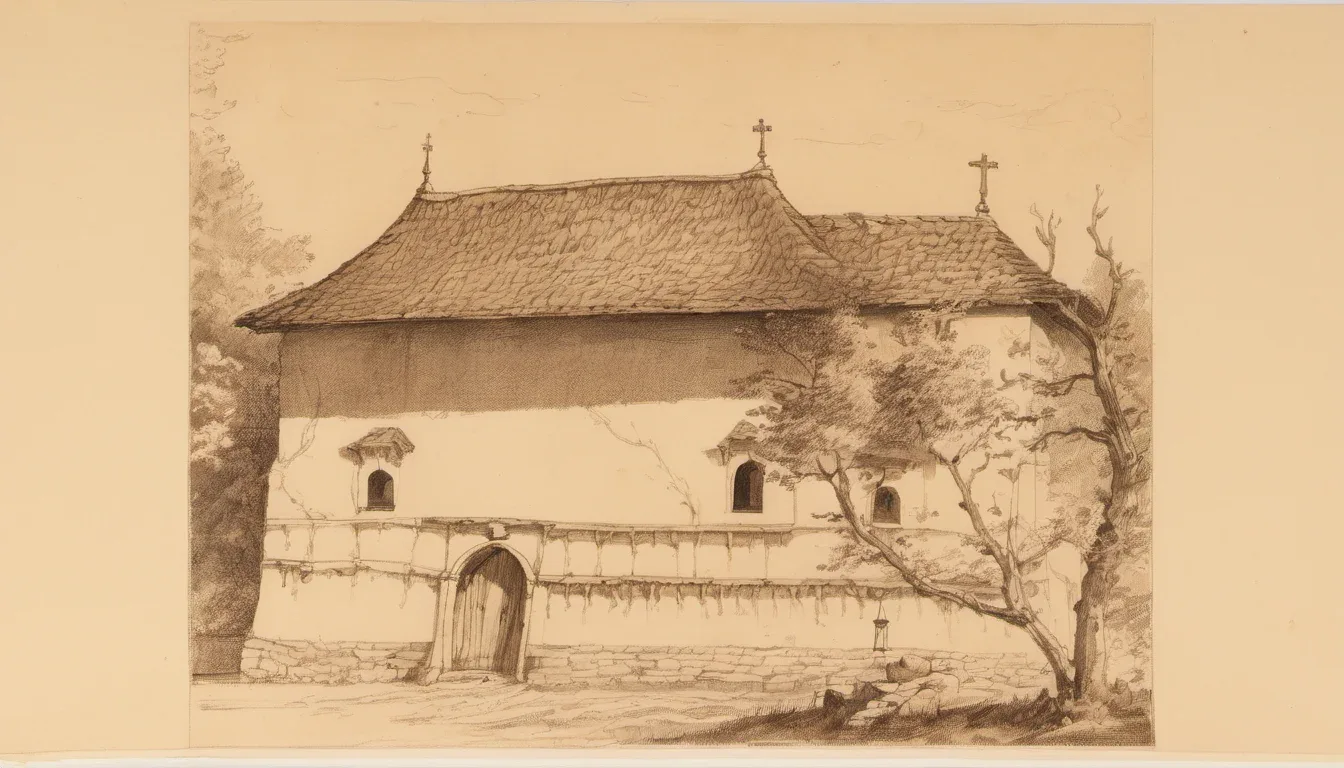
Look up. The stone walls are not bare. They are covered in authentic and unique fresco paintings. This is the defining feature of the Moldavian architectural style. You are standing before a testimony to the Principality of Moldavia, a style that developed here starting from the 14th century. The north of the region preserves numerous such buildings.
These eight Romanian Orthodox Churches in Suceava County were listed as a World Heritage Site by UNESCO in 1993. They were built from the late 15th century to the late 16th century. In 2010, the Church of the Resurrection within the Sucevița Monastery was added to the site. The grouping represents a specific era of religious and artistic consolidation.
The frescoes are not merely decorative. They represent complete cycles of religious themes. This is a unique characteristic. Most churches keep their art inside, but here the narrative is projected outward. The walls become a book for the faithful and the traveler. The imagery is vivid, defying the weather and time.
The source does not name the specific patron of this particular structure, but it places it firmly within the context of the Moldavian style. This style is distinct from its neighbors. It is a regional identity carved in stone and painted in pigment. The churches stand as isolated fortresses of faith in the landscape.
There is a legend in the air of these places. The paintings were said to protect the church from invaders. While the source does not confirm this specific folklore, it notes the 'authentic and unique' nature of the exterior decoration. You are looking at a survival strategy as much as a spiritual one. The art is the armor.
Observe the exterior walls. They are not plain stone. They are covered in frescoes. This is the hallmark of the Moldavian architectural style. The north of the Moldavia region in Romania preserves numerous religious buildings as a testimony to this style. It developed in the Principality of Moldavia starting from the 14th century. You are looking at a tradition that chose to paint the outside.
The specific church you stand before is part of a group of eight Romanian Orthodox Churches. They are located in Suceava County. They were built from the late 15th century to the late 16th century. This period marks the zenith of the Principality’s artistic output. The construction dates place them in a time of consolidation and cultural assertion.
In 1993, UNESCO listed these churches as a World Heritage Site. The recognition highlights their universal value. The criteria focus on their unique architectural and artistic features. In 2010, the list was expanded. The Church of the Resurrection within the Sucevița Monastery was added to the site. This expansion acknowledges the breadth of the style across the region.
The frescoes are the key. The source describes them as 'authentic and unique'. They are not fragments. They represent complete cycles of religious themes. This is rare. Usually, exterior frescoes are supplementary. Here, they are primary. The narrative of the faith is displayed for all to see, not just those who enter. The walls speak to the landscape.
Consider the context. The source mentions 'Byzantium after Byzantium'. This phrase captures the essence. The style is a continuation of Byzantine traditions, adapted to the local context. It is a 'Christianity in Romania' that is distinct. The Eastern Orthodox Church provided the theological framework, but the Moldavians provided the visual language.
The source references the 'Moldavian vault'. This is a structural element. It is a distinctive feature of the architecture. The vaults support the roofs and create the interior space. Externally, they contribute to the silhouette. The combination of the vault and the frescoes creates a cohesive aesthetic. The building is a unified work of art.
The source lists 'Seven Wonders of Romania' and 'Romanian architecture'. These categories place the churches in a national narrative. They are not just local landmarks. They are national treasures. The 'Painted Wonders of Bucovina' is a common title. The source links to articles with images. The visual impact is the primary draw.
The source mentions 'South Bucovina' in a reference title. This suggests a regional distinction. The churches in Suceava County are in North Bucovina. The style is shared, but the locations differ. The source does not elaborate on the differences. It treats the group as a cohesive whole. The unity of the style is the point.
The source includes a reference to a book by E. Kocój. The title translates to 'Temples, persons, icons'. It discusses the painted churches and monasteries of South Bucovina in Romanian imagology. This suggests that the perception of these buildings is part of a larger cultural identity. The 'imagology' refers to the image of the nation.
The source does not provide specific anecdotes about individual patrons or builders. It focuses on the collective achievement. The 'testimony' is the building itself. The 'unique fresco paintings' are the evidence. The source is a catalog of facts. It lists the dates, the location, and the UNESCO status. It is a record of survival.
The source mentions 'Cultural Heritage and Religious Tourism'. This indicates the current use. The churches are not just historical artifacts. They are active sites. They attract visitors. The 'location details' are available in linked articles. The source is a gateway. It points you to the physical reality. The reality is the painted wall.