Teatro dell Aquila
Before the Teatro dell’Aquila, Fermo made do with a small wooden theatre inside the Sala Grande of the Palazzo dei Priori. That structure was destroyed by fire, and in 1774 the city council resolved to move the theatre to a less dangerous site. Archbishop Andrea Minucci donated land in 1780, and the court architect Cosimo Morelli drew up the plans.
The theatre was inaugurated on 26 September 1790. It took its name from the earlier Sala dell’Aquila. The original design featured a triple stage opening ('a tre bocche'), but this was soon replaced by a single proscenium arch by the painter-architect Giuseppe Lucatelli. A further reform of the auditorium was carried out in 1830 by Pietro Ghinelli, who also worked on the Teatro delle Muse in Ancona.
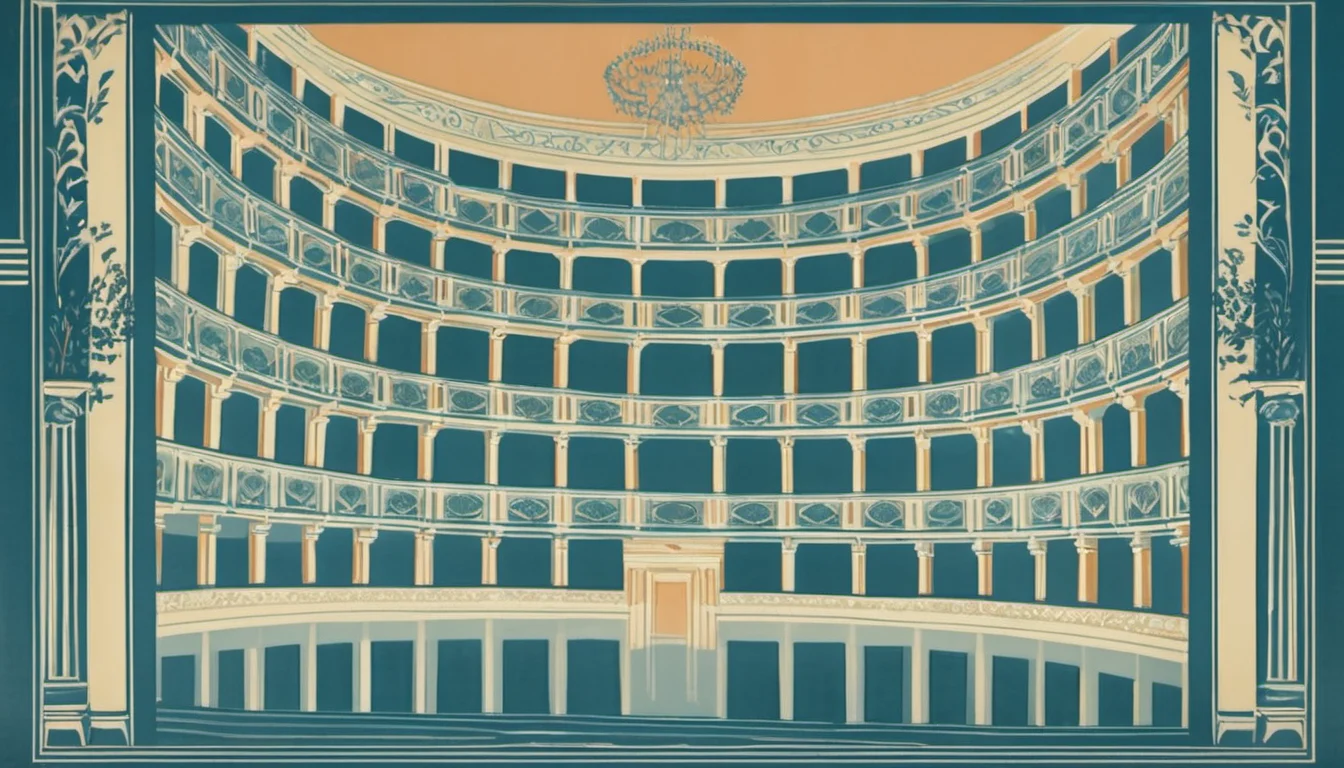
The auditorium is a horseshoe shape with five orders holding 124 boxes. The ceiling bears a tempera fresco by Luigi Cochetti, a pupil of Tommaso Minardi, depicting the gods of Olympus: Apollo, Jove, Juno, the three Graces and the six nocturnal Hours. From the centre hangs a 56-arm chandelier in gilded iron and wooden leaves, originally powered by carbide, ordered from Paris in 1830. The historical curtain, also by Cochetti, shows Harmony presenting a lyre to the genius of Fermo.
The theatre enjoyed a brilliant 19th century, staging opera and prose in step with the major European capitals. After years of closure and neglect, a thorough restoration in 1997 – strongly backed by Mayor Ettore Fedeli – returned it to its former splendour and reopened it to the public.
Before the Teatro dell’Aquila, Fermo’s theatrical life was confined to a modest wooden structure inside the Sala Grande (also known as the Sala dei ritratti) of the Palazzo dei Priori. By the second half of the 18th century that space had grown insufficient, and a fire eventually destroyed it. On 29 February 1774 the Consiglio di Cernita, the city council of the day, decided to move the theatre to a safer location – effectively building a new one.
It took another six years to secure land. On 21 August 1780 Monsignor Andrea dei Conti Minucci, Archbishop and Prince of Fermo, ceded his own ground for the project. The design was entrusted to Cosimo Morelli, an architect from Imola who worked for the Papal States. Construction began the same year, and a bronze commemorative medal was struck, bearing a symbolic theatre design and the inscription 'Teatrum Novuum anno Dom. M.DCCLXXX' on one side and Fermo’s coat of arms on the other.
The theatre opened on 26 September 1790. It was named after the Sala dell’Aquila in the Palazzo dei Priori. The original auditorium was oval, with a stage conceived as three openings ('a tre bocche'). Very quickly, however, that triple arch was replaced by a single, more conventional proscenium arch by the painter-architect Giuseppe Lucatelli. A second major renovation came in 1830, led by Pietro Ghinelli, who had recently designed the Teatro delle Muse in Ancona.
The interior is a horseshoe-shaped room with five orders, containing a total of 124 boxes. The ceiling is adorned with a fine tempera painting by Luigi Cochetti (1802–1884), a student of Tommaso Minardi. It shows the Olympian deities: Jove, Juno, the three Graces, the six nocturnal Hours dancing, and Apollo listening to a song. The painting adds a celestial lightness above the audience.
At the centre of the ceiling hangs a massive chandelier with 56 arms, made of gilded iron and wooden leaves. It was originally powered by carbide and was ordered from Paris in 1830. The historical front curtain, also painted by Cochetti, depicts Harmony handing a lyre to the genius of Fermo. In 1830 Alessandro Sanquirico, the leading set designer of the era, created several stage backdrops for the theatre; four of them survive today.
During the 19th century the theatre enjoyed a golden age, hosting opera and prose performances that kept pace with the great houses of Europe. International artists performed on its stage. Later, however, the building fell into disuse and was closed for many years. A major restoration, strongly pushed by Mayor Ettore Fedeli and the public works department, was completed in 1997. It restored the theatre’s original splendour and allowed it to reopen to the public.
Today the Teatro dell’Aquila is once again a vibrant centre for the performing arts. Its stage, measuring about 350 square metres, and its celebrated acoustics place it among the most prestigious historic theatres in Italy. Visitors can see the original painted backdrops, the Parisian chandelier, and the lavish ceiling fresco – all preserved from the theatre’s luminous past.