Mănăstirea Rarău
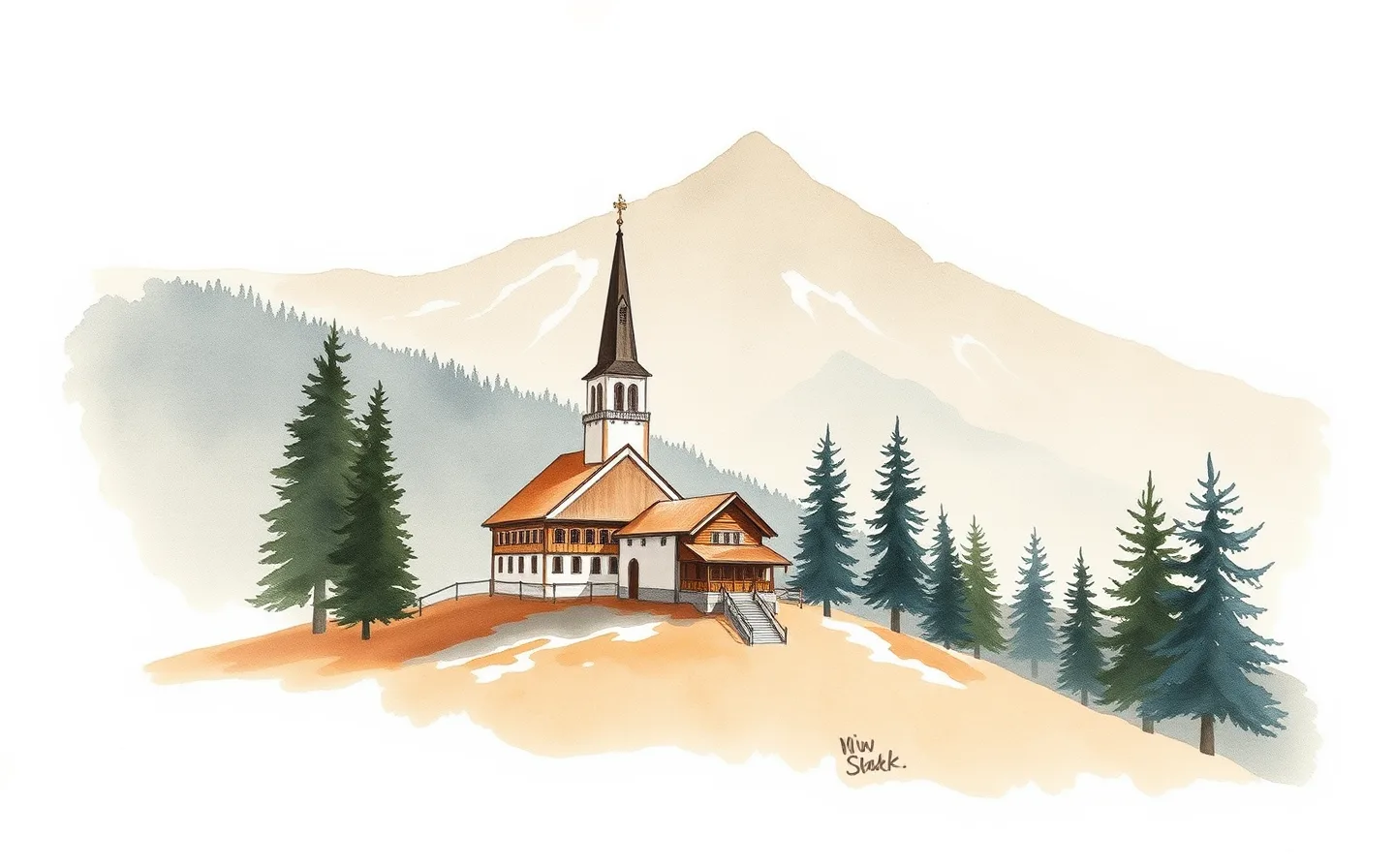
You are standing at nearly 1,400 metres on the forested slopes of the Rarău massif, one of the highest monastic sites in the Romanian Carpathians. The air is cooler here than in the Bucovina valleys below — thin, resin-scented, often moving. Two churches stand close together near the tree line: an old wooden church from the time of Petru Rareș, and a newer church consecrated in 2000. Around you is the silence that made this ridge a hermit's refuge in the first place, at the end of the 15th century, when the monk Sisoe is said to have settled here.
Start with the founding, because it is pure Moldavian drama. Tradition holds that a skete existed here by the late 1400s, founded by the hermit Sisoe. In 1538 the voivode Petru Rareș — illegitimate son of Stephen the Great — raised a church on the site. When Rareș was deposed, his wife Elena and their children fled into these mountains, and the monks of Rarău sheltered them. On his restoration, the voivode gave thanks by rebuilding the church. A place that saved a dynasty, at 1,400 metres.
The Austrians ended the first life of the monastery. After the 1775 annexation of Bukovina the monasteries were dissolved, and the monks of Rarău crossed the mountain with the community's treasure, re-founding their house on the Moldavian side. For two centuries the old site kept only its church and its silence.
The revival came at the end of the 20th century: services resumed here in 1994, and a new church was consecrated in 2000 beside the old wooden one. But the monastery's soul is older than either building — an icon of the Mother of God that tradition says Petru Rareș received as a gift from Mount Athos. Since 1997 it has been reported to flow with myrrh; it now stands before the iconostasis in a silver oklad, and pilgrims climb the TransRarău road for it in every season.
Give the place the time its setting deserves. The monastery is a short detour off the TransRarău between Câmpulung Moldovenesc and the pass, so it pairs naturally with the drive itself — or with the walk up towards the Pietrele Doamrei, the limestone pinnacles that crown the massif. Come for the icon, stay for the view; at this altitude the clouds move through the churchyard like a slow procession.