Vatra Dornei
Look up at the Vatra Dornei Casino. Its facade, designed by Austrian architect Peter Paul Brang in 1898, stands as a monument to the Habsburg era. The building was constructed for wealthy tourists who came to bathe in the town’s mineral springs. It remains the visual anchor of the city center, a reminder of a time when Bukovina was part of the Austro-Hungarian Empire.
You are standing in a town that was declared a city only in 2000, making it the newest and smallest in Suceava County. Yet its history stretches back to a written mention in 1592. For over a century, from 1775 to 1918, Vatra Dornei was under Habsburg rule. This period defined its development as a premier resort. The town grew not as an industrial hub, but as a place of leisure and health.
The geography here is precise. Vatra Dornei sits in the Dorna Depression, at the confluence of the Bistrița and Dorna rivers. This location provided the mineral water springs that attracted visitors. In the late 19th and early 20th centuries, Bukovina had only two spa towns: Vatra Dornei and Solca. The town’s identity was built on this exclusivity. The climate is temperate-continental, with heavy precipitation and about 120 days of snowfall per year.
Consider the demographic shift. Until the early 1950s, the population was ethnically mixed. Romanians, Bukovina Germans, Ukrainians, and Jews lived here. The large synagogue and the picturesque Jewish cemetery bear witness to this legacy. Today, 98.65% of the population is ethnically Romanian. The town peaked at 18,500 inhabitants in 1992, but has since declined to around 12,500. The silence of the streets reflects this change.
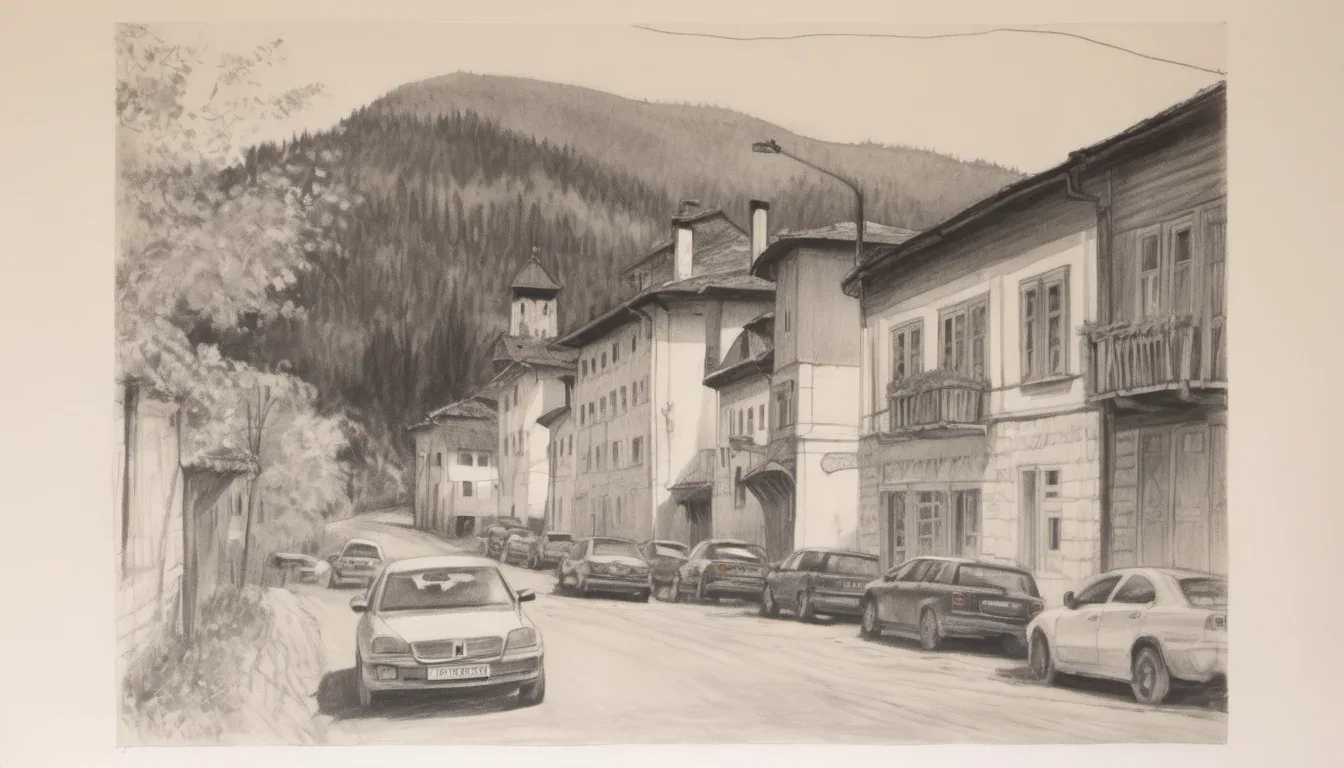
Locals know the town through its ten quarters, including Chilia, Foresta, and Runc. The ski slopes, such as the 3,200-meter Dealu Negru, draw winter crowds. But the true story is in the architecture. The two railway stations, both historical monuments, connect the town to the national network. The E58 route crosses the city, linking Moldavia with Transylvania. You are walking through a layered history of empires and identities.
Look at the Vatra Dornei Casino. It is the most visible artifact of the town’s golden age. Designed by the Austrian architect Peter Paul Brang, it was completed in 1898. The building was intended for the wealthy tourists who flocked to the town’s mineral springs. Its presence in the city center signals the importance of leisure in the late 19th century. The facade is a deliberate statement of Habsburg influence in Bukovina.
Vatra Dornei is situated in the Dorna Depression, at the confluence of the Bistrița and Dorna rivers. This geographical feature is not just scenic; it is functional. The mineral water springs found here and in the surroundings allowed the settlement to develop as a spa. In the late 19th and early 20th centuries, Bukovina had only two spa towns: Vatra Dornei and Solca. This scarcity created a sense of exclusivity. The town became a destination for those seeking health and status.
The town’s history is marked by shifting borders. The earliest written mention of the settlement dates to 1592. From 1775 to 1918, Vatra Dornei was under the rule of the Habsburg monarchy, later Austria-Hungary. This period was crucial for its development. The town became a well-known resort in the early 19th century. The construction of villas and hotels followed the discovery of the springs. The architecture reflects this era, with buildings designed to accommodate the needs of a leisure class.
Consider the demographic composition of the town before the mid-20th century. Until the early 1950s, Vatra Dornei had an ethnically mixed population. Romanians, Germans (specifically Bukovina Germans), Ukrainians, and Jews lived together. The large synagogue and the picturesque Jewish cemetery are physical reminders of the Jewish presence. These structures bear witness to a historical legacy that has largely faded. The town’s identity was once plural, reflecting the broader diversity of Bukovina.
The population dynamics have changed significantly. Vatra Dornei reached its peak population in 1992, with about 18,500 inhabitants. Since then, the population has declined gradually. According to the 2011 census, the town had 13,659 inhabitants. The 2021 census recorded 12,578 inhabitants. Of this population, 98.65% are ethnically Romanian. The decline reflects broader trends in rural and semi-rural areas of Romania. The town is now the fifth largest urban settlement in Suceava County.
The town is divided into ten quarters: Chilia, Centru, Foresta, Runc, Roșu, Argestru, Todireni, Bârnărel, Bernat, and Floreni. Each quarter has its own character. The Centru quarter contains the casino and the main spa building. The Floreni quarter is home to an airport located five kilometers from the city center. This airport suggests a continued, if niche, interest in accessibility. The quarters reflect the town’s expansion and its adaptation to different functions over time.
Tourism remains a key part of the town’s economy. Vatra Dornei is a well-known ski resort in the Carpathian Mountains. The Dealu Negru ski slope is 3,200 meters long. It is served by a chairlift that operates year-round. The ascent takes 20 to 25 minutes, offering views of the surrounding mountain ranges. The Parc 1 slope is 900 meters long and located near Central Park. It is one of the most popular slopes in northern Romania. The Poienița slope, adjacent to Parc 1, is ideal for beginners. The Veverița slope is rated as intermediate. The Dealu Runc slope is designed for cross-country skiing.
The natural surroundings are integral to the town’s appeal. Vatra Dornei is surrounded by large forest areas. These forests are proper places for practicing alpine tourism. The resort town is encircled by the Giumalău, Bistrița, Călimani, Rodna, and Obcina Mestecăniș mountains. Visitors can explore the surroundings using the chairlift or by taking excursions to Poiana Negri and Poiana Stampei. Both areas are known for their mineral springs. The town is also part of the Via Transilvanica long-distance trail, connecting it to a broader network of hiking routes.
The town’s infrastructure includes two railway stations: Vatra Dornei and Vatra Dornei Băi. Both are historical monuments. They connect the town to the Romanian national railway system. The European route E58 crosses the city, linking the region of Moldavia with Transylvania. This connectivity was vital during the Habsburg era and remains important today. The town hall, the post office building, and the Sentinela Spring are also considered historical and architectural monuments. These buildings form the backbone of the town’s heritage.
The cultural institutions in Vatra Dornei offer insight into the region. The Ethnographic Museum provides an overview of folk art from the mountainous region of Bukovina. The Museum of Natural Sciences and Cynegetic has two sections: one related to the fauna and flora of the Dorna Region, and the other to the cynegetic section of Suceava County. These museums preserve the natural and cultural history of the area. They serve as educational resources for visitors and locals alike. The town’s identity is rooted in its natural environment and its historical layers.
Vatra Dornei is the smallest and newest city in Suceava County, declared a city in 2000. It administers three villages: Argestru, Roșu, and Todireni. The town’s status reflects its administrative role in the region. Despite its small size, it has a rich history. The transition from a Habsburg resort to a modern Romanian city is evident in its architecture and demographics. The town’s story is one of adaptation and resilience. It continues to attract visitors with its spa heritage and ski slopes.