Șaru Dornei
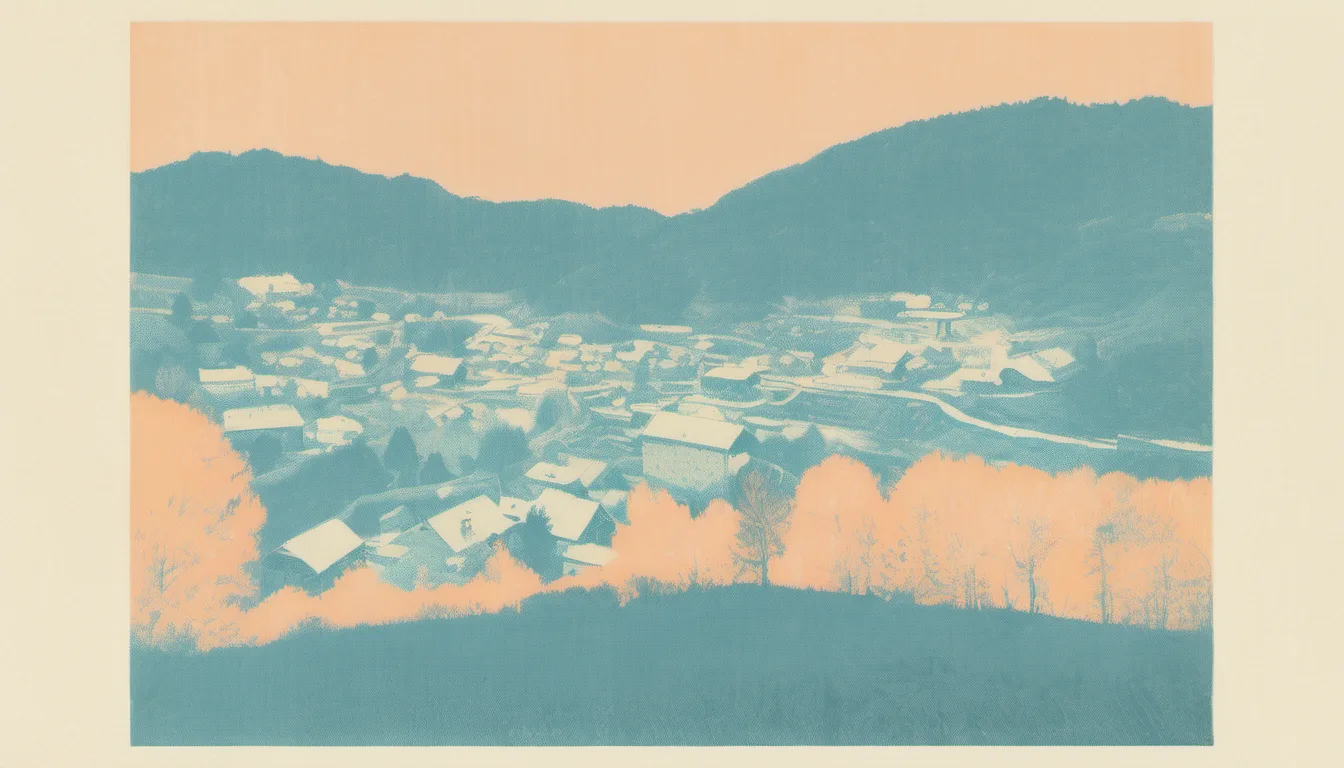
You stand in Șaru Dornei, a commune that exists as much in administrative records as in the physical landscape. It is a place of seven villages, scattered across the foothills of the Carpathians in Suceava County. The air here is thin with the quiet of rural Romania, far from the tourist trails of the painted monasteries further south. You are in a region where the history is not written in stone churches, but in the subtle shift of dialect and custom across a few kilometers of land. The ground beneath your feet belongs to a commune that defies simple categorization, straddling the line between two historical identities.
The commune is composed of seven distinct villages, each with its own rhythm. Six of them—Gura Haitii, Neagra Șarului, Plaiu Șarului, Sărișor, Sărișoru Mare, and the titular Șaru Dornei—are located in the historical region of Western Moldavia. These villages form the bulk of the community, anchored by Neagra Șarului, which serves as the administrative center. It is here that the local council convenes, managing the affairs of a population that numbers just over four thousand. The seventh village, Șaru Bucovinei, stands apart, located in Bukovina. This single village creates a geographical anomaly, a pocket of Bukovinian history embedded within a predominantly Moldavian administrative unit.
The key figure in this story is not a king or a bishop, but the collective voice of the residents. The current local council reflects the political composition resulting from the 2020 Romanian local elections. These elections determine the direction of the commune, balancing the needs of the six Moldavian villages against the unique position of the Bukovinian one. The administration is a quiet engine, maintaining roads, schools, and services in a region that is often overlooked by the broader narrative of Romanian history. The power here is decentralized, rooted in the specific needs of each village rather than a grand central vision.
There is a legend, or perhaps just a local tradition, that the border between these regions is not just a line on a map, but a shift in the soul of the place. Residents might tell you that the people of Șaru Bucovinei have a different cadence in their speech, a different way of celebrating the seasons. This is the killer fact of Șaru Dornei: it is a microcosm of the complex historical layers of Romania. The unsolved mystery is why this administrative division persists, keeping these villages together despite their historical divergence. It is a testament to the resilience of local identity in the face of modern standardization.
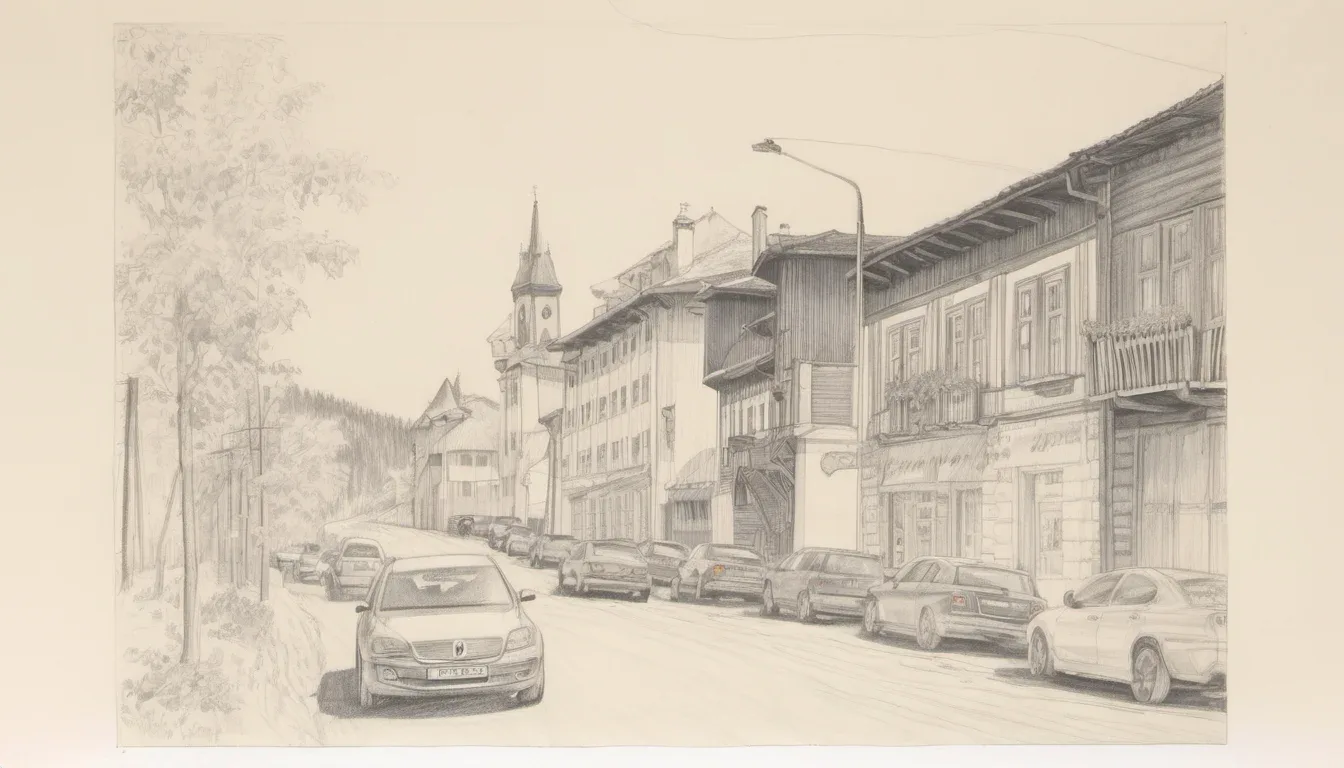
As you look around, notice the lack of grand architecture. There are no towering spires or fortified churches dominating the skyline. Instead, you see the modest homes of a rural community, built with materials sourced from the surrounding forests and hills. The beauty of Șaru Dornei lies in its authenticity, its refusal to perform for an audience. It is a place where the past is not a museum exhibit, but a living reality. The walk through these villages is a walk through the quiet heart of northeastern Romania, where the only thing louder than the wind is the silence of a place that has never needed to shout to be heard.
You are standing in Șaru Dornei, a commune that exists as a quiet anomaly in the landscape of Suceava County. It is a place of seven villages, scattered across the foothills of the Carpathians in northeastern Romania. The air here is thin with the quiet of rural life, far from the tourist trails of the painted monasteries further south. You are in a region where the history is not written in stone churches, but in the subtle shift of dialect and custom across a few kilometers of land. The ground beneath your feet belongs to a commune that defies simple categorization, straddling the line between two historical identities. This is not a place of grand monuments, but of quiet persistence.
The commune is composed of seven distinct villages, each with its own rhythm and character. Six of them—Gura Haitii, Neagra Șarului, Plaiu Șarului, Sărișor, Sărișoru Mare, and the titular Șaru Dornei—are located in the historical region of Western Moldavia. These villages form the bulk of the community, anchored by Neagra Șarului, which serves as the administrative center. It is here that the local council convenes, managing the affairs of a population that numbers just over four thousand. The seventh village, Șaru Bucovinei, stands apart, located in Bukovina. This single village creates a geographical anomaly, a pocket of Bukovinian history embedded within a predominantly Moldavian administrative unit.
The key figure in this story is not a king or a bishop, but the collective voice of the residents. The current local council reflects the political composition resulting from the 2020 Romanian local elections. These elections determine the direction of the commune, balancing the needs of the six Moldavian villages against the unique position of the Bukovinian one. The administration is a quiet engine, maintaining roads, schools, and services in a region that is often overlooked by the broader narrative of Romanian history. The power here is decentralized, rooted in the specific needs of each village rather than a grand central vision. The council members are local figures, known by name, who navigate the complexities of rural governance.
There is a legend, or perhaps just a local tradition, that the border between these regions is not just a line on a map, but a shift in the soul of the place. Residents might tell you that the people of Șaru Bucovinei have a different cadence in their speech, a different way of celebrating the seasons. This is the killer fact of Șaru Dornei: it is a microcosm of the complex historical layers of Romania. The unsolved mystery is why this administrative division persists, keeping these villages together despite their historical divergence. It is a testament to the resilience of local identity in the face of modern standardization. The border is invisible, yet it shapes the daily life of the residents.
As you look around, notice the lack of grand architecture. There are no towering spires or fortified churches dominating the skyline. Instead, you see the modest homes of a rural community, built with materials sourced from the surrounding forests and hills. The beauty of Șaru Dornei lies in its authenticity, its refusal to perform for an audience. It is a place where the past is not a museum exhibit, but a living reality. The walk through these villages is a walk through the quiet heart of northeastern Romania, where the only thing louder than the wind is the silence of a place that has never needed to shout to be heard. The landscape is green and rolling, dotted with small farms and orchards.
The history of this area is deeply tied to the broader history of Moldavia and Bukovina. For centuries, this region was a crossroads of cultures, influenced by the Ottoman Empire, the Habsburg Monarchy, and the Russian Empire. The division between Western Moldavia and Bukovina is a legacy of these shifting borders. Șaru Dornei, with its seven villages, is a living archive of this history. The names of the villages themselves—Gura Haitii, Plaiu Șarului, Sărișor, Sărișoru Mare, Șaru Bucovinei, Șaru Dornei, and Neagra Șarului—are echoes of a past that is both local and universal. Each name tells a story of the land, the people, and the events that shaped them.
The political context of the commune is one of quiet stability. The 2020 local elections were a moment of reflection for the community, a chance to choose leaders who would guide them into the future. The results of these elections reflect the values and priorities of the residents, who are deeply connected to their land and their traditions. The council is responsible for a wide range of issues, from infrastructure to education to cultural preservation. In a region that is often overlooked by the broader narrative of Romanian history, the local council plays a crucial role in maintaining the identity and vitality of the community. The work is unglamorous, but essential.
There is an anecdote, passed down through generations, about the founding of Neagra Șarului. According to local tradition, the village was established by a group of settlers who were drawn to the fertile land and the protective cover of the surrounding forests. They built their homes from the timber of the forest and the stone of the hills, creating a community that was self-sufficient and resilient. This story is a testament to the ingenuity and determination of the early settlers, who faced the challenges of a harsh climate and a difficult terrain. It is a story that is retold at local festivals and gatherings, keeping the memory of the past alive in the present.
The unsolved mystery of Șaru Dornei is the reason for its unique administrative structure. Why does a commune composed of seven villages, six in Western Moldavia and one in Bukovina, exist as a single unit? The answer is not clear, but it is likely tied to the historical and geographical realities of the region. The border between Moldavia and Bukovina is not a straight line, but a complex and shifting boundary that has been redrawn many times over the centuries. The current administrative division is a legacy of these shifts, a reminder of the complex history of the region. It is a mystery that invites further exploration and reflection.
As you leave Șaru Dornei, you carry with you the memory of a place that is both ordinary and extraordinary. It is ordinary in its quiet beauty and its rural charm, but extraordinary in its historical significance and its cultural complexity. The commune is a microcosm of the broader story of Romania, a story of resilience, adaptation, and identity. The seven villages of Șaru Dornei are a testament to the power of local community, and the importance of preserving the diverse traditions and histories that make up the fabric of the nation. It is a place that deserves to be known, not for its grand monuments, but for its quiet authenticity.
The final impression of Șaru Dornei is one of peace and continuity. The landscape is unchanged from the days of the early settlers, and the people still live in harmony with the land. The commune is a place where the past and the present coexist, where the history of the region is not a distant memory, but a living reality. It is a place that invites you to slow down, to listen to the wind, and to reflect on the complex and beautiful story of this corner of the world. The walk through Șaru Dornei is a journey into the heart of Romania, a journey that is both physical and spiritual.