Mănăstirea Zamca
You stand before a building that defies simple categorization. This is the Armenian Monastery of Suceava, known locally as Zamca. It is not merely a place of prayer, nor simply a ruin. It is a palimpsest of conflict and faith in northern Romania. Look at the walls. They are thick, imposing, and scarred by history. You are standing in the Bukovina district, a region where empires collided. This site captures that collision perfectly. It is a monument to two distinct eras, layered one upon the other.
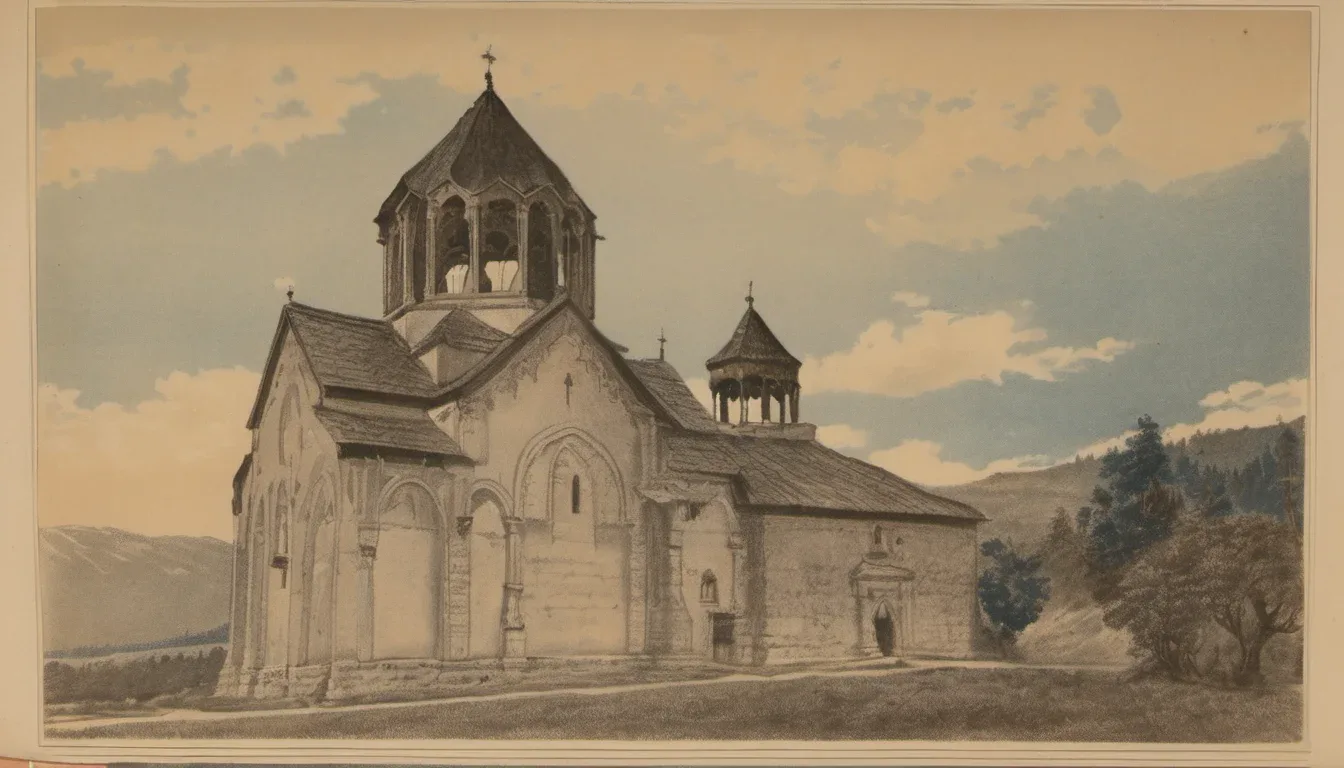
The story begins in 1401. Alexandru I Mușat, the Hospodar of Moldavia, established this complex. He did not build a fortress. He built a seat for the local Armenian Church. The central structure was the Saint Auxentius Church. It was designed as a center for the Armenian Apostolic community. For centuries, this was a place of spiritual authority. The architecture reflected liturgical needs, not defensive ones. You can still see the residential structures and the chapel dedicated to Gregory the Illuminator. These elements speak to a community living in relative stability, under the protection of the Moldavian ruler.
Then came the shift. The 17th century brought the War of the Holy League. Poland entered the conflict against the Ottoman Empire. In 1690, the monastery ceased to be just a church. It became the headquarters of the Polish Army for all operations in Moldavia. James Louis Sobieski, attempting to ascend to the Moldavian throne, used the monastery as his base. The monks did not vanish. They coexisted with soldiers. The sacred became strategic. The quiet cloister became a command center. This transition is the key to understanding the site today.
Look closely at the perimeter. You will see an extensive network of bastion fortifications. These were built by the Poles during their stay. They are well preserved. They transform the monastery into a military installation. The name 'Zamca' likely emerged from this period. It is derived from the Polish word 'zamek,' meaning castle. The locals did not call it a monastery. They called it a castle. The identity of the place shifted from religious to martial. You are walking through a fortress that houses a church.
The interior tells a later story. The murals date from the 18th century. They were added after the military phase. They reflect a return to spiritual focus, or perhaps a desire to mask the violence of the past. The belltower and the gate also date from the 1606 renovations. You see a blend of styles. The Armenian liturgical tradition meets Polish military engineering. It is a unique hybrid. There is no other site in Bukovina quite like it. You are standing in a place where prayer and powder magazines shared the same walls. The silence here is heavy with that memory.
You are standing in Suceava, in the northern Romanian district of Bukovina. Before you lies the Armenian Monastery of Suceava. Locals call it Zamca. The name is a clue. It is not a typical monastic name. It is derived from the Polish word 'zamek,' which means castle. This etymology hints at the site’s complex history. It is not just a monastery. It is a fortress. It is a place where the spiritual and the martial intersected violently. You are about to explore a site that embodies the geopolitical turbulence of Eastern Europe.
The origins are peaceful. In 1401, Alexandru I Mușat, the Hospodar of Moldavia, founded the complex. He established it as the bishop’s seat for the local Armenian Church. This was a significant act of patronage. It recognized the Armenian community in Moldavia. The central building was the Saint Auxentius Church. It was designed to be the heart of the complex. The architecture was liturgical. It served the needs of the Armenian Apostolic Church. For the first two centuries, this was a center of religious life. The structures included residential quarters and a chapel dedicated to Gregory the Illuminator. These buildings survive today. They speak of a stable, protected community.
The 17th century changed everything. The War of the Holy League erupted. This was a major conflict involving the Polish-Lithuanian Commonwealth and the Ottoman Empire. Poland sought to expand its influence in the region. In 1690, the monastery became the headquarters of the Polish Army. All Polish operations in Moldavia were coordinated from here. James Louis Sobieski, a claimant to the Moldavian throne, used the monastery as his base. He stayed for several years. The monastery became a military hub. The monks remained, but their world was invaded by soldiers. The sacred space was repurposed for war.
The physical transformation was drastic. The Poles built an extensive network of bastion fortifications. These are visible today. They are well preserved. They encircle the original religious structures. You can see the thick walls, the angular bastions, the defensive gates. These were not added for aesthetics. They were built for survival. They reflect the star-fort design popular in the late 17th century. The monastery became a citadel. The name Zamca stuck. The locals saw a castle, not a church. The identity of the site shifted permanently. The Armenian bishopric became a Polish fortress.
Consider the architecture. The church was renovated or rebuilt in 1606. This was before the Polish occupation. It is a crucial date. At this stage, the additions included the belltower, the gate, and the residential structure with the Gregory the Illuminator chapel. These elements predate the fortifications. They represent the Armenian architectural tradition. The later Polish additions are distinct. They are military in nature. You can distinguish the two layers. The older structures are softer, more organic. The fortifications are hard, geometric, aggressive. The contrast is stark. It is a visual record of the site’s dual life.
The interior offers a different narrative. The murals date from the 18th century. This was after the Polish military presence had ended. The decoration reflects a return to religious function. The artists chose themes of peace and salvation. They painted saints and biblical scenes. The style is distinct from the earlier frescoes found in other Bukovinian monasteries. Those are famous for their vibrant colors and intricate patterns. Here, the murals are more subdued. They reflect the Armenian tradition. They also reflect the trauma of the previous century. The art is a response to the violence. It is a plea for peace.
James Louis Sobieski is a fascinating figure. He was the son of John III Sobieski, the King of Poland. He attempted to ascend to the Moldavian throne. His campaign was ambitious. He used the monastery as his operational base. This was a strategic choice. The site was defensible. It was central. It controlled key routes. His presence here highlights the importance of the monastery. It was not just a local site. It was a key node in the regional power struggle. The Polish army stayed for years. They lived among the monks. The coexistence was uneasy. It was a marriage of convenience.
The War of the Holy League was a pivotal conflict. It involved the Holy Roman Empire, Poland, and Venice against the Ottomans. The Moldavian theater was significant. The Poles sought to secure their eastern flank. The monastery became a forward base. The fortifications were built to withstand Ottoman attacks. They were effective. The site survived the war. The bastions are a testament to the intensity of the conflict. They are a rare example of Polish military architecture in Romania. Most Bukovinian monasteries are known for their frescoes. This one is known for its walls. It is unique in the region.
Scholars have studied this site extensively. Works by Korsak, Tokarski, Galusek, Jurecki, and others provide detailed accounts. They highlight the hybrid nature of the complex. It is a blend of Armenian religious architecture and Polish military engineering. The sources emphasize the preservation of the fortifications. They are well maintained. They allow visitors to see the 17th-century military design. The residential structures and the chapel of Gregory the Illuminator provide a glimpse into the earlier period. The church of Saint Auxentius remains the spiritual center. The layers are distinct but integrated.
There is an unsolved mystery. How did the monks cope? The sources do not detail their daily lives during the occupation. Did they resist? Did they collaborate? The silence is telling. The murals from the 18th century suggest a desire to move on. They focus on spiritual themes. They do not depict the war. The fortifications remain, but the memory of the occupation is faded. The name Zamca preserves the memory. It reminds visitors of the Polish connection. But the details are lost. You can imagine the tension. The clash of cultures. The coexistence of prayer and war. It is a haunting thought.
You stand in a place of contradictions. It is a monastery that is a castle. It is a site of peace that was a center of war. The Armenian community founded it. The Polish army fortified it. The 18th-century artists decorated it. Each layer adds depth. Each layer tells a different story. The site is a testament to the resilience of the Armenian community. It is also a testament to the impact of European conflicts on local life. The fortifications are a reminder of the violence. The church is a reminder of the faith. You are invited to reflect on both. The silence of the site is profound. It speaks of history’s complexities.