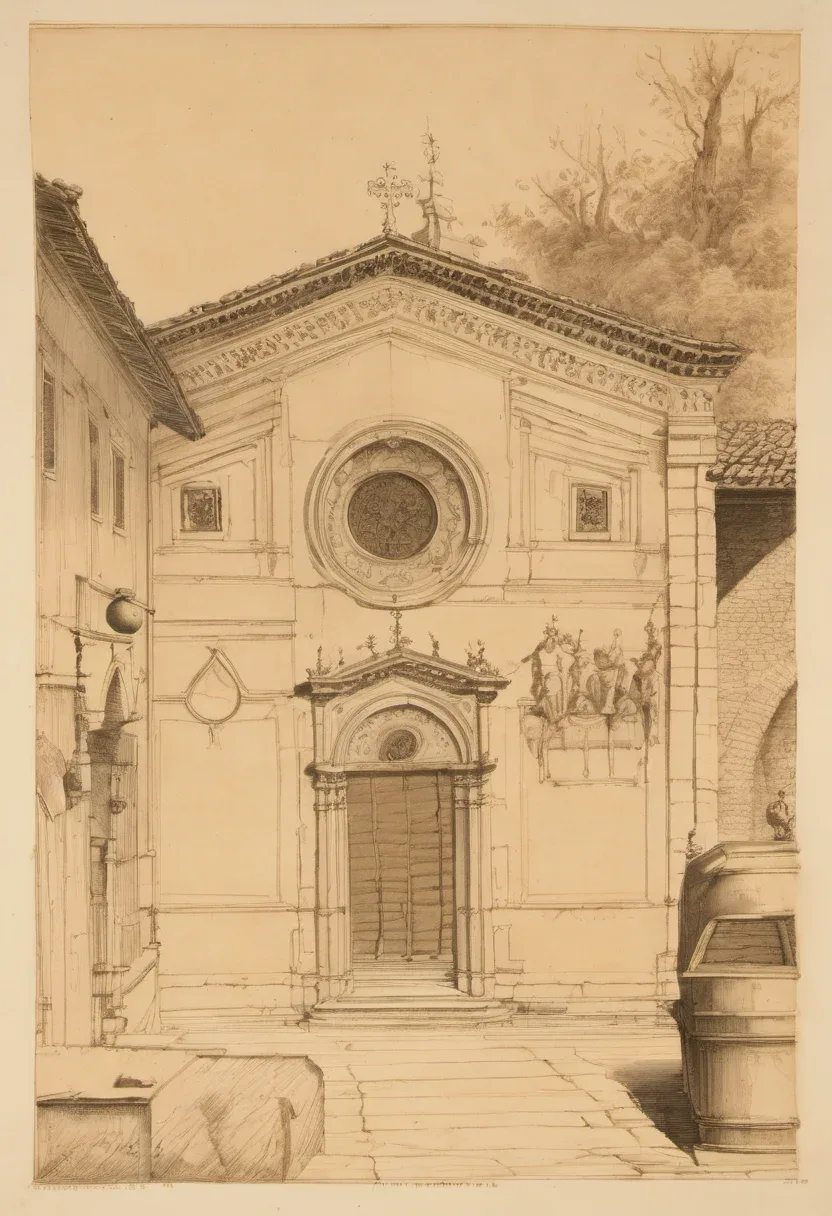
Oratorio di San Giovanni Battista
Medieval bestiaries held that a mother pelican revived her dead chicks by tearing open her own breast and feeding them her blood. Legend, not biology, but it is why the Salimbeni brothers painted her at the top of the Crucifixion on the wall ahead, nesting in a tree that grows straight out of the cross, a serpent coiled below waiting for its chance.
That fresco is dated and signed 1416, a rare boast for painters of the time, when most work went out anonymous. Lorenzo and Jacopo Salimbeni came from San Severino, seventy kilometres away, hired by the confraternity of St John the Baptist, a lay brotherhood founded in 1350 that still meets in this hall today.
Look up: the ceiling is built like the upturned hull of a ship, a carpentry trick as old as the room itself. Along the right wall, in two stacked rows, nine scenes trace John the Baptist's life, from his father struck speechless at news of the birth to his baptism of Christ in the Jordan. Twelve scenes survive whole. Five exist only as fragments, worn away by six centuries of damp.
Everyone in these paintings dresses like Urbino in 1416, not first-century Judea — velvet sleeves and fashionable hats on biblical shepherds and priests. Local guides call this the Sistine Chapel of the Marche, a bold claim for a room barely the size of a tennis court. Stand here until your eyes adjust to the dim light, and that pelican is still feeding her young, six hundred years on.
Look straight ahead, at the wall behind the altar. That tree growing out of the foot of the cross is not decoration — follow its branches upward and you will find a pelican, wings spread, tearing open her own breast to feed blood to the chicks nested above her. A serpent lies coiled just beneath them, waiting. It is one of the strangest, most tender images in the region's art, and it has looked out over this room, largely undisturbed, since 1416.
The men responsible were brothers: Lorenzo and Jacopo Salimbeni, painters from San Severino, about seventy kilometres southeast of here. Convention in early fifteenth-century Italy still favoured anonymity — artists were craftsmen, not names. The Salimbenis broke it. A band of painted lettering survives along the base of the Crucifixion, recording their names and the year. Signed, dated frescoes from this period and place are rare enough that art historians treat the inscription itself as a small event.
Their patron was the confraternity of St John the Baptist, a lay brotherhood of Urbino citizens founded in 1350, more than sixty years before the frescoes went up, and still meeting in this hall today. The building it commissioned had started life more humbly, as a hospice for pilgrims, the sick, and penitents passing through the city, begun in 1365 and finished by 1393. By the time the Salimbenis arrived, Urbino was ruled by Guidantonio da Montefeltro — decades before his son Federico built the Ducal Palace and turned the city into a genuine Renaissance capital. The International Gothic style the brothers painted in, gilded, courtly, richly patterned, was the fashionable idiom of that earlier moment, shared with contemporaries like Gentile da Fabriano working elsewhere in the Marche.
What makes the room remarkable is density, not scale. It measures barely fourteen metres by seven, smaller than many Urbino apartments, yet almost no surface is left bare. The right-hand wall alone carries nine scenes from John the Baptist's life, stacked in two registers: his father Zechariah struck mute at news of the birth, the baptism of Christ in the Jordan, sermons, imprisonment, execution. Twelve of those scenes survive in full colour. Five exist only as fragments, the plaster lost to centuries of damp before modern conservation caught up with it. Overhead runs a wooden ceiling built like the upturned hull of a ship, a construction technique as old as the room and rare enough to have survived largely intact.
Look closely at the faces in the crowd scenes and you will notice they are dressed not as first-century Judeans but as fashionable Urbino citizens of 1416 — velvet sleeves, elaborate hats, the sort of clothing confraternity members would have worn to their own meetings. It is a technique later Renaissance painters would refine into a formula: plant contemporaries inside sacred history so patrons could see themselves, quite literally, among the faithful. Whether any specific face here is a genuine portrait of a named member is a question scholars still leave open; no inscription confirms it, only the costumes suggest it.
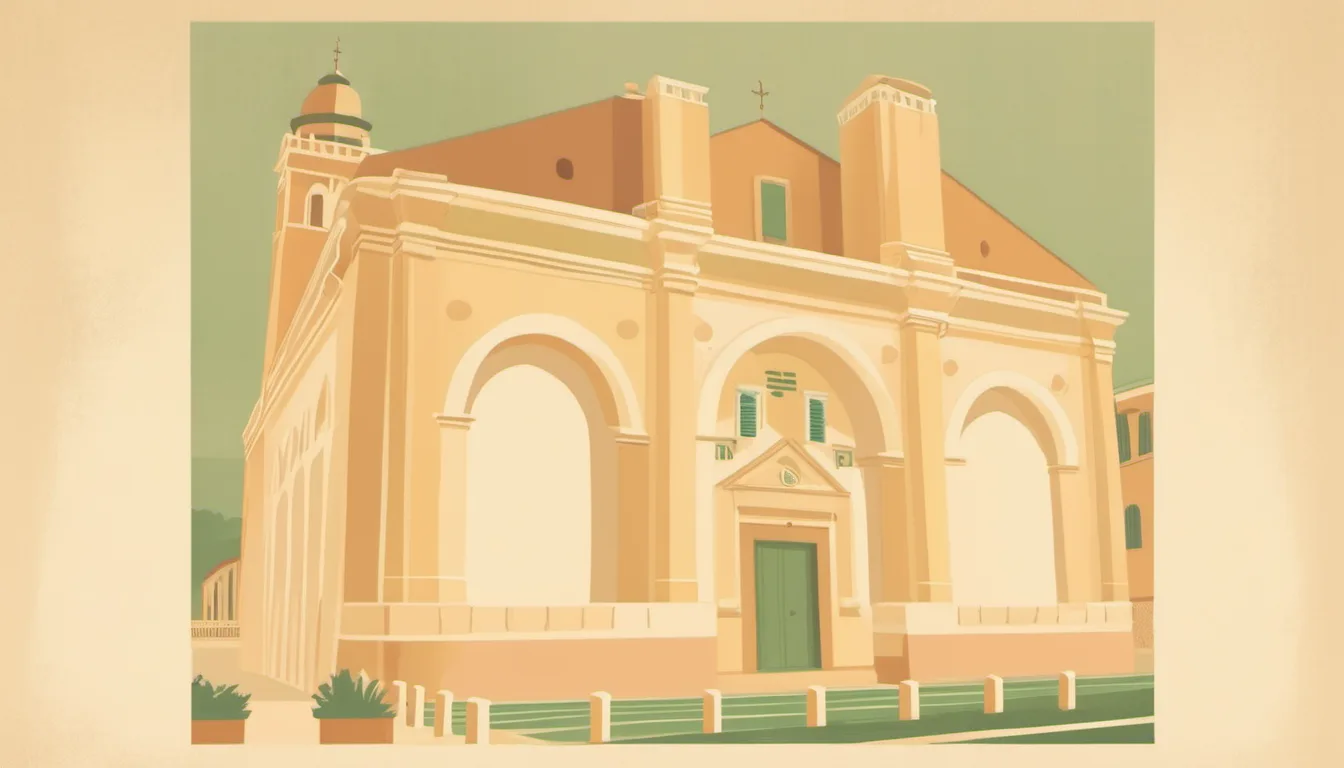
Not everything in the room is by the Salimbeni hand. Stylistic analysis attributes several scenes on the left wall and inner facade to a third painter, Antonio Alberti da Ferrara, working roughly thirty years after the brothers finished their share — evidence the cycle took decades to complete, likely interrupted by cost, by plague, or simply by changing taste. Even the building's face to the street is younger than it looks: the pointed-arch Gothic-revival facade on Via Barocci was rebuilt around 1900 by the architect Diomede Catalucci, shortly before the oratory was declared a national monument in 1902. Everything genuinely medieval here is inside, not outside.
Restorers spent 2012 and 2013 cleaning six centuries of candle smoke and rising damp from the plaster, timed for the cycle's six-hundredth anniversary in 2016. What came back is vivid enough that Urbino's own guides now call this the Sistine Chapel of the Marche — a stretch, certainly, for a room this size, but not an empty one. Wait for your eyes to adjust to the half-dark, and look up at that pelican one more time: still opening her own chest, still feeding her young, six hundred years and counting.