Cattedrale di San Giovanni Battista
The Duomo did not always stand here. Before the Malatesta it sat inside the raised citadel called the Murata, on the ground the Sferisterio now occupies. In 1378 Galeotto I Malatesta, newly lord of Cesena, ordered it rebuilt down in the contrada Croce di Marmo, where the church of Sant'Antonio Abate had stood, at the crossing of the Via Emilia with the old salt road to Cervia, today corso Gastone Sozzi. A bull of Urban VI authorised the replacement that same year. Commerce and faith at one junction.
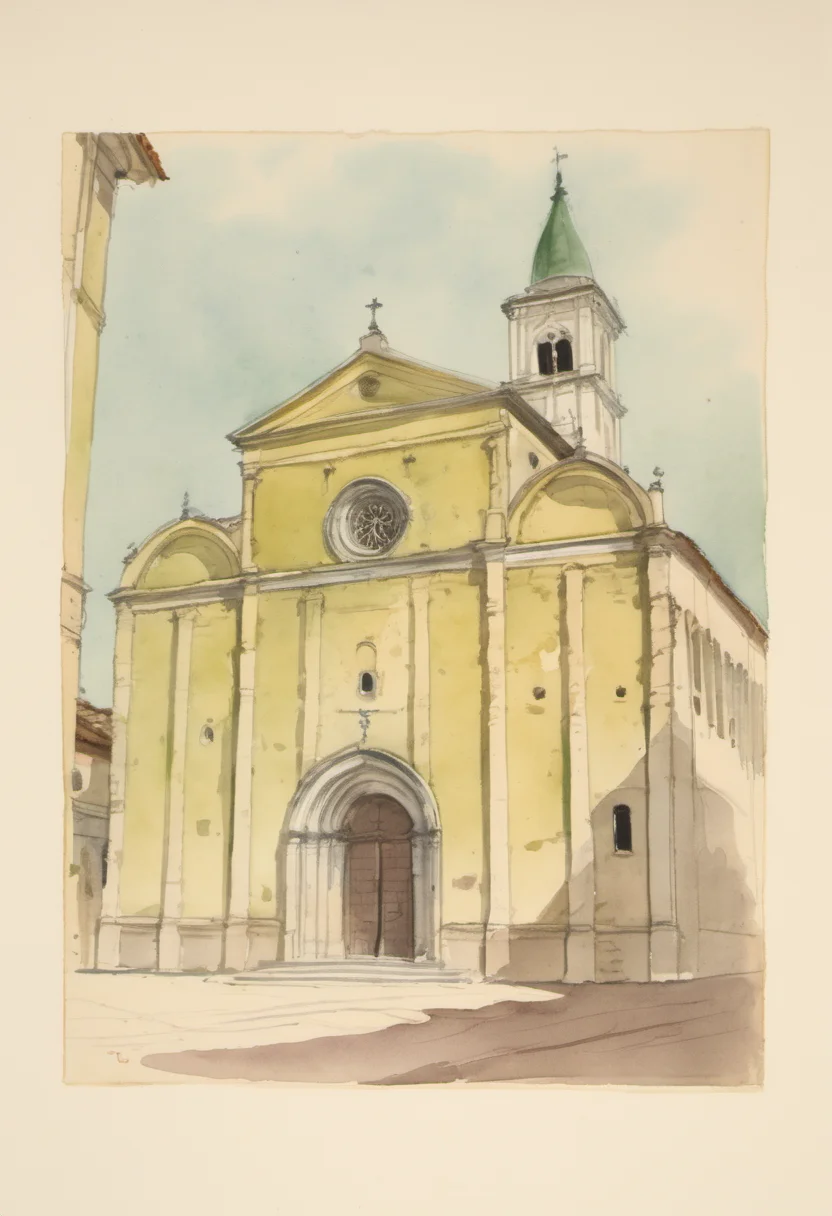
Work began in 1385, paid for by Andrea Malatesta, and ran about two decades to completion around 1405. The design is credited to an architect from Untervaldo in Switzerland, known ever since by the place rather than a name: Maestro Underwalden. He used the Hallenkirche scheme, the hall church of German Gothic. Outside it is brick and deliberately plain, eight pilaster strips the only interruption of a flat front. The upper half came at the turn of the sixteenth century and is attributed to the Venetian Mauro Codussi, who gave it a triangular pediment, two semicircular tympana and an oculus ringed with a frieze of seraphim.
Then the bell tower, begun in 1443 to designs by Maso di Pietro of the Val Lugano and paid for by Bishop Antonio Malatesta da Fossombrone, who did more than anyone to give the building its present shape. A bell chamber followed in 1741, its small dome in 1753, taking the tower to 72 metres. Inside, the remains of Saint Maurus of Cesena, who died in 946, rest in the Altar of Saint John, carved between 1494 and 1505 by Giovanni Battista Bregno da Osteno.
What you enter is a restoration argument settled in 1960. The Baroque additions were stripped out, then Francesco Gualandi gave the church a neo-Gothic face between 1886 and 1892, then that too was removed between 1957 and 1960: vaults gone, a new ceiling and crypt, the façade windows walled up. Only what remains of the eastern door survives from the original fabric. In July 1960 John XXIII raised the church to minor basilica.
Cities rarely move their cathedrals. Cesena did. Before the Malatesta, the Duomo stood inside the raised citadel known as the Murata, on ground the Sferisterio now occupies. In 1378, newly lord of the city, Galeotto I Malatesta ordered it rebuilt down in the contrada Croce di Marmo, where the church of Sant'Antonio Abate had stood, at the crossing of the Via Emilia with the old salt road to Cervia, today corso Gastone Sozzi.
A bull of Urban VI authorised the replacement that same year. Work began in 1385, paid for by Andrea Malatesta, and ran about two decades to completion around 1405. The design is credited to an architect from Untervaldo in Switzerland, known ever since by the place rather than by a name: Maestro Underwalden. He worked to the Hallenkirche scheme, the hall church of German Gothic, in Romanesque-Gothic dress.
The exterior is brick and deliberately plain, eight pilaster strips the only interruption of a flat front. The upper half waited until the turn of the sixteenth century and is attributed to the Venetian Mauro Codussi: a triangular pediment, two semicircular tympana, two small pilasters, and at the centre an oculus ringed with a frieze of seraphim. Lower down, a niche holds a Madonna and Child by Vincenzo Gottardi of 1510.
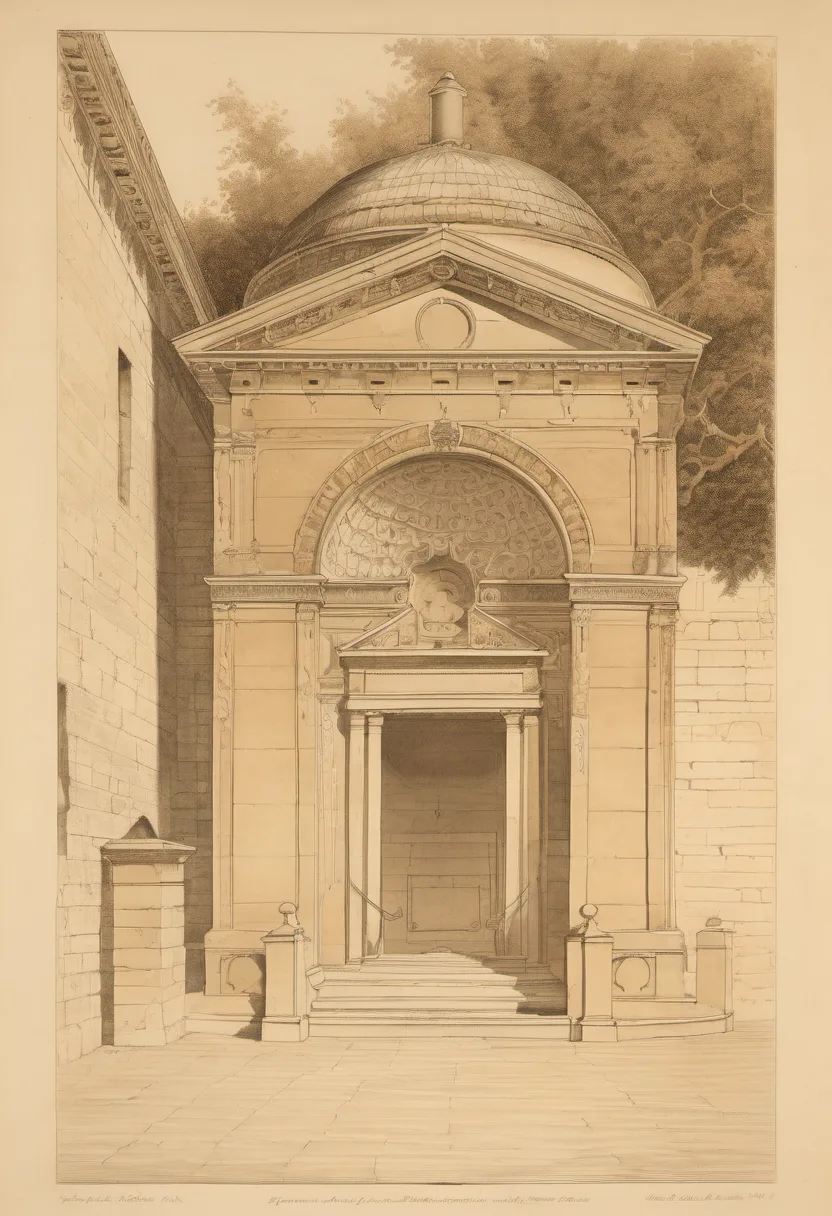
The portal is the building's open question. Splayed stone, round-arched. Tradition holds it came from the old church of San Lorenzo and was set here at the wish of Bishop Antonio Malatesta; it may equally belong to the Duomo's own fabric. To its right, an inscription records the plenary indulgence Pius VI granted the city on 9 July 1793. The bronze door is recent, made in 2000 by the Cesena sculptor Ilario Fioravanti.
Antonio Malatesta da Fossombrone, bishop from 1435 to 1475, shaped more of the church than anyone. He commissioned the campanile, begun in 1443 to designs by Maso di Pietro of the Val Lugano; a bell chamber followed in 1741, its small dome in 1753, taking it to 72 metres. At his death the Florentine Ottaviano di Antonio di Duccio carved his tomb arch, opening a prosperous stretch for sculpture that drew the brothers Giovanni Battista and Lorenzo Bregno da Osteno. Giovanni Battista's Altar of Saint John, carved between 1494 and 1505, holds the remains of Saint Maurus of Cesena, who died in 946.
Devotion, meanwhile, gathered around a small painting by Bartolomeo Ramenghi, il Bagnacavallo. Late in the 1500s Bishop Camillo Gualandi gave the cult its name, calling the picture the Madonna del Popolo. Her chapel was built between 1746 and 1748 to designs by Pietro Carlo Borboni and frescoed by Corrado Giaquinto in 1750 and 1751. On 3 June 1782 Pius VI crowned the painting himself, the first occasion of its kind in papal history.
The building has been argued over ever since. The Baroque additions were stripped out; between 1886 and 1892 Francesco Gualandi gave the cathedral a neo-Gothic face; between 1957 and 1960 that was undone in turn, the neo-Gothic vaults and nineteenth-century altars removed, a new ceiling and crypt built, the façade windows walled up. The result looks close to the original. Almost nothing of the original is left: only what remains of the door on the eastern side.
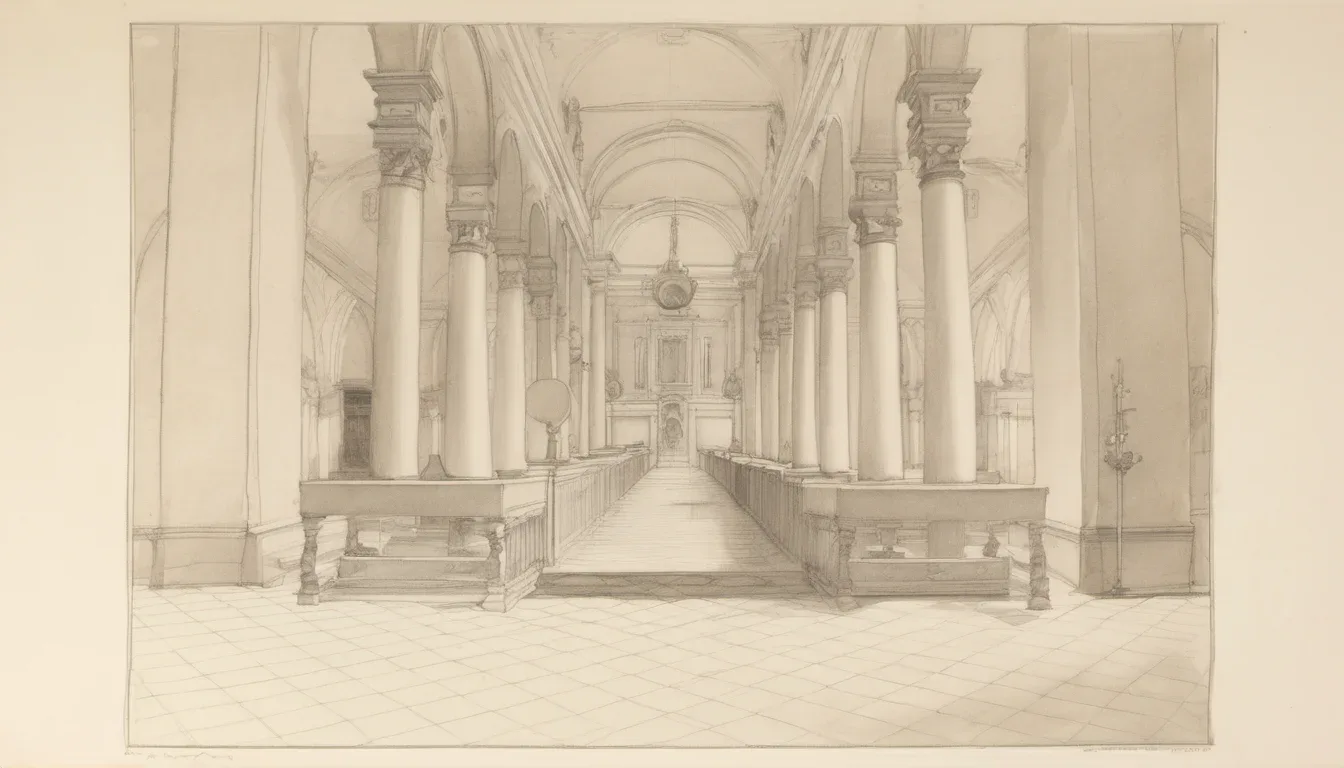
Inside, three naves, wooden trusses over the centre, cross vaults over the aisles. Turn back at the entrance for Girolamo Cialdieri's 1625 painting of the Virgin with Saints Maurus and Severus and the city of Cesena, carried here from the destroyed church of San Severo, and a copper urn of San Mauro from 1645. In July 1960 John XXIII raised the church to minor basilica; since 1986 it has been the seat of the Diocese of Cesena-Sarsina.