Marsh's Library
Marsh's Library sits in St. Patrick's Close, tucked beside the cathedral and the former St. Sepulchre's Palace. When it opened in 1707, it became the first free public library in Ireland. Archbishop Narcissus Marsh commissioned it, donating his own collection of more than 10,000 volumes, including the celebrated library of Bishop Edward Stillingfleet.
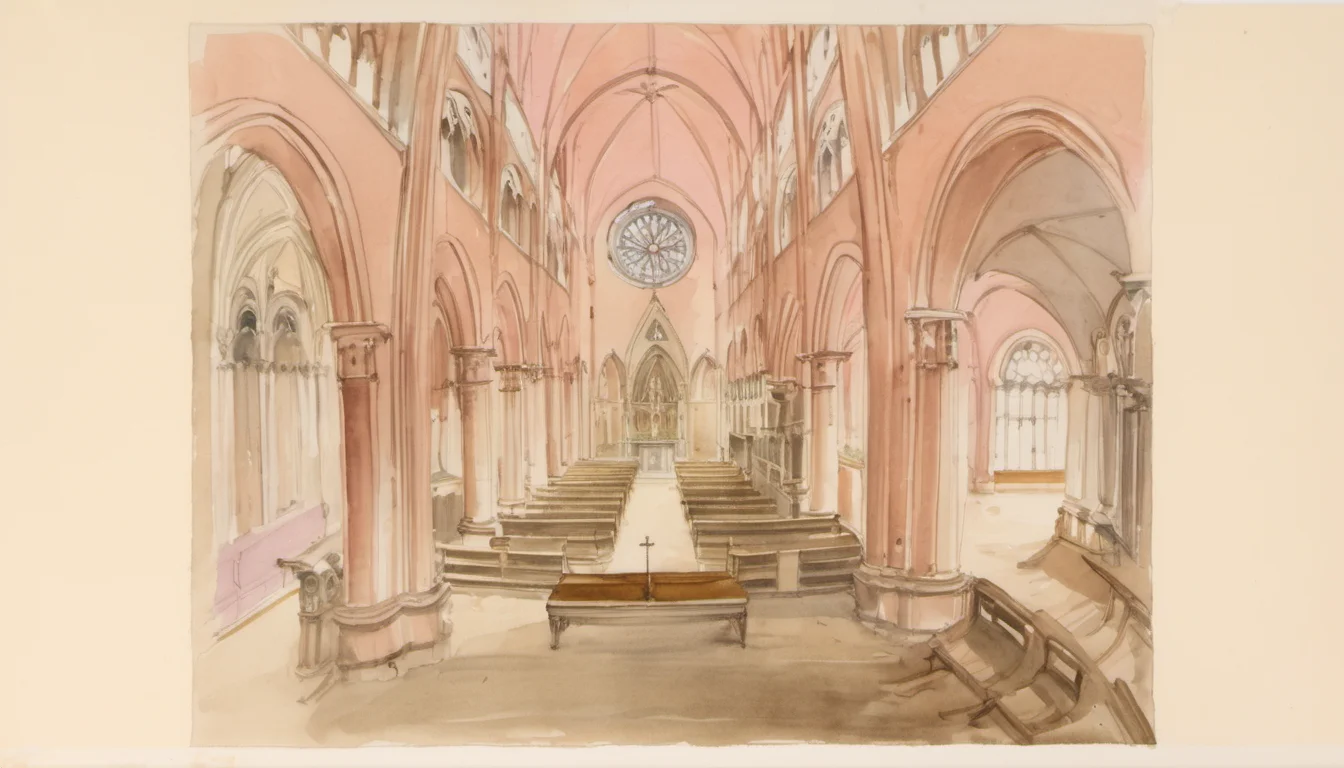
The building's interior has changed little since the early 1700s. Quarter-plained Baltic oak bookcases line the walls, their gables carved and lettered. In the 1770s, three wire alcoves—known as 'cages'—were added to thwart thieves. Some of the wood still shows bullet holes from the Easter Rising, when the adjacent Jacob's Biscuit factory was occupied.
Today the library holds over 25,000 books from the 16th to 18th centuries, plus 300 manuscripts and about 80 incunabula. Subjects range from medicine and law to travel, mathematics, and classical literature, with a strong focus on theology. The collection includes works in Hebrew, Arabic, Turkish, and Russian, as well as an important set of Latin Judaica.
Visitors can explore the galleries for a fee. Researchers may use the reading room by appointment. The library remains one of the last 18th-century buildings in Ireland still serving its original purpose, and its daily social media posts offer a glimpse into the breadth of its holdings.
Marsh's Library, originally called St. Sepulchre's Library, was built on land belonging to St. Sepulchre's Palace, adjacent to St. Patrick's Cathedral in Dublin. Construction began in 1703 and the First Gallery and Old Reading Room were completed by 1705. The library was formally incorporated by an act of the Irish Parliament in 1707, with a second gallery added the following year.
The design was the work of Sir William Robinson, Surveyor General of Ireland. After Robinson's disgrace over financial impropriety, Thomas Burgh extended the library wing and entrance porch in 1710. Archbishop Narcissus Marsh donated his own library of over 10,000 volumes, which included the former library of Bishop Edward Stillingfleet, considered one of the finest in England. Marsh purchased that collection for £2,500.
The first librarian, Dr. Elias Bouhereau, was a Huguenot refugee from La Rochelle who fled France after the Revocation of the Edict of Nantes. He also donated his personal library. His collection is particularly strong in French history, religious controversies, and medicine, and includes works on the Massacre of St. Bartholomew's Day and the Siege of La Rochelle.
The library's holdings have grown to over 25,000 books and 300 manuscripts. Notable items include 80 incunabula from before 1501, 430 Italian books from before 1600, 1,200 English works published before 1640, and another 5,000 English books printed before 1700. Irish manuscripts purchased from Dudley Loftus in 1695 include an Irish-Latin dictionary from 1662 and royal grants from 1604 to 1631.
The interior remains largely original. The bookcases are made of quarter-plained Baltic oak with carved and lettered gables. In some cases, bullet holes from the Easter Rising of 1916 are still visible. Three wire alcoves, known as 'cages', were introduced in the 1770s to prevent theft—readers were locked inside with the books.
In 1745, John Stearne, Bishop of Clogher, bequeathed half his collection to the library (the other half went to Trinity College Dublin). More recently, when the Guinness family sold Farmleigh House to the state, the Benjamin Iveagh Library was donated to Marsh's Library, though the documents remain housed at Farmleigh.
Muriel McCarthy became the first female Keeper in 1989 and served until 2011. The current Director is Dr Jason McElligott, educated at University College Dublin and St John's College, Cambridge. The library's catalogue is available online, and researchers can apply to use the reading room. Tourist numbers have grown from 16,000 in 2013 to 23,000 in 2015.
Today the library hosts exhibitions and conferences, and publishes material related to its collections. It maintains an active social media presence, posting at least one image daily from the collections on Instagram, Facebook, and Twitter. As a charitable institution, it accepts donations, which are recorded in a special ledger that dates back to 1707.