My Son Sanctuary
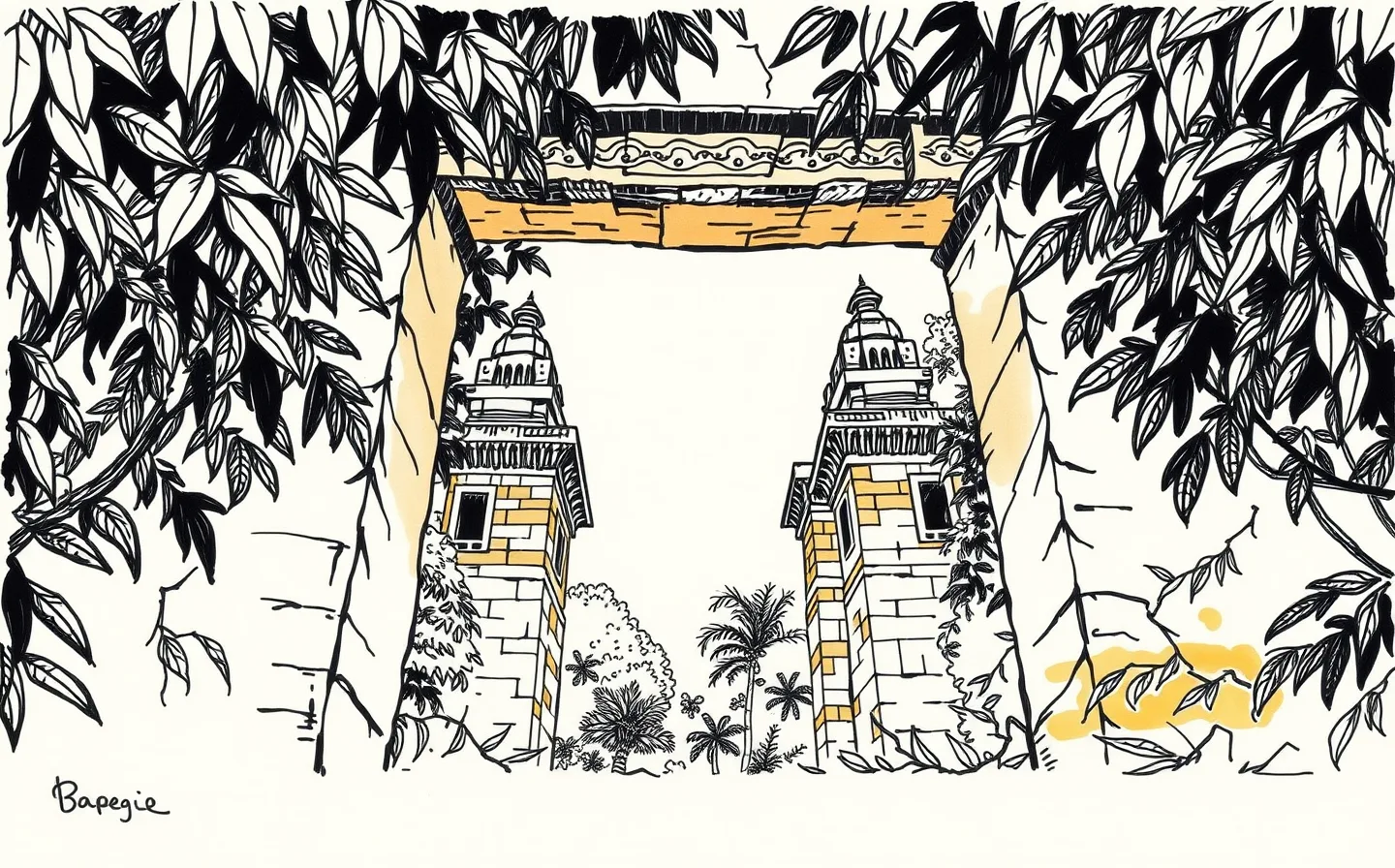
Deep in the hills of Quảng Nam, the stone towers of My Son Sanctuary rise from the jungle. This UNESCO World Heritage site, one of two in the province, marks a place of ancient worship and power. The surrounding province has been inhabited for over two millennia, with the Sa Huỳnh culture preceding the Cham kingdom. Quảng Nam was once the political heart of Champa, and My Son is thought to have served as its spiritual center. The exact origins of the sanctuary, however, remain in legend.
The province’s history is one of trade and conflict. Its ports, like Hội An, traded silk, porcelain, and luxuries from the highlands. The Dutch even brought slaves from these lands to Taiwan. The region also saw fierce dynastic wars and foreign intervention. Today, the jungle has reclaimed much of the site, leaving a quiet, haunting atmosphere.
You reach My Son via a winding road from Hội An. The morning light filters through the canopy, casting long shadows on the carved lintels. The air is thick with humidity and the sound of cicadas. It is a place for slow walking and quiet thought. The stonework, though weathered, holds a sense of enduring presence.
Allow a few hours to explore the main temple clusters. The quieter paths lead to smaller ruins hidden in the undergrowth. Nearby, the ancient town of Hội An offers a different kind of heritage, with its well-preserved architecture and riverfront. Together, they provide a deep look into Vietnam’s layered past.
Dawn arrives slowly over the hills of Quảng Nam. Mist clings to the canopy, and the air is still. At My Son Sanctuary, the first light touches the sandstone towers, revealing carvings softened by centuries of rain. This is a place that asks for silence.
The province itself is a study in contrasts. Quảng Nam stretches from the South China Sea to the Lao border, its terrain rising from coastal plains to the high peaks of the Truong Son range. The Ngoc Linh mountain, at 2,598 meters, marks the western boundary. The Thu Bon river drains the central valley, its waters once carrying trade goods from the highlands to the port at Hội An.
Human presence here reaches back 2,200 years, to the Sa Huỳnh culture. Later, Quảng Nam became the political and geographic heart of the Cham kingdom. For a time, the most powerful city-states and the busiest Cham port were located here. Luxury goods from the Central Highlands—elephant tusks, beeswax, mother-of-pearl—flowed through Hội An, funding the construction of sanctuaries like My Son.
But power shifted. Warfare with Vietnam pushed the Cham political center south to Vijaya. The trade in luxuries continued under the Nguyễn lords, then declined under the Nguyễn dynasty and French colonial rule. The region’s mountain passes made it a recurring battleground. The Trịnh–Nguyễn War saw heavy inter-dynastic fighting here. Later, the Tay Son rebellion destroyed and rebuilt Hội An. Western influence arrived early: Alexandre de Rhodes, who codified the Vietnamese alphabet, worked here, and a military alliance with France was signed in the province during the Tay Son upheaval.
The 20th century brought more conflict. Quảng Nam was split during the Vietnam War, the southern half becoming Quảng Tín. Heavy fighting marked the region until the Hue–Da Nang Campaign. After unification in 1976, the province was re-established, but in 1997 Da Nang separated into its own city. In a further twist, Quảng Nam was merged back into Da Nang on 12 June 2025.
My Son itself remains enigmatic. No inscriptions survive to name its builders. Local legend attributes the towers to Cham kings, but the sanctuary’s original dedication is lost. What is known is that the site was a UNESCO World Heritage designation, alongside Hội An, and that its stonework represents a distinct architectural tradition. The jungle has reclaimed much of it, leaving only fragments of walls, lintels, and towers.
You approach the site on foot, following a path through dense vegetation. The main cluster of towers stands in a clearing, their surfaces covered in moss and lichen. Step inside a doorway, and the noise of the world falls away. The only sounds are birds and the rustle of leaves. It is easy to imagine the processions and rituals that once filled this valley.
Allow a morning or an afternoon to explore. Bring water and insect repellent; the humidity is heavy. Afterward, Hội An waits, its ancient streets and riverbanks offering a different, but equally layered, heritage. My Son, however, leaves the stronger trace—a quiet stone presence that lingers long after you leave.