Konjikido, Chuson-ji
The bus drops you at the foot of a wooded hill. A path climbs past stone lanterns and mossy cedar trunks. At the top, inside a featureless concrete building, waits one of Japan's most improbable treasures: a tiny hall sheathed entirely in gold leaf, built in 1124 and still holding the mummified remains of three warlords.
This is Konjikido, the Golden Hall of Chūson-ji. It measures just five and a half metres on a side and stands eight metres tall. Gold leaf covers both interior and exterior. Inside, mother-of-pearl inlays, lacquerwork and painted decorations bring together the finest arts of the late Heian period. Three altars face the viewer, each once holding a seated Amida Nyōrai flanked by bodhisattvas and guardian figures. (One Niten statue is now missing.) The hall was the first structure in Japan ever designated a National Treasure.
The warlords themselves are the reason the hall was built. Fujiwara no Kiyohira, founder of the Northern Fujiwara clan, had lost his family in the bloody Former Nine Years and Latter Three Years Wars. He resolved to create an ideal Buddhist society in Hiraizumi and built this temple to placate the souls of all who had died. Work began around 1095; the temple once contained more than 40 halls and 300 monks' residences. Kiyohira's son and grandson continued the project, but in 1189 the forces of Minamoto no Yoritomo destroyed Hiraizumi. Chūson-ji survived, though a 1337 fire consumed most of its buildings.
Today only Konjikido and a sutra repository remain from the original complex. The hall was first sheltered by a wooden cover in 1288; since 1965 it has sat behind thick acrylic glass in a protective concrete shell. The mummies – Kiyohira under the central altar, Motohira under the northwest, Hidehira under the southwest (next to a casket holding the head of his beheaded son) – were last examined in 1950. The interior lacquer was restored in 1964 by maki-e master Shōgyo Ōba. Stand before the glass and you face the gilded dream of a dynasty that lasted barely a century.
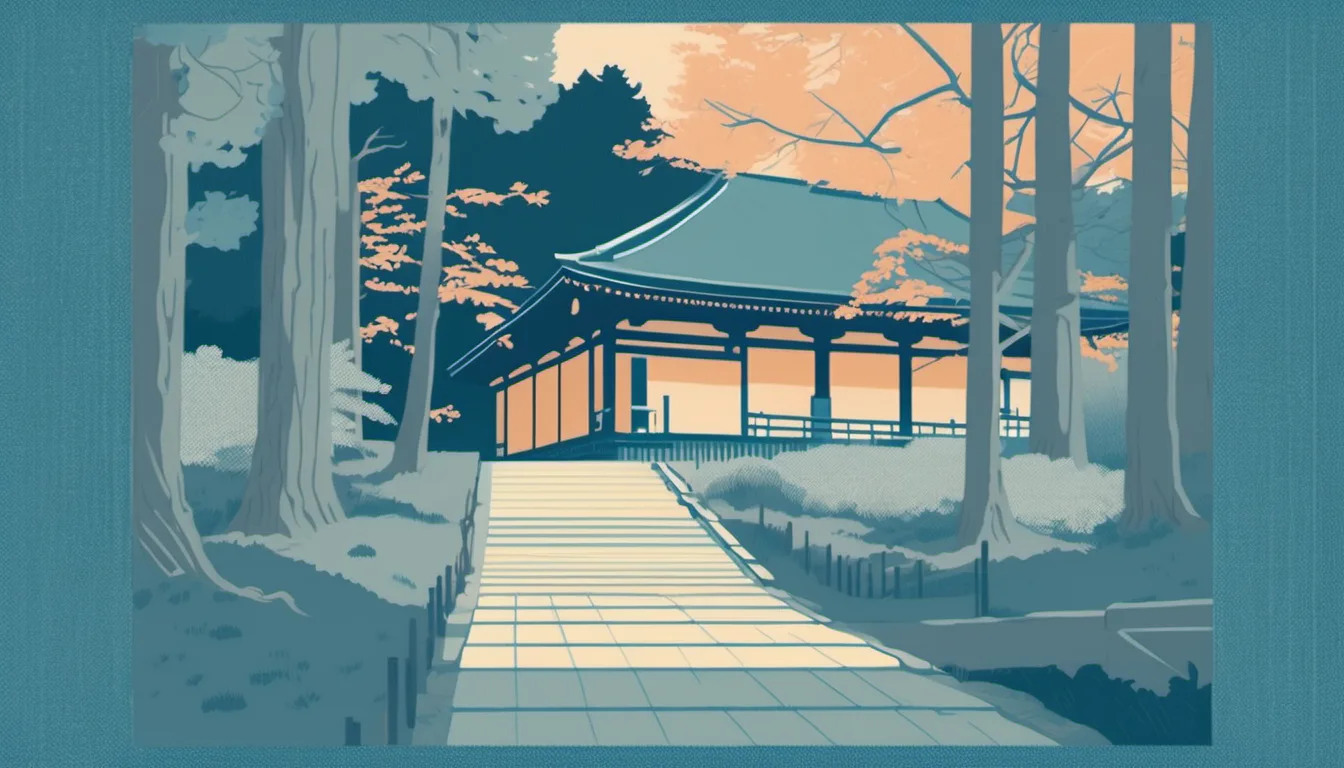
The bus drops you at the foot of a wooded hill. A path climbs past stone lanterns and mossy cedar trunks. At the top, a concrete building – utilitarian, without ornament – sits on a broad platform. Step inside, and the fluorescent light dims. Behind thick acrylic glass, a tiny structure burns with gold light. This is Konjikido, completed in 1124, the only building from Chūson-ji's original forty-plus halls that still conveys the temple's prime.
The hall is a cube: five and a half metres on each side, eight metres tall. Gold leaf covers both the interior and exterior. Inside, every surface is worked – mother-of-pearl inlays, woodwork, metalwork, lacquerwork, paintings. These are arts of the late Heian period, gathered in a space smaller than a modern living room. Three altars face the viewer, each originally holding a seated Amida Nyōrai flanked by Kannon Bosatsu, Seishi Bosatsu, six Jizō Bosatsu and two Niten guardian statues. One Niten figure is now missing. The hall was the first structure in Japan to be designated a National Treasure.
But Konjikido is not just a work of art. It is a mausoleum. Beneath the altars lie the mummified remains of the first three leaders of the Northern Fujiwara clan. Fujiwara no Kiyohira, the founder, is assumed to be under the central altar. His son Motohira, known to have died of a cerebral hemorrhage, lies under the northwest altar. Under the southwest altar is Fujiwara no Hidehira; beside him, a casket holds the head of his son Yasuhira, who was beheaded in 1189. The mummies were last examined in 1950.
Why build a golden tomb for warlords? Kiyohira had been forced into bloody battles during the Former Nine Years War and the Latter Three Years War. He lost his family to the violence. After consolidating power in northern Honshu, he resolved to bring peace to the region based on an ideal Buddhist society. He moved his headquarters to Hiraizumi around 1087 and began constructing Chūson-ji around 1095. The temple was meant to placate the souls of all who had died in those wars. Per the Azuma Kagami, the official history of the Kamakura shogunate, the complex contained more than 40 halls and pagodas, and over 300 monks' residences.
Hiraizumi flourished for nearly a century – a political, military and commercial centre that rivalled Kyoto in ambition if not scale. Kiyohira's son Motohira continued the work, commissioning his own great temple, Mōtsū-ji, nearby. Motohira's son Hidehira completed Mōtsū-ji and also built Muryōkō-in. But in 1189, Minamoto no Yoritomo's forces destroyed Hiraizumi. Chūson-ji survived the war, but fell into decline. A fire in 1337 consumed much of the temple; still, more than 3,000 National Treasures and Important Cultural Properties survived.
During the Edo period, the Date clan of Sendai partially rebuilt Chūson-ji, and it became a subsidiary temple of Kan'ei-ji in Edo. The poet Matsuo Bashō visited during his travels for Oku no Hosomichi; the sight of overgrown ruins moved him to write: 'erba estiva... resti dei sogni dei soldati' – the summer grass: all that remains of the soldiers’ dreams.
Konjikido itself was originally exposed to the open air. In 1288 a wooden structure was built to protect it. That roof rotted over the centuries. In 1965 the concrete shelter was constructed, and the hall was rebuilt from 1962 to 1968. The maki-e lacquer artist Shōgyo Ōba restored the interior lacquerwork in 1964. Today you view the hall only from the front and sides, the acrylic glass muffling any sense of intimacy. Yet the gold still holds its power.
Stand before the glass. The three altars, the bodhisattvas, the missing guardian – all are relics of a dynasty that dreamed of paradise on earth. The mummies are silent beneath the gilded wood. Outside, the summer grass grows tall.