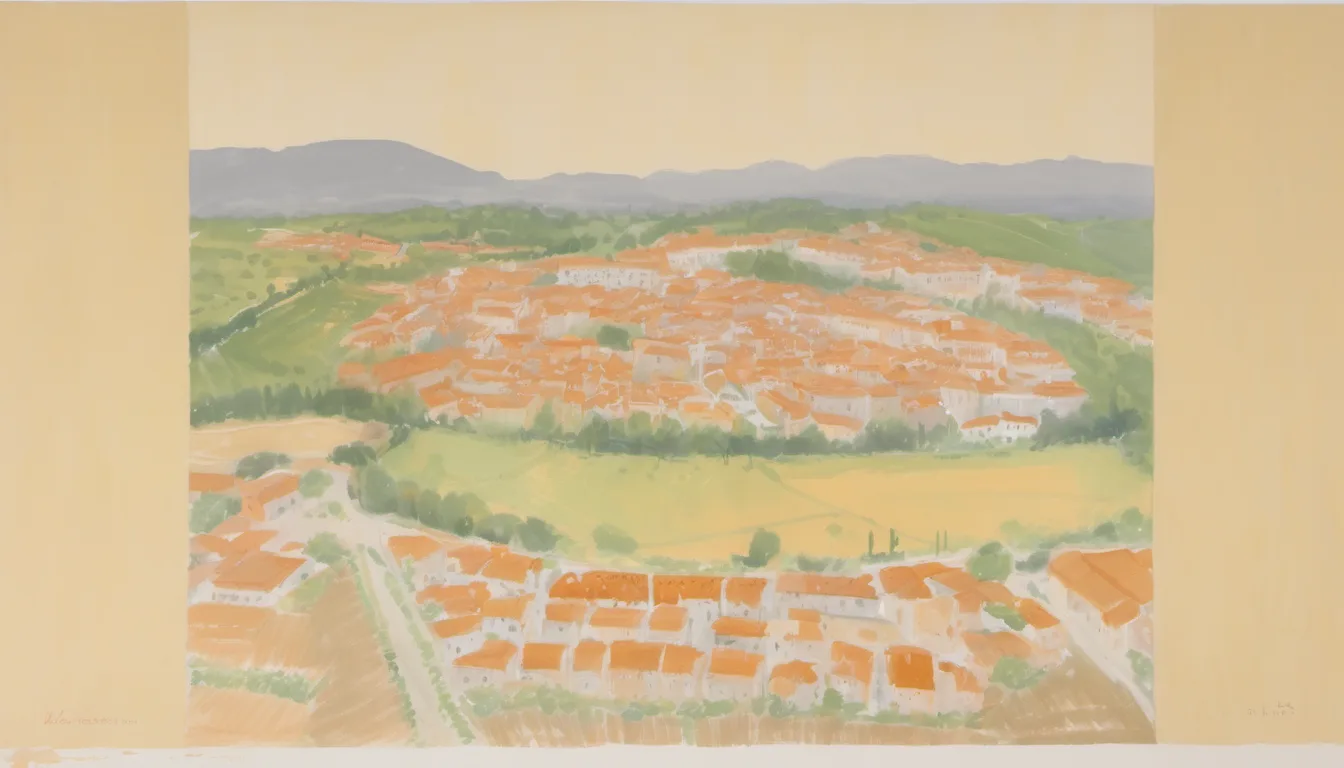
Lucca, Italy
Lucca does not shout; it endures. Nestled in a fertile plain along the Serchio River, this Tuscan city is an anomaly in Italy’s narrative of conquest and change. For nearly five centuries, from the twelfth to the seventeenth century, Lucca remained an independent republic, a status it maintained alongside Venice and Genoa. It painted the word Libertas on its banner until the French Revolution, a testament to a civic pride that refused to be extinguished by the shifting tides of European power. To walk its streets is to move through a living archive of resilience, where the air itself seems to hold the weight of centuries of self-governance.
The city’s most defining feature is its Renaissance-era walls, almost intact and enclosing a historic center that feels suspended in time. These are not mere fortifications but a continuous promenade, a tree-lined rampart that offers one of the most rewarding views in Italy. Walking atop them, you are elevated above the dense tapestry of medieval towers, baroque palaces, and narrow alleys. The walls transform the city into a garden, a verdant ribbon that separates the urban density from the surrounding countryside, inviting a rhythm of ascent and descent that defines the Lucca experience.
Inside the walls, the city reveals its layers. The rectangular grid of the historical center preserves the Roman street plan, a geometric skeleton laid down in 180 BC when Lucca became a Roman colony. Piazza San Michele occupies the site of the ancient forum, while the outline of a Roman theater is visible in Piazza Sant’Agostino. This archaeological continuity is not abstract; it is embedded in the daily life of the city. The Piazza dell’Anfiteatro, with its origins in the second half of the first century AD, still bears the elliptical imprint of its Roman predecessor, now filled with cafes and the hum of modern life. It is a place where history is not displayed but inhabited.
What makes Lucca singular is not just its stones, but its spirit. It is the birthplace of composers like Giacomo Puccini and Luigi Boccherini, a city that understands the power of melody and silence in equal measure. It is a place where the Guinigi Tower, with its fourteenth-century plane trees growing from its summit, stands as a symbol of organic growth within rigid structures. Walking Lucca rewards you with the realization that independence is not just a political status, but a way of seeing. The city’s preservation is an act of defiance, a refusal to let the modern world erase the past. It is a city that invites you to slow down, to look up at the towers, and to listen to the quiet hum of a republic that still believes in itself.
Lucca is a city that has survived by being difficult to take. Located in a fertile plain along the Serchio River in central Italy, it has resisted the gravitational pull of its more famous neighbors, Florence and Pisa, for over a millennium. Its story is one of stubborn autonomy, a narrative of a city that chose to be small, wealthy, and fiercely independent rather than absorbed into the grander narratives of empire. The name Lucca itself, derived from the Latin 'lucus' meaning sacred grove or 'lucare' meaning to cut, hints at its origins as a clearing in a wooded area, a space defined by what was removed to make room for light. This etymology sets the tone for a city that has always valued clarity and space, even within its dense urban fabric.
The roots of Lucca’s urban identity stretch back to antiquity. The territory was settled by the Etruscans and possibly earlier Ligurian tribes, but it was the Romans who gave it its shape. In 180 BC, Lucca became a Roman colony, and in 89 BC, a municipality. The rectangular grid of its historical center is a direct inheritance of this Roman planning, a geometric order that persists today. Piazza San Michele stands on the site of the ancient forum, the political heart of the Roman city. The outline of the Roman amphitheater is still visible in the Piazza dell’Anfiteatro, and the footprint of a Roman theater can be traced in Piazza Sant’Agostino. These are not ruins to be visited but living spaces, integrated into the city’s contemporary life. Fragments of Roman walls are even incorporated into the church of Santa Maria della Rosa, a physical layering of time that is unique to Lucca.
The political significance of Lucca in the ancient world was profound. In 56 BC, the city hosted the Lucca Conference, where Julius Caesar, Pompey, and Crassus reaffirmed their political alliance, the First Triumvirate. This event underscores Lucca’s status as a key player in Roman politics, a city of enough wealth and influence to host the architects of the empire’s future. However, it was the Middle Ages that forged Lucca’s distinct character. In the early sixth century, Frediano, an Irish monk, became bishop of Lucca, marking the city’s integration into the broader Christian world. The city’s strategic importance was evident when Narses besieged it in 553, and later when it served as the capital of the Lombard Duchy of Tuscia from 576 to 797. During this period, Lucca minted its own coins, a clear assertion of sovereignty.
Religious devotion played a crucial role in Lucca’s medieval prosperity. The arrival of the Holy Face of Lucca, or Volto Santo, in 742, transformed the city into a major pilgrimage destination. This eight-foot-tall wooden crucifix, allegedly carved by Nicodemus, is the oldest surviving wooden carving in Europe. Along with relics of saints like San Regolo and Saint Fridianus, the Holy Face placed Lucca on the Via Francigena, the great pilgrimage route from northern Europe to Rome. This influx of pilgrims brought wealth and cultural exchange, fostering a cosmopolitan atmosphere. The city’s silk trade, which began in the eleventh century, became legendary, rivaling the silks of Byzantium. Lucca cloth, woven with gold or silver threads, was a symbol of the city’s economic power and artistic sophistication.
Politically, Lucca navigated the turbulent waters of medieval Italy with remarkable skill. In 1057, Anselm of Baggio, later Pope Alexander II, was appointed bishop, strengthening the city’s ties to the Church. Under his leadership, the Cathedral of San Martino was rebuilt, and the Church’s patrimony was restored. The Allucingoli family, a noble dynasty with strong church connections, produced Pope Lucius III in 1181 and several cardinals, further embedding Lucca in the ecclesiastical hierarchy. However, it was the republican period that defined Lucca’s modern identity. After the death of Matilda of Tuscany, the city constituted itself as an independent commune with a charter in 1160. For nearly 500 years, Lucca remained a republic, a status it maintained alongside Venice and Genoa.
The republican era was marked by both internal strife and external threats. In 1273 and 1277, Lucca was ruled by Guelph capitano del popolo Luchetto Gattilusio. In 1314, internal discord allowed Uguccione della Faggiuola of Pisa to seize power, but the Lucchesi expelled him two years later. They then handed the city to Castruccio Castracani, a condottiero who transformed Lucca into a leading state in central Italy. Castracani’s rule was brief but brilliant; he defeated Florence’s Guelphs at the Battle of Altopascio in 1325 and was nominated duke of Lucca by Louis IV the Bavarian. His tomb in the church of San Francesco is a testament to his legacy, and his biography was studied by Machiavelli as a model of political rule. Lucca’s rivalry with Florence during this period highlights its military and political significance.
Despite its successes, Lucca’s independence was constantly challenged. After Castracani’s death in 1328, the city fell under various rulers, including Louis of Bavaria, the Genoese Gherardino Spinola, and John, king of Bohemia. It was pawned to the Rossi of Parma, ceded to Mastino II della Scala of Verona, sold to the Florentines, and surrendered to the Pisans. In 1408, Lucca hosted a convocation organized by Pope Gregory XII to end the papal schism, further demonstrating its diplomatic importance. The city managed to maintain its independence, first as a democracy and later as an oligarchy after 1628. It painted the word Libertas on its banner until the French Revolution in 1789, a symbol of its enduring commitment to self-governance.
The early modern period saw Lucca’s transition from republic to monarchy. In 1801, the French granted it a democratic constitution, but in 1805, Napoleon converted the Republic of Lucca into a monarchy, installing his sister Elisa Bonaparte Baciocchi as Princess of Lucca. From 1815 to 1847, it was a Bourbon-Parma duchy under Maria Luisa of Spain and her son Charles II, Duke of Parma. The Treaty of Vienna in 1815 led to Lucca’s annexation to the Grand Duchy of Tuscany upon Marie Louise’s death in 1847. In 1860, it became part of the Kingdom of Sardinia, and in 1861, part of the Italian State. This political evolution reflects the broader unification of Italy, but Lucca’s unique character remained intact.
One of the most poignant figures in Lucca’s history is Santa Zita, a domestic servant who lived in the thirteenth century. Born in 1218 in Pescaglia, Zita worked for the noble Fatinelli family in Lucca, where she remained for her entire life. She was known for her generosity to the poor and her miracles, including turning bread into flowers and water into wine. Her story, popularized by Dante Alighieri in the Divine Comedy, has made her a symbol of Lucca’s piety and compassion. Her body, incorrupt since 1652, is displayed in the basilica of San Frediano, a testament to her enduring legacy. Zita’s patronage of domestic servants and her status as co-patron of Lucca highlight the city’s values of humility and service.
Today, Lucca is a city that balances its rich history with modern life. Its walls, a continuous tree-lined promenade, offer panoramic views of the city and the surrounding countryside. The historic center, with its Roman grid, medieval towers, and baroque palaces, is a living museum. The city is the birthplace of composers like Giacomo Puccini and Luigi Boccherini, reflecting its cultural significance. The Guinigi Tower, with its plane trees, and the Piazza dell’Anfiteatro, with its elliptical shape, are iconic landmarks. Lucca’s independence, though political, is cultural; it is a city that has preserved its identity through centuries of change. Walking Lucca is an exercise in patience and observation, rewarding those who take the time to explore its layers. It is a city that invites you to slow down, to listen to its stories, and to appreciate the quiet dignity of a republic that still stands.
Do not miss around Lucca
5 placesEvery place below is a ten-to-fifteen minute walk from the last.