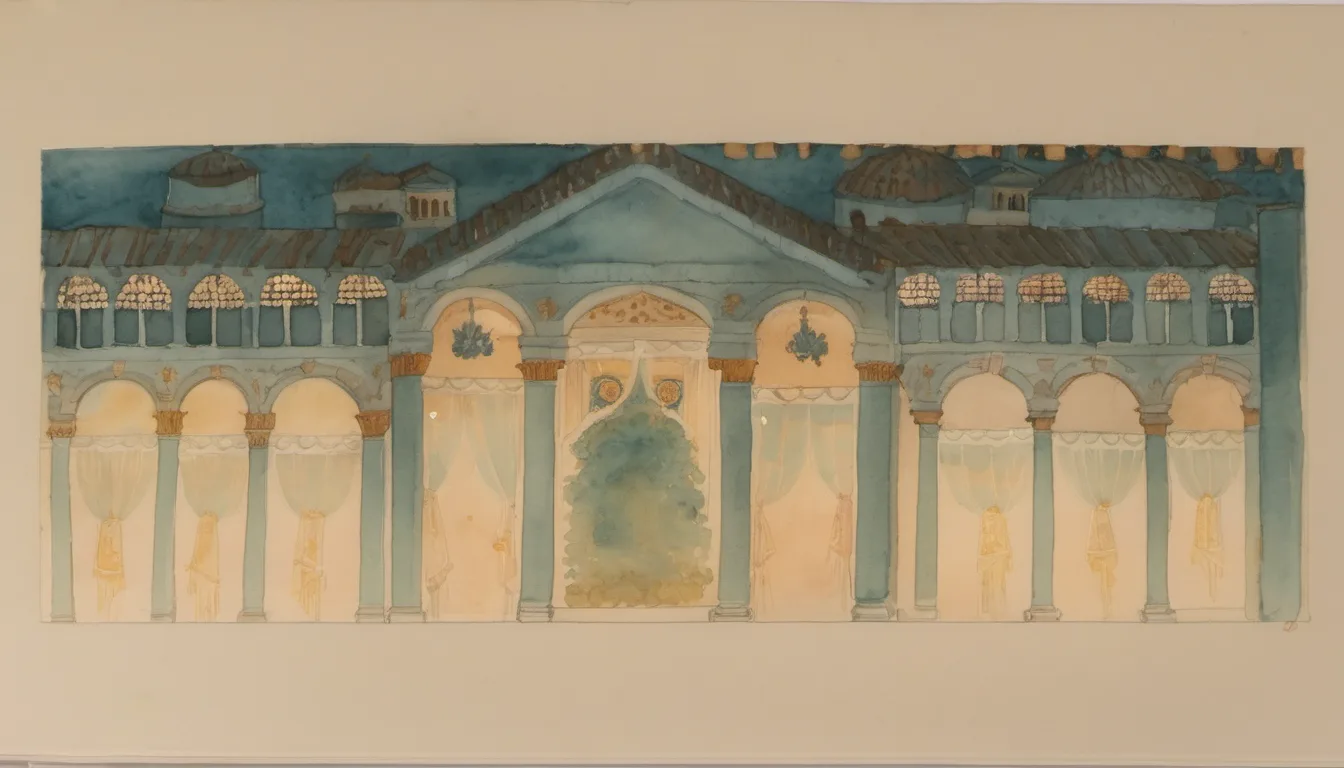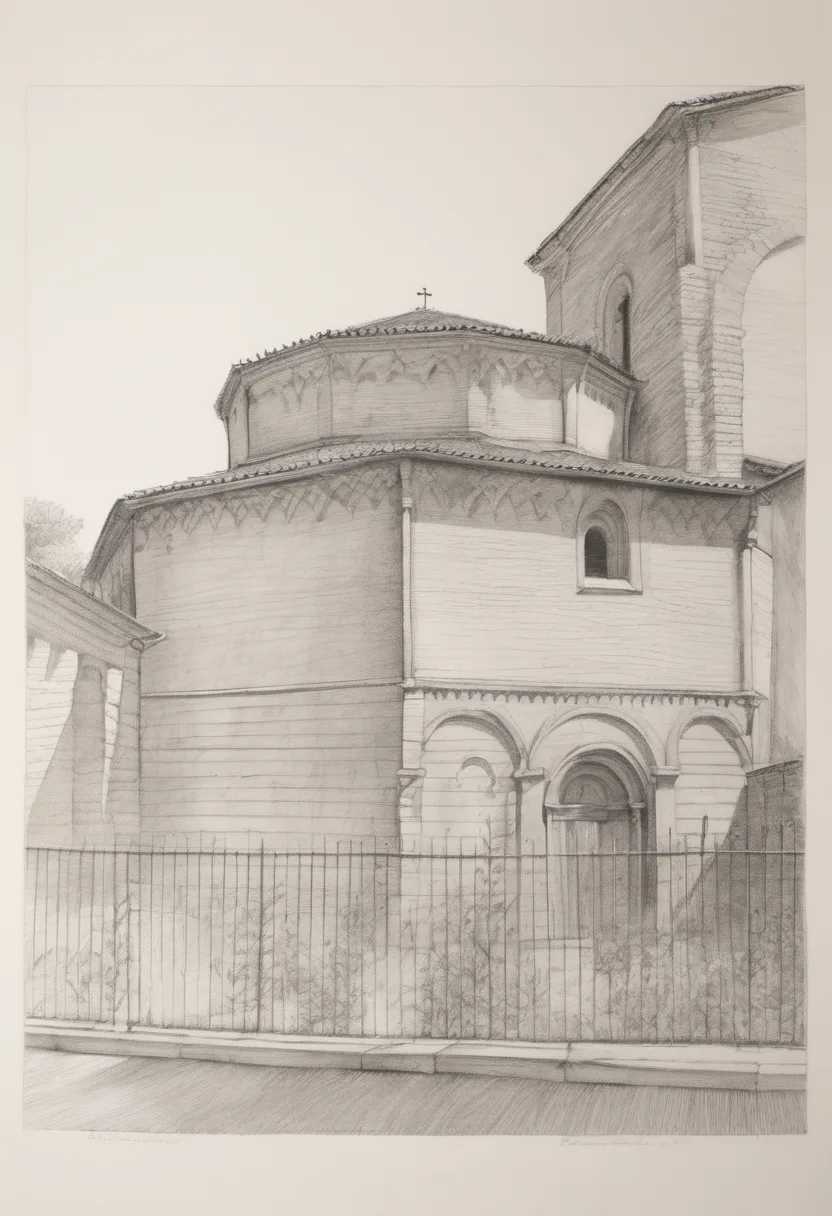
Basilica di Santo Stefano (Sette Chiese)
That stone basin in the courtyard ahead of you is called the Catino di Pilato, and legend has it that Pontius Pilate washed his hands there before condemning Christ. In truth it is a Lombard offering, carved under King Liutprand and dated to around 737 to 744, a good seven centuries after Pilate died. The legend has stuck around anyway, because this whole complex was built to make that kind of confusion feel almost plausible.
Tradition credits a fifth century bishop named Petronius with the idea: build a Jerusalem you do not have to sail to. Pilgrims who could not reach the Holy Land could walk one here instead, a chain of churches following the route of Christ's Passion, courtyard to crypt. The complex sits, so the story goes, on the ruins of a Roman temple to Isis, and the marble columns propping up the round Holy Sepulchre church, one a rare black stone shipped from Africa, are the circumstantial evidence.
Step inside that rotunda and look at the geometry: the outer walls form an irregular octagon, no two sides equal, while twelve columns inside trace a perfectly regular ring. Nobody has ever fully explained the mismatch.
Downstairs, in the crypt, two stone urns hold Bologna's first Christian martyrs, a Roman citizen named Agricola and Vitale, the servant executed alongside him around the year 304. Their columns are scavenged from older buildings, no two the same height, and legend claims one matches the exact height of Christ.
Four of the original seven churches survive. A pagan temple, a stand-in Jerusalem, and a courtyard basin that was never near Pilate's hands, still convincing people otherwise, thirteen centuries on.
Look at the basin in the courtyard behind you. Locals call it the Catino di Pilato, and legend has Pontius Pilate washing his hands in it before condemning Christ. It is actually a Lombard basin, a gift under King Liutprand dated to somewhere between 737 and 744, carved a good seven centuries after Pilate died. The legend survives anyway, because this whole complex was built to make that kind of confusion feel almost plausible.
Tradition credits a fifth-century bishop named Petronius with the idea: build a Jerusalem you do not have to sail to. Pilgrims who could not reach the Holy Land could walk one here instead, a chain of churches tracing the route of Christ's Passion, courtyard to crypt to calvary. It is a good story, and Bologna has told it for close to a thousand years. What the stones actually show is messier. Most of what stands today was rebuilt by Benedictine monks between the tenth and thirteenth centuries, after Hungarian raiders flattened whatever had come before.
Underneath, tradition says, sat a Roman temple to Isis, and the circumstantial evidence is standing right in front of you: seven slender marble columns inside the round Holy Sepulchre church, salvaged from the Greek island of Karystos, plus one rare black cipollino column shipped from Africa in Roman times. Whoever built this rotunda made an odd choice with them. The outer walls form an irregular octagon, no two sides quite equal, while the columns inside trace a perfectly regular twelve-sided ring. Why the mismatch? Nobody has fully explained it. The likeliest guess is that an older floor plan is buried under the one you are walking on.
Below the high altar, in the crypt of the Church of the Crucifix, two stone urns hold Bologna's first Christian martyrs: Agricola, a Roman citizen, and Vitale, the servant executed alongside him around the year 304, under Diocletian's persecutions. Their crypt is held up by mismatched columns, spolia scavenged from older Roman buildings, no two the same height, and one, so the story goes, matches the exact height of Christ. Which one, nobody agrees.
Santo Stefano's strangest chapter belongs to a different tomb. Sometime around 1400, workers uncovered a paleochristian grave inscribed simply 'Symon,' and Bologna quietly convinced itself it had found the tomb of the apostle Peter. Rome was not amused. A furious pope had the roof stripped off the offending church and the whole building filled with earth, sealed for roughly seventy years, reopened only after a cardinal named Giuliano della Rovere, the future Pope Julius II, intervened on the city's behalf.
Inside the Church of the Crucifix stands a set of life-sized wooden figures carved in the late thirteenth century, among the oldest sculpted Nativity groups known to survive anywhere. They were painted and gilded decades later by Simone dei Crocifissi, the same painter who decorated the crucifix hanging nearby around 1380. Conservators spent years stabilizing seven-hundred-year-old lime and elm wood before reinstalling the figures behind climate-controlled glass in 2007.
For nearly nine centuries, this was also Bologna's holiest address for another reason entirely: the bones of San Petronio, the city's patron saint, discovered here in 1141 and venerated ever since in the Holy Sepulchre chapel. Only in the year 2000 did Cardinal Giacomo Biffi finally move them across town, reuniting the saint's body with the head already kept in the basilica that now bears his name, closing an eight-hundred-and-fifty-nine-year commute.
Walk back out through the courtyard, past the small stone rooster carved to recall Peter's denial, and that basin at its centre stops looking like plumbing and starts looking like what it actually is: one small, deliberate fiction, kept polished for thirteen centuries because the story it stood in for mattered more, to the people who needed it, than the facts ever did.