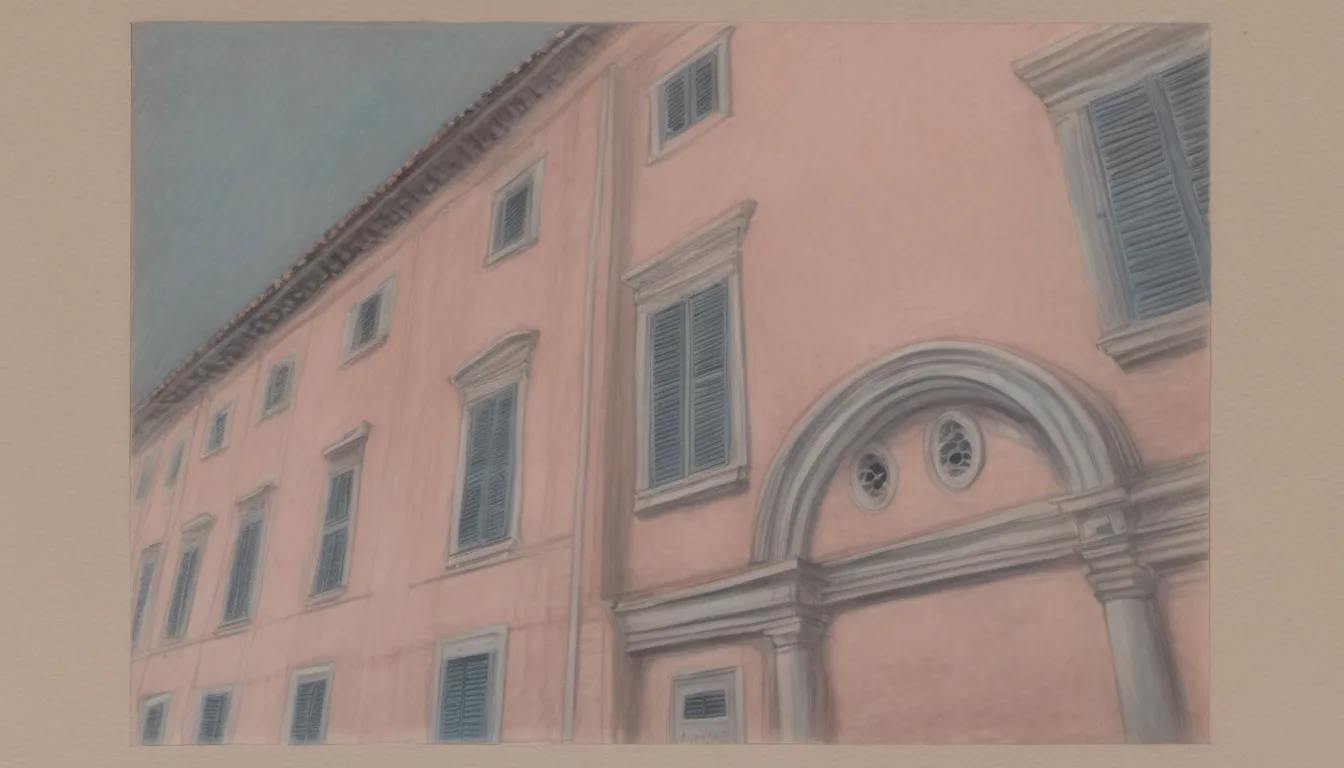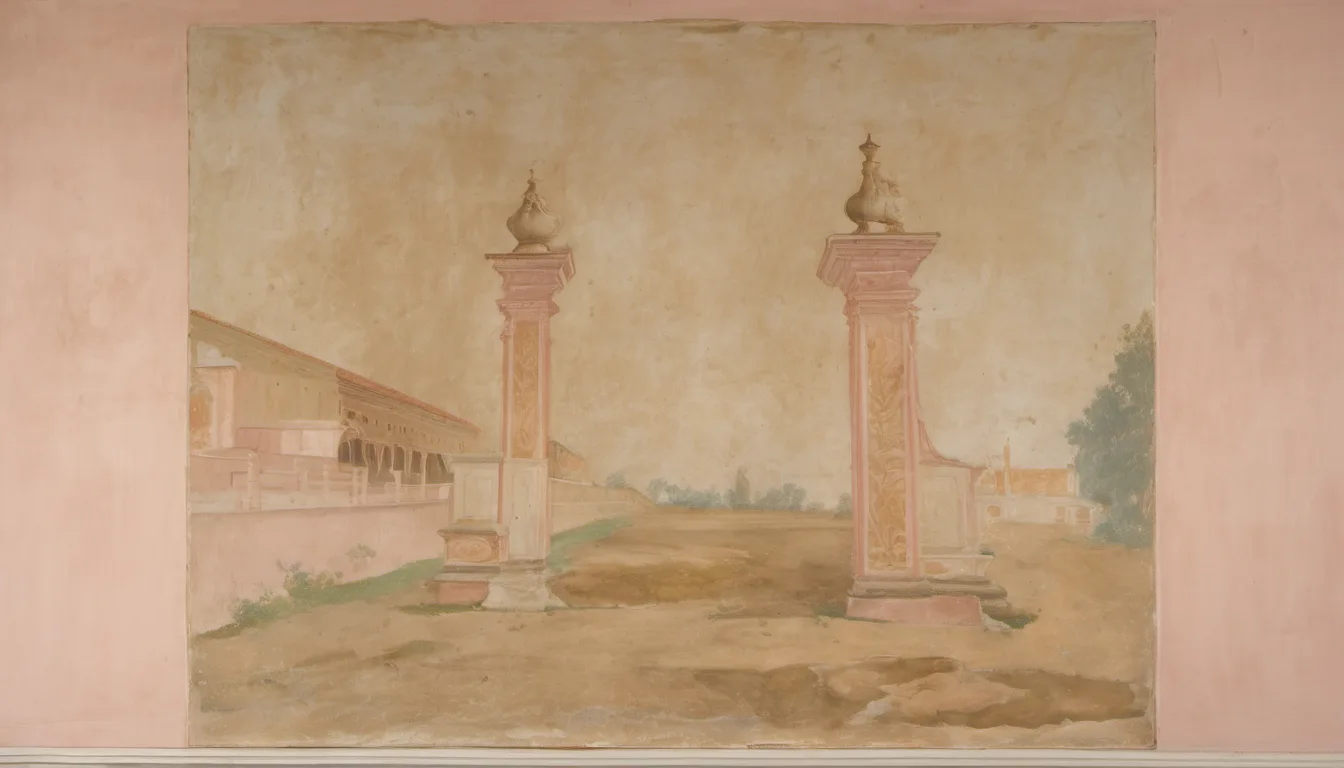
Certosa di Paradigna
Behind the brick walls of a former Carthusian monastery outside Parma — known today as the Abbazia di Valserena — sits an archive built for silence but stacked with noise: roughly 165,000 photographs, the working life of a woman who spent five decades pointing a camera at Italy's most private and most public faces. Chiara Samugheo gave them to Carlo Arturo Quintavalle, director of Parma's Museum of Photography, and the gift now sits among the collections of CSAC, the university archive housed in the old abbey.
She was born Chiara Paparella in Bari in 1925, though for the whole of her life she gave her birth year as 1935 — a decade shaved off, never explained. She dreamed of composing music; her parents wanted a schoolteacher. In 1953 she left for Milan instead, where she fell in with Enzo Biagi, Alberto Moravia, Pier Paolo Pasolini and Giorgio Strehler, who told her to study acting and mime. She called it an escape. There she met Pasquale Prunas, founder of the magazine Sud.
Money forced her first real job: a commission to photograph Predappio, home of the Mussolini family. From there she went to Galatina, to photograph the invasate — women who believed a spider's bite had left them hysterical or convulsing, and who travelled to the Chapel of Saint Paul seeking a cure through Tarantism. In 1955 came the reportage that made her name, on poverty in Naples with text by Domenico Rea, its centrepiece a flash-lit portrait of a screaming mother. It ran in Cinema Nuovo, the neorealist journal whose founder, critic Guido Aristarco, was himself arrested and convicted of 'press crimes' over a story on wartime desertion.
By the late 1950s she had set reportage aside for a different subject: the diva. With a Hasselblad, often on location and increasingly in colour, she photographed Liz Taylor, Shirley MacLaine, Monica Vitti, Sophia Loren, Claudia Cardinale and Gina Lollobrigida at the height of la dolce vita, when the star system stood for modernity and the actress was sold as an object of desire. Samugheo's pictures pushed against that: of the actress Milva, one writer said her face seemed to have 'lost a dimension,' as if private dramas never touched the surface she showed the lens.
The years after took her from a Rome apartment near Piazza Campo de' Fiori — burgled during a 1974 party attended by Ugo Tognazzi and Vittorio Gassman — to a studio in Nice, and to honours including Cavaliere della Repubblica Italiana in 2003. But the gift to Quintavalle is what brought her home to this stretch of Emilia. Samugheo died in Bari in January 2022, aged 96. What she left behind — Predappio to Rio, tarantism to Taylor — now sits catalogued inside a monastery built for men sworn to silence.
Behind the brick walls of a former Carthusian monastery outside Parma — known today as the Abbazia di Valserena — sits an archive built for silence but stacked with noise: roughly 165,000 photographs, the working life of a woman who spent five decades pointing a camera at Italy's most private and most public faces. Chiara Samugheo gave them to Carlo Arturo Quintavalle, director of Parma's Museum of Photography, and the gift now sits among the collections of CSAC, the university's archive of communication, housed in the old abbey alongside a photography collection at the Museum of Fine Arts in Houston.
She was born Chiara Paparella in Bari in 1925, though for the whole of her life she gave her birth year as 1935 — a decade shaved off, never explained, never corrected. As a girl she dreamed of composing music; her parents wanted her to become a schoolteacher. In 1953 she left for Milan instead, against their wishes, and fell in with the intellectual and artistic circle of Enzo Biagi, Alberto Moravia, Pier Paolo Pasolini and Giorgio Strehler, who suggested she study acting and mime. 'I escaped to Milan, where my life changed,' she later told a reporter. It was there she met her life partner, Pasquale Prunas, founder of the magazine Sud, for which Domenico Rea and Francesco Rosi also wrote.
The work itself began out of necessity. Her parents, hoping to draw her back to Bari, cut off her allowance, and she took the first commission offered: to photograph Predappio, home of the Mussolini family. From there she travelled to Galatina, to photograph the invasate — women who believed a spider's bite had left them hysterical, depressed or convulsing, and who travelled to the Chapel of Saint Paul in search of a cure through the ritual of Tarantism. It was early, unglamorous work, and it set the register for what followed.
In 1955 came the reportage that made her name: a fotodocumentario on poverty in Naples, text by Domenico Rea, inspired by Patellani's photojournalism. Its dominant image was a flash-lit portrait of a screaming mother, confrontational enough to read as an accusation against 'this Italy.' The work ran in Cinema Nuovo, the journal established in 1952 by film critic Guido Aristarco to champion Italian neorealist cinema. Aristarco was himself arrested on 10 September 1953 and convicted of 'press crimes' for running the story 'L'armata s'agapò' — war, fascism, poverty and the Resistance having become subjects the Christian Democrat censors would no longer tolerate. It was in that climate that Cinema Nuovo kept publishing photodocumentaries, Samugheo's among them, alongside work by Franco Pinna, Carlo Cisventi, Benedetto Benedetti and Paolo Costa.
She belonged, by one account, to a Milan-based generation of freelancers working alongside Mario Dondero, Ugo Mulas, Alfa Castaldi, Carlo Bavagnoli and Uliano Lucas, distinct from a Rome-based group that included Antonio and Nicola Sansone, Franco Pinna, Calogero Cascio and Mario Carubba. Unlike the commissioned photographers who preceded them, these freelancers shot first and sold after, with foreign magazines — Paris Match, Stern, Look, Life — as their reference points. Samugheo herself went on to work steadily for Tempo, Epoca and Paris Match.
Later in the 1950s and through the 1960s she set reportage aside for a different subject: the diva. Her camera of choice became a Hasselblad, and increasingly she shot in colour and on location, photographing Liz Taylor, Shirley MacLaine, Monica Vitti, Sophia Loren, Claudia Cardinale and Gina Lollobrigida at the height of la dolce vita — an era in which the star system was sold as a sign of modernity, and the diva presented as an object of desire.
Samugheo's own photographs worked against that grain, reaching for something more intimate. Writing of her portraits of the actress and singer Milva, Donata Gianeri described a face that 'has lost a dimension... almost as if all her romantic misadventures have barely touched her,' as though the art of a true actress lay in keeping her dramas from ever reaching the surface she presented to the camera and the press. It is, in its way, a description of what Samugheo's lens was after throughout the celebrity years: the person behind the presented self.
In March 1974, living on the fashionable Via del Biscione near Rome's Piazza Campo de' Fiori, Samugheo hosted a party attended by Ugo Tognazzi, Franca Bettoia, Vittorio Gassman, Paolo Villaggio, Sydne Rome and others from Roman society. Youths crashed it; when they were thrown out, a scuffle followed, police were called, and valuable items were later found to have been stolen — a small, sharp anecdote from the years when she moved as easily through celebrity circles as she once had among the rural poor.
She later left Rome for Nice, working from a studio on rue Droite where she photographed the painter Daniel Schinasi, and exhibiting, including at the Palais de l'Europe in Menton in 2000. Honours followed: honorary citizenship in France, and, on 2 June 2003, the title of Cavaliere della Repubblica Italiana. Parma itself hosted a dedicated show, 'Le Parmigiane,' at the Palazzo Pigorini in 2004, and her cinema work was later exhibited at Rimini's Museo Fellini and Turin's Museo Nazionale del Cinema.
But it is the gift to Quintavalle that ties her most permanently to this particular stretch of Emilia. Roughly 165,000 photographs — the Predappio commission, the Galatina rituals, the Naples reportage, the divas, the whole visible record of a career built on getting close — now form part of the collections of CSAC at the Abbazia di Valserena, a building raised for Carthusian monks and repurposed for the University of Parma's study of images and communication.
Samugheo died in Bari on 13 January 2022, at the age of 96, the city she had once fled for Milan taking her back at the end. What she left behind travels a long arc — from a chapel in Puglia where women sought a cure for a spider's curse, to a Roman party that ended in a police report, to the faces of the era's biggest stars — and all of it now sits, catalogued and quiet, inside a former monastery that was built, centuries ago, for men who had taken vows of silence.