Mănăstirea Râșca
You stand before massive stone walls that enclose a world apart. This is Văratec Monastery, the largest community of nuns in Romania, with more than 400 sisters living within these bounds. The air here is still, shaped by centuries of prayer and labor.
Look at the main church, 'The Dormition of the Virgin Mary'. It dates from the beginning of the 19th century, built of stone to replace an earlier wooden structure. The walls are thick, the silence heavy. This was not always a place of such scale.
The key figure is Mother Olimpiada. Born Bălașa Herescu, she was a daughter of a priest from Iași. In 1785, she and her confessor Father Iosif began building a wooden church in a clearing. They were guided by Father Paisius Velichkovsky, who wanted to dissolve small, scattered sketes and concentrate nuns in isolated communities.
Consider the fate of Mother Safta Brâncoveanu. A royal daughter with a vast fortune, she withdrew here in 1832 after her husband’s death. She melted down her personal silver objects to create bindings for Gospels and coverings for icons. Her wealth became the monastery’s spiritual armor.
In 1821, during the Wallachian uprising, Ottomans besieged the skete. Goods were stolen, nuns were cast out or killed. Mother Olimpiada fled to Secu Monastery. Yet the community rebuilt. Today, the village of narrow alleys and traditional houses remains a testament to that resilience.
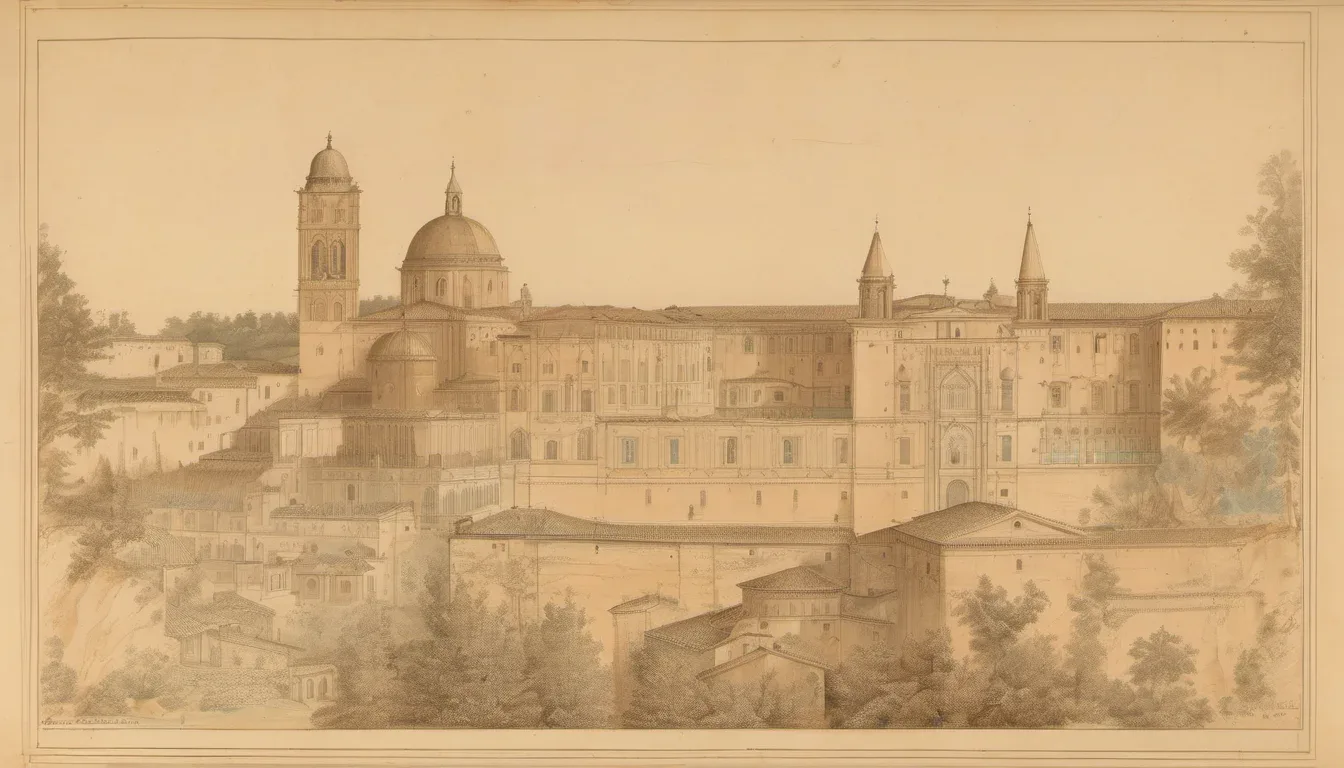
You are standing at the edge of a monastic universe. Massive stone walls enclose the main church, the abbot's building, and administrative offices on the northern side. To the south lies the museum, once the site of the 'Queen Mary' workshop. Beyond these walls, the monastery village unfolds along narrow alleys, composed of rural traditional houses where the nuns live. This is Văratec, the largest community of nuns in Romania.
The scale is immediate. More than 400 nuns reside here. But this was not always so. The founding story begins with Bălașa Herescu, daughter of Father Mihail from the Saint Nicolae Domnesc Church in Iași. She lived as a rassophore in the nearby Toplița Skete, taking the name Sister Olimpiada. She received lands from a treasurer named Deleanu and a forester, Ion Bălănoiu.
Mother Olimpiada was guided by Father Paisius Velichkovsky, hegumen of Neamț Monastery. His vision was strategic: dissolve small women’s sketes near cities and villages, and concentrate the nuns in larger, isolated monasteries. Between 1781 and 1785, Olimpiada established a small hermitage in a clearing in Văratec. In June 1785, she and her confessor, Father Iosif, began building a wooden church titled 'The Dormition of Virgin Mary'.
Father Iosif is considered a co-founder. Born around 1750 in Valea Jidanului in Transylvania, he entered monastic life early, becoming a novice of Paisius Velichkovsky at Dragomirna Monastery. He died on 28 December 1828 and is buried in the narthex of the main church. He was sanctified as a Saint in 2005, celebrated on 16 August. His presence in the narthex marks the spiritual foundation of this place.
The community grew through unification. In 1787, Văratec Skete merged with the older Toplița Skete. Nuns moved from Topolița to Văratec. The following year, nuns from Durău Skete arrived with their superior, Mother Nazaria. She led the monastery from 1788 to 1814, aided by Father Iosif. In 1803, Metropolitan Veniamin Costachi of Moldavia reorganized the region’s monastic life. He moved 50 nuns from Socola Monastery in Iași to Agapia, and briefly united Văratec with Agapia.
The Metropolitan also established a school for liturgical music, Greek language, embroidery, and weaving. Nuns from Prapa Doamna, Gârcina, and Vânătorii Pietrii were moved here. By September 1811, Văratec housed 273 nuns. The social diversity was striking: 33 boyar daughters, 59 merchant daughters, 105 peasant daughters, 23 daughters of disgraced dignitaries, 51 clergy daughters, one teacher’s daughter, one shepherd’s daughter, and one woman of a different religion.
The wooden church became too small. In 1808, Superior Mother Nazaria began constructing a stone church, consecrated in 1812. It was painted in 1841 and reconsecrated by Metropolitan Veniamin Costachi. The community faced violence during the Wallachian uprising of 1821. Ottomans besieged the skete, stole goods, and killed or cast out nuns. Mother Olimpiada took refuge in Secu Monastery. The community survived, but the trauma shaped its isolation.
New structures rose in the first half of the 19th century: enclosure walls, a stone refectory, cells, and a three-level bell tower with a 'Saint Nicholas' Chapel. Mother Olimpiada devoted her worldly fortune to this development. Boyar wives donated land. Elencu Paladi gave three domains and funded the iconostasis for the main church in 1816. Mother Elisabeta Balș, born Zoe Rosetti, donated the Vulturești domain. She died around 1833 and is buried here.
Her daughter, Mother Safta Brâncoveanu, arrived in 1832. Married to Grigore Brâncoveanu, lord of Craiova, she had no children. After her husband’s death, she withdrew to Văratec. She donated the Osica and Vlăduleni domains, clerical vestments, and books. Most notably, she melted her personal silver objects to make bindings for the Gospel, coverings for icons, candles, and cross bases for the altar. She died on 8 August 1857, buried next to her mother.
In 1839, Văratec separated from Agapia and became independent. Under Mother Eufrosina Lazu (1844–1887), the monastery expanded. The 'Birth of Saint John the Baptist' church was rebuilt in stone in 1844. The 'Transfiguration' church was built between 1845 and 1847. The inner painting of the main church was redone in 1882 by painters T. Ioan and D. Iliescu. Schools for music, girls, and adults were established, reflecting a commitment to education alongside prayer.
A great fire on the night of 10/11 June 1900 burned most cells and the main church roof. The community rebuilt, maintaining its isolation and discipline. Today, the site is a historical monument, classified in 2004. It consists of five objectives: the main church, the gate bell tower, the 'Saint John the Baptist' church, the 'Transfiguration' church, and the cells. The silence here is not empty; it is filled with the memory of those who chose this path.