Skara Brae
A winter storm in 1850 stripped the grass from a knoll on Orkney’s Bay of Skaill, revealing a Neolithic village that had been buried for millennia. Today, Skara Brae stands as Europe’s most complete Neolithic village—a stone labyrinth of houses, passageways, and furniture frozen in time.
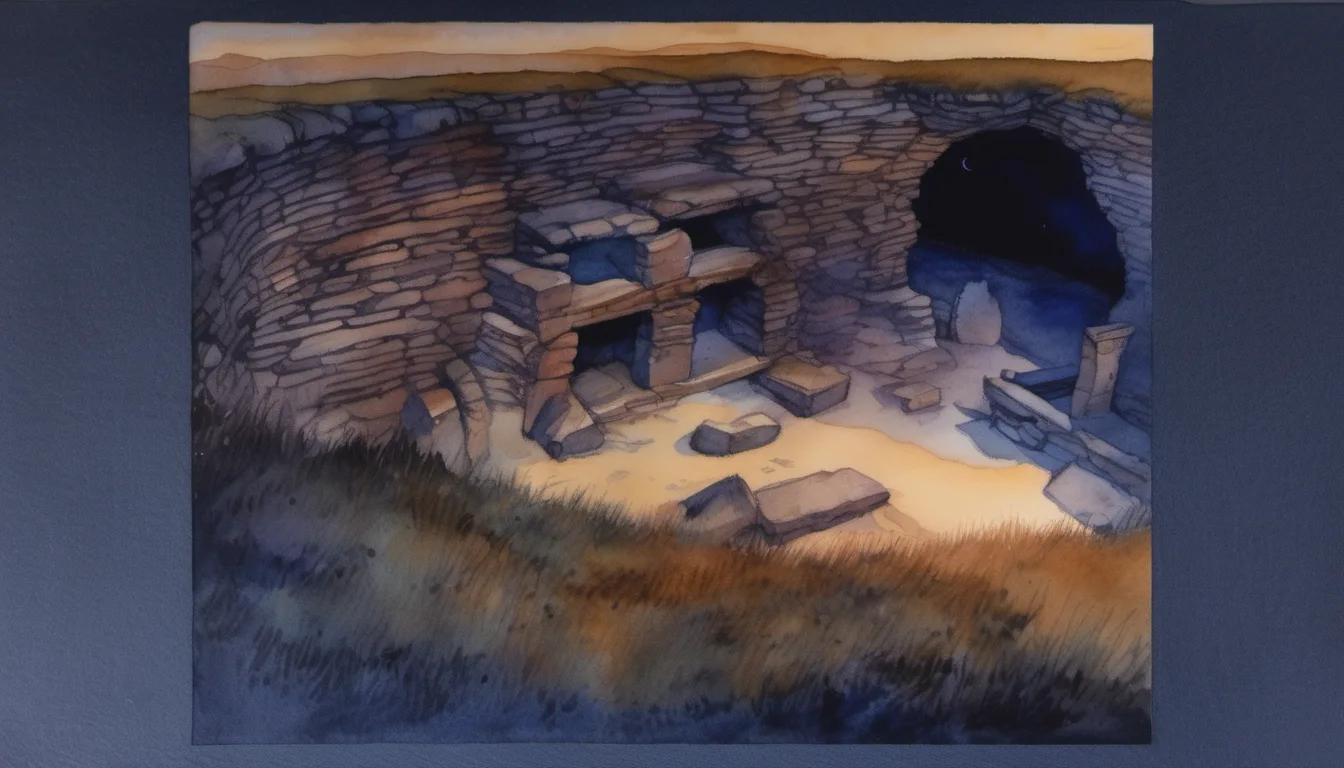
You enter through low doorways, ducking under stone lintels. Inside, each dwelling centres on a hearth, with stone beds on either side and a dresser opposite the entrance. The layout is deliberate: the larger bed on the right, the smaller on the left, possibly reflecting gender roles. Stone slabs could be slid shut with a bone bar.
The inhabitants lived off cattle, sheep, pigs, and barley, and gathered seafood. They made grooved ware pottery and left behind the earliest known human flea in Europe. But after six centuries, around 2500 BC, they left. Climate turned colder and wetter; a legendary storm may have delivered the final blow.
Walk the low road that connects Skara Brae to the Ring of Brodgar and Maeshowe. The site is managed by Historic Environment Scotland and open year-round. Stand where the dresser faced the door, and imagine the stone slab closing against the wind.
A winter storm in 1850 stripped the grass from a knoll on Orkney’s Bay of Skaill, revealing a Neolithic village that had been buried for millennia. Local villagers found the outline of several small houses without roofs. William Graham Watt of Skaill House, a self-taught geologist, began an amateur excavation but abandoned it in 1868 after uncovering four houses.
The site remained undisturbed until 1913, when a party with shovels plundered it over a single weekend, taking an unknown quantity of artefacts. Another storm in 1924 swept away part of a house, prompting proper excavation. The job went to Professor V. Gordon Childe of the University of Edinburgh, who arrived in mid-1927.
In 2019, photographs revealed that four women—Margaret Simpson, Margaret Mitchell, Mary Kennedy, and Margaret Cole—participated in Childe’s excavation, previously thought to be tourists. The women have been tentatively identified as his students.
The name Skara Brae reflects Orkney’s layered linguistic history. ‘Brae’ is Scots for slope or hillside; ‘Skara’ derives from earlier forms like Skerrabra or Styerrabrae, originally applied to the grassy mound that covered the settlement.
The inhabitants made grooved ware pottery and lived in free-standing stone houses insulated with midden. Each dwelling has a central hearth, beds on either side, and a dresser opposite the door. The larger bed on the right may have been the husband’s; beads and paint pots found in smaller beds suggest the wife’s. Stone boxes to the left of doorways forced a right-hand turn upon entry.
House 8 is different: no storage boxes or dressers, divided into small cubicles, with fragments of stone, bone, and antler suggesting tool-making. It is above ground with walls over two metres thick and a porch. A series of drains runs beneath at least five houses.
What the inhabitants burned in their hearths is unclear. Childe assumed peat, but climatic conditions may not have supported peat beds until after Skara Brae was abandoned. Other possibilities include driftwood, animal dung, and dried seaweed—a glassy residue called kelp may be burnt seaweed. The site yielded the earliest known human flea in Europe.
Around 2500 BC, the climate became much colder and wetter. The settlement may have been abandoned after about six hundred years. Popular interpretations involve a major storm. Evan Hadingham imagined a dramatic end: ‘As the storm raged, the people of Skara Brae may have fled, leaving their furniture and belongings behind.’ There is no definitive evidence.