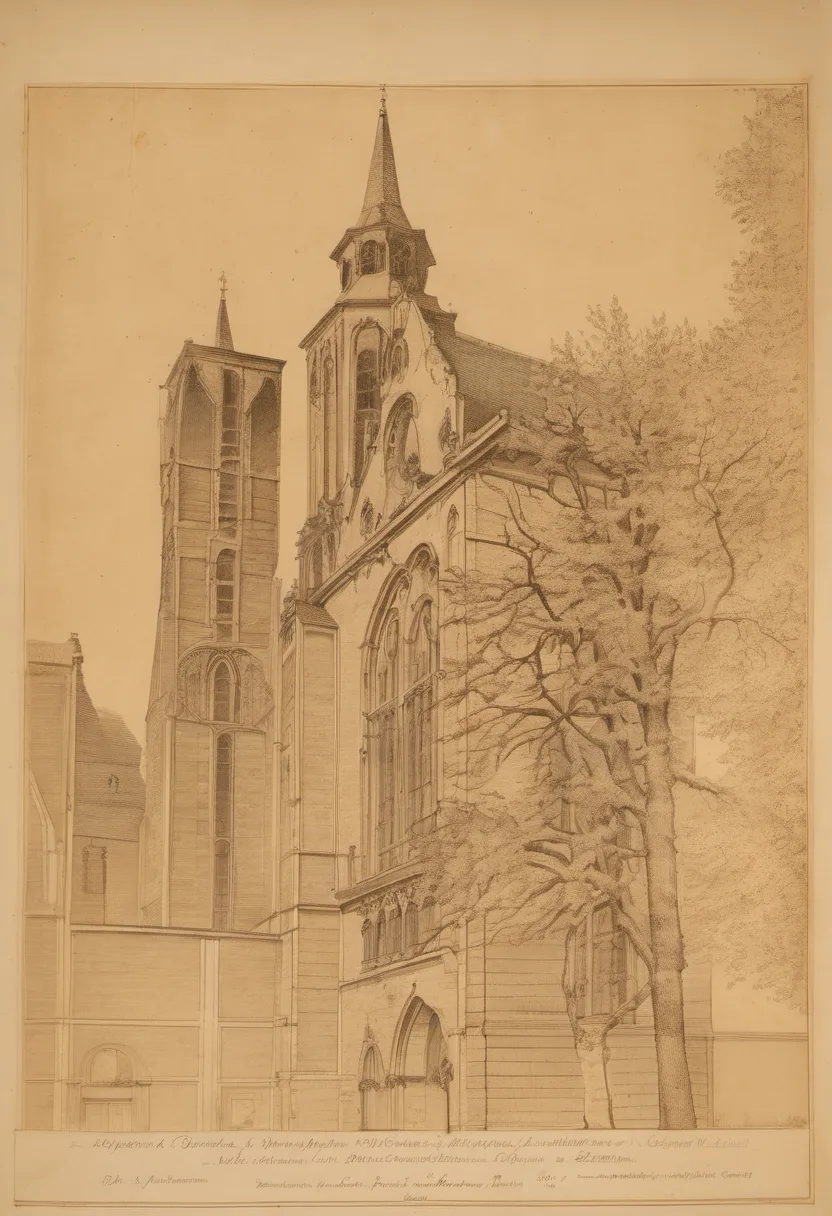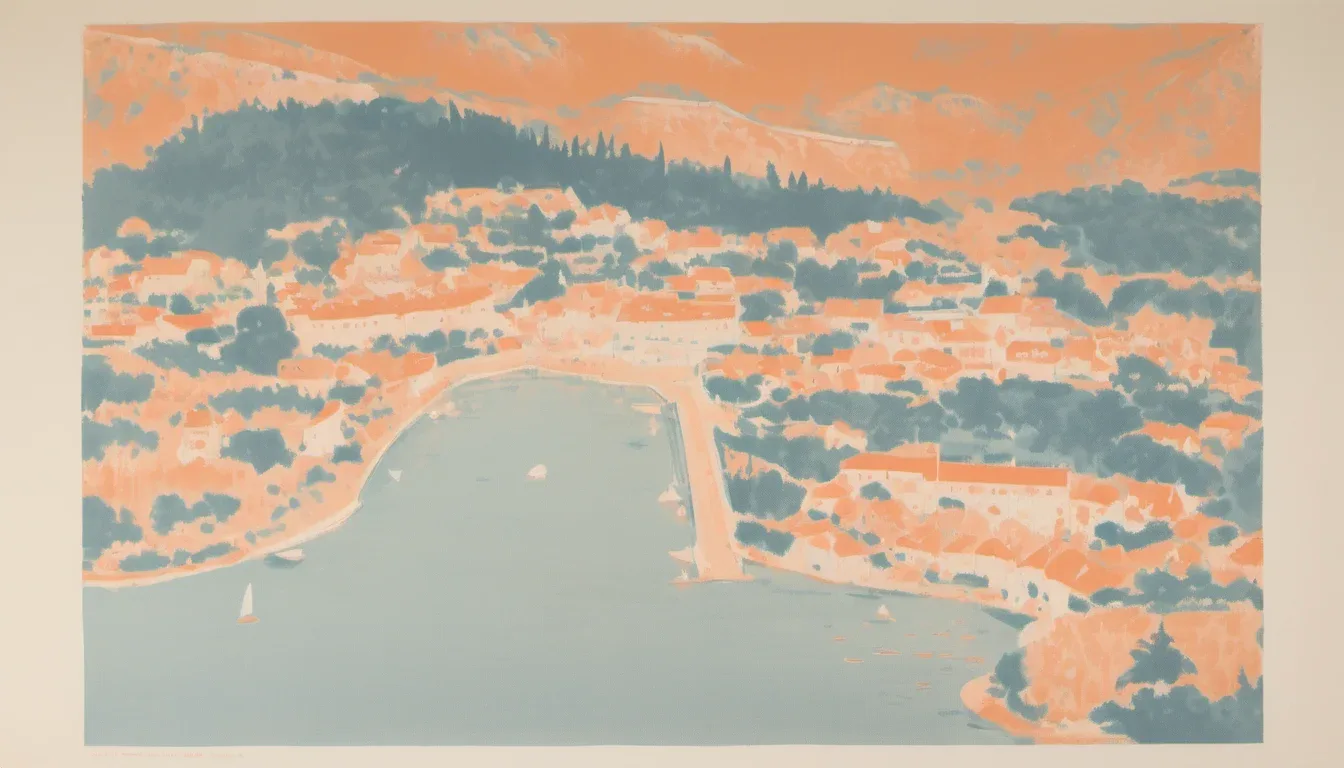
Hvar Public Theatre
Hvar town made its fortune the ordinary way, on the water. Under Venice it became a major naval base, a place where trade routes down the Adriatic and across to Italy converged, and its independence as a commune meant that fortune stayed close to home. That money did not simply sit in vaults. It went into nobles' palaces, into fine communal buildings, and into something rarer still: one of the first public theatres in Europe, open not just to the ruling families but, in spirit, to the town itself. A theatre built by a naval power at the height of its confidence says something about how that confidence was spent, not hoarded, but staged.
The confidence did not last unchallenged. The sixteenth century turned hard. The Hvar Rebellion unsettled the town from within, while pirates and Ottoman raiding parties pressed in from without, sailing up a coastline that had grown rich enough to be worth robbing. The response was architectural as much as military: unusual fortified buildings went up along the island's northern shore, built specifically to give the local population somewhere to shelter. Culture and defense, in other words, rose from the same century, the theatre and the watchtower as twin instincts of a town that had learned it could be both admired and attacked.
Peace returned under the Austrians, and with it a different kind of prosperity. Harbours were widened, quays extended, and the old naval town leaned into fishing and boatbuilding. Wine left the island in growing quantities, and lavender and rosemary were grown and shipped for the French perfume trade, a strange, fragrant footnote to a maritime economy. It did not hold. Wooden sailing boats fell out of fashion, phylloxera tore through the vineyards, and much of the island emptied out as islanders went looking for a living elsewhere. The theatre, presumably, kept its seats through all of it, a fixed point while the economy around it rose and fell.
What replaced sail and wine was tourism, and it grew from surprisingly organised roots: the Hygienic Association of Hvar, founded in 1868, existed specifically to look after visitors, and its legacy is the hotels, apartments, restaurants, marinas, museums, galleries and cafes that followed. The island now regularly appears in Conde Nast Traveler's list of the world's best islands, an odd modern honour for a place whose real inheritance is older and stranger: a karst ridge of limestone and dolomite, dry-stone terraces holding the soil in place, and close to 2,800 hours of sunshine a year, measurably more than Dubrovnik down the coast. Sit in that theatre for an hour and you are sitting inside the same equation that built it: a small, well-placed town, exposed to everyone who ever sailed past, deciding again and again what to do with what the sea brought in.
Hvar town made its fortune the ordinary way, on the water. Under Venetian rule it grew into a major naval base and, for long stretches, an independent commune, which meant the money that trade routes down the Adriatic and across to Italy generated stayed close to home rather than flowing back to a distant capital. It went into nobles' palaces, into fine communal buildings, and into something rarer: one of the first public theatres in Europe. A theatre built by a naval power at the height of its confidence is a statement about how that confidence was spent, not hoarded in a treasury but staged, night after night, for a town to watch itself.
The island's habit of turning maritime advantage into permanent structures is far older than Venice. Hvar has been inhabited since prehistoric times, first by a Neolithic people whose distinctive pottery gave the term Hvar culture to archaeologists, and later by the Illyrians. In 384 BC, Greek colonists founded Pharos on the site of what is now Stari Grad, on the island's northern side, making it one of the oldest towns in Europe and laying out the field divisions of the Stari Grad Plain that survive today as a UNESCO World Heritage Site. It is a different settlement from the town of Hvar itself, but it establishes the pattern the theatre later continues: this island has always converted its position on the sailing routes into something built to last.
The founding of Pharos was not peaceful. The Greek colonists defeated the Iadasinoi warriors and their allies, who had been invited in by the island's indigenous population to resist the colonization. The coins Pharos minted afterward carried a pointed image: a goat standing opposed to a snake, the two animals reportedly symbolizing the Pharian Greeks and the Illyrians respectively. It is the kind of detail that survives as much as legend as numismatic fact, a small propaganda piece struck in metal and passed hand to hand long after the war it commemorated was forgotten.
By the medieval period, the story had shifted from Pharos to the town of Hvar, which rose within the Venetian Empire specifically because of its usefulness as a naval base. Prosperity followed, and prosperity, in this telling, meant culture: the public theatre, the nobles' palaces, the communal buildings that still define the town's centre. It is worth pausing on what a public theatre meant then. Most stages in Europe at the time answered to a court or a church. One that answered, at least nominally, to the town itself was unusual enough to be remembered as among the first of its kind on the continent.
That golden period had a harder edge. The sixteenth century brought the Hvar Rebellion, an uprising that unsettled the town from within, at the same time as pirates and Ottoman raiding parties pressed in from the mainland, targeting a coastline that had grown visibly wealthy. The response was architectural: unusual fortified buildings went up along the island's northern shore, built to give the local population somewhere to shelter when the raiders came. Culture and defense rose from the same century. The theatre and the fortified refuge were both answers to the same fact of Hvar's geography, that a rich island close to the sailing lanes will always draw attention it cannot fully control.
Napoleon's rule passed through briefly, and then the island settled into the Austrian Empire, a period the record treats as calmer and more prosperous than what came before. On the coast, harbours were expanded and quays built; fishing and boatbuilding businesses grew alongside them. The island's wine exports increased, and lavender and rosemary were grown and shipped for the French perfume industry, a fragrant, unlikely export line for a naval town. None of it lasted into the twentieth century. Wooden sailing boats went out of fashion, phylloxera devastated the vineyards, and many islanders left to build lives elsewhere. Through the boom and the emptying-out, the theatre presumably stood where it had always stood, a fixed point in a town whose fortunes kept moving.
What eventually filled the gap was tourism, and it arrived with more organisation than the word usually implies. The Hygienic Association of Hvar, founded in 1868 specifically to assist visitors to the island, laid the groundwork for the hotels, apartments, restaurants, marinas, museums, galleries and cafes that followed. Hvar today is consistently listed among the top ten islands by Conde Nast Traveler, a modern accolade sitting on top of a much older inheritance.
That inheritance is geological as much as historical. The island is a high east–west ridge of Mesozoic limestone and dolomite, part of the mainland until roughly 11,000 years ago, before rising seas filled the valleys that now separate it from Brac, Vis and Korcula. It is karst terrain, meaning rainfall vanishes quickly into crevices rather than sitting on the surface, which is why the fields depend on water cisterns and why the slopes are worked into dry-stone terraces to hold the soil against erosion. Pine forests, vineyards, olive groves, fruit orchards and lavender fields fill the spaces the limestone allows, an agricultural landscape built around the scarcity of surface water.
The climate rewards the effort. Winters are mild, summers warm, and the island logs around 2,800 hours of sunshine a year, an average of 7.7 hours a day against 7.2 in Dubrovnik down the coast. Sea temperatures drop to around 14 degrees Celsius in February and climb to between 23 and 27 degrees through summer. It is a place engineered by geography and re-engineered by people: first the Greeks at Pharos, then Venice's naval commune, then Austrian harbour-builders, then a tourist association founded before the word tourism had settled into common use.
Sit inside the theatre for an hour, in a town of under four thousand people that has been a Neolithic trading post, a Greek-adjacent colony, a Venetian naval base, a rebellion site, a pirate target, an Austrian harbour town, and a modern island resort, and the continuity is hard to miss. Someone built a stage here on purpose, at a moment when the town had the money and the confidence to decide that watching a performance together mattered as much as watching the horizon for ships.