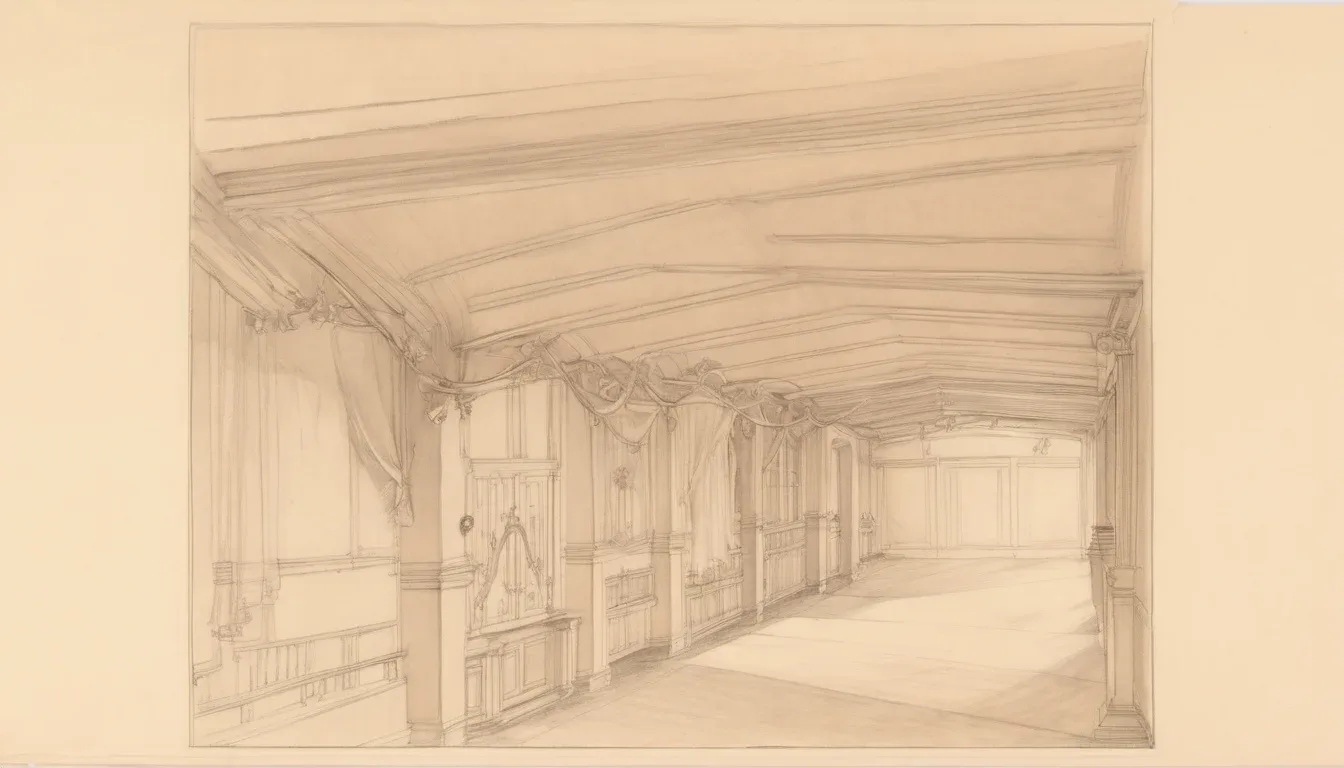
Kapuzinergruft
Ask to enter the Kapuzinergruft as a corpse, and the friars will not simply let you in. A funeral official must knock on the chapel doors, announce the deceased by full title — Emperor, Empress, Prince, Princess — and be told that no such person is known. The exchange repeats until the official gives up the titles and says instead that a poor sinner is asking for entry. Only then do the doors open. It is a ritual with at least two centuries behind it, and it has been performed for people who ruled half of Europe.
The crypt exists because a widow wanted somewhere to be buried with her husband. Anna of Tyrol, wife of Emperor Matthias, left funds for a Capuchin cloister and burial vault near the Hofburg in her will of 1617; she died the following year, releasing the money, and Matthias followed her in 1619. The foundation stone went down in 1622, delayed by the Thirty Years' War, and the church was finally dedicated in 1632. The next Easter, the founders' plain sarcophagi were carried into what is now called the Founders Vault — the first of what would grow into 145 sets of royal bones.
Successive Habsburgs kept building outward and downward. Leopold I dug under the nave; his sons pushed the vaults west and east; Maria Theresa, in 1754, broke past the church entirely into the monastery garden, raising a domed chamber that lets in daylight, the grandest space in the crypt. Ferdinand I rebuilt the crumbling monastery in 1840 and added two more vaults; Franz Joseph I marked his diamond jubilee in 1908 with another. By 1960 the tombs were visibly deteriorating, so architect Karl Schwanzer added the climate-controlled New Vault, prompting a wholesale reshuffling of tombs into themed groups — bishops in one, an emperor's direct ancestors in another.
What you actually see are 107 metal sarcophagi and five heart urns, in styles running from austere flat-topped chests to rococo excess. Early tombs were a tin alloy coated in shellac; the great baroque and rococo pieces are solid bronze, cast, engraved, and riveted together by sculptors like Balthasar Ferdinand Moll. The reforming emperor Joseph II swapped in cheaper copper for the 19th century. Inside each shell sits a silk-wrapped wooden coffin — black and gold for rulers, red and silver for everyone else — locked twice, one key held by the crypt's Capuchin guardian, the other by the Hofburg treasury.
A dozen Capuchin friars still keep the place today, alongside their parish duties elsewhere in Vienna. The most recent entombment was in 2023. Since 2003 the crypt has been wheelchair-accessible and air-conditioned, and visitors no longer have to retrace their steps to leave — a small mercy, given how many centuries of additions they are walking through.
Ask to enter the Kapuzinergruft as a corpse, and the friars will not simply let you in. A funeral official knocks on the chapel doors and announces the deceased by full title — Emperor, Empress, Prince, Princess — and is told that no such person is known. The exchange repeats, knock after knock, until the official gives up the titles and says instead that a poor sinner is asking for entry. Only then do the doors open. It is a ritual with at least two centuries behind it, performed for people who once ruled half of Europe.
The crypt exists because a widow wanted somewhere to be buried with her husband. Anna of Tyrol, wife of Emperor Matthias, left funds for a Capuchin cloister and burial vault near the Hofburg in the will she made on 10 November 1617. She died the following year, releasing the money for planning and construction; Matthias followed her in 1619. The foundation stone was laid on 8 September 1622 in the presence of Emperor Ferdinand II, and progress was slow — the Thirty Years' War kept getting in the way — so the church was not dedicated until 25 July 1632. The next Easter, the founders' plain sarcophagi were carried with great ceremony into what is now called the Founders Vault.
What followed was two and a half centuries of Habsburgs adding rooms. Leopold I enlarged the crypt under the nave in 1657. His son Joseph I extended it further west and built another mausoleum chamber and a chapel to the east in 1710, somewhat awkwardly; his brother Charles VI continued the westward vault in 1720, extending it under the chancel and the apse choir above. It was the first time a well-known architect, Lukas von Hildebrandt, worked on an enlargement.
In 1754 Charles VI's daughter, Empress Maria Theresa, went further still — past the church entirely, into the monastery garden, with a domed addition that admits natural light. The dome, the work of architect Jean Jadot de Ville-Issey, remains the crypt's most imposing space. During the reign of her grandson, Emperor Francis II, architect Johann Aman added a wing to the north in 1824.
By then the monastery surrounding the church had fallen into disrepair after two centuries of constant use. Under Emperor Ferdinand in 1840 the monastery — though not the church — was torn down and rebuilt, and architect Johann Höhne built the Ferdinand Vault and the Tuscan Vault into the basement of the new structure. In 1908, marking his sixtieth year on the throne, Emperor Franz Joseph I had architect Cajo Perisic add another mausoleum chamber and chapel east of the Franz II and Ferdinand vaults, with new visitor annexes on either side of the church.
By 1960 the sarcophagi were visibly deteriorating — decades of shifting heat and humidity were wearing the metal down — and it was clear the environment needed controlling. Architect Karl Schwanzer built the New Vault to the north, with metal doors by sculptor Rudolf Hoflehner, adding about a fifth more space and hosting a massive tomb rearrangement. The original small vault, which had held the two founders plus a dozen children and was known as the Angel's Vault, was cleared, its occupants moved to niches newly cut into the front wall of the Leopold Vault. Selected tombs from other vaults were regrouped by theme in the New Vault: bishops together, the direct ancestors of the last reigning emperor together, and the immediate family of Archduke Charles, Duke of Teschen — victor of the Battle of Aspern — together. Thirty-seven further tombs, mostly minors and minor family members, were walled into four piers built inside the Ferdinand Vault. By the time it was finished, roughly half of all the tombs had been relocated to more orderly places.
A 2003 renovation opened previously unused doors, so the visitor route no longer forces total backtracking, and made the crypt accessible to disabled visitors. The whole space was air-conditioned too, to slow the metalwork's decay.
What survives is 107 metal sarcophagi and five heart urns, ranging from puritan-plain chests to rococo extravagance — either a flat-topped storage-chest shape or a tub with sloping sides and a tapered, convex lid. Until late in the 18th century the standard material was a bronze-like alloy of tin coated in shellac; the true baroque and rococo showpieces are solid bronze, nobler and pricier, cast, engraved, hammer-worked, riveted at the seams and finished with screwed-on ornament by sculptors such as Balthasar Ferdinand Moll, the hand behind the most elaborate tombs here. Reforming emperor Joseph II, who simplified burial customs for ordinary subjects, brought cheaper, lighter copper into the crypt, used well into the 19th century, when a mix of cast brass, bronze, and silver-bronzed copper took over; silver and gold appear only as plating on decoration. Inside, iron bracing and wood lining keep the largest tombs from caving in or buckling under their own covers — the lid alone on Maria Theresa's double sarcophagus, shared with her husband, weighs roughly 1,700 kilograms.
Within each metal shell sits a plainer wooden coffin, wrapped in silk — black with gold trim for rulers, red with silver trim for everyone else — and secured with two locks. One key stays with the Capuchin Guardian of the crypt; the other is kept across town in the Hofburg's Schatzkammer. The bodies inside were embalmed for display before burial, which meant their organs were removed first. For about a third of them, the heart went into a silver urn and was sent elsewhere, usually to the Herzgruft in the Augustinerkirche; for some, the intestines and other organs went into a copper urn and down into the Dukes' Crypt, in the catacombs beneath Vienna's cathedral, the Stephansdom. A Habsburg body, in other words, was rarely kept whole in one place.
None of this preservation has been effortless. Centuries of shifting humidity, temperature swings, and a steady flow of visitors have worn on the sarcophagi — corrosion has left its mark on some of the bronze. A dozen resident Capuchin friars still act as guardians and caretakers of the crypt today, on top of their ordinary pastoral work around Vienna, and the tradition they tend is a living one: the most recent entombment took place in 2023.