Arco di Traiano
You find the Arco di Traiano at the edge of Ancona’s port, where the land meets the Adriatic. It is a Roman arch, but not like the bulky ones in Rome. Here the proportions are leaner, as if the monument caught the breeze from the sea.
The Roman Senate raised this arch in the 2nd century AD to thank Emperor Trajan for expanding the harbour at his own expense. The inscription on the attic still tells this story. The architect was likely Apollodoro di Damasco, though the attribution remains a matter of scholarly debate. The marble came from the island of Proconnesus.
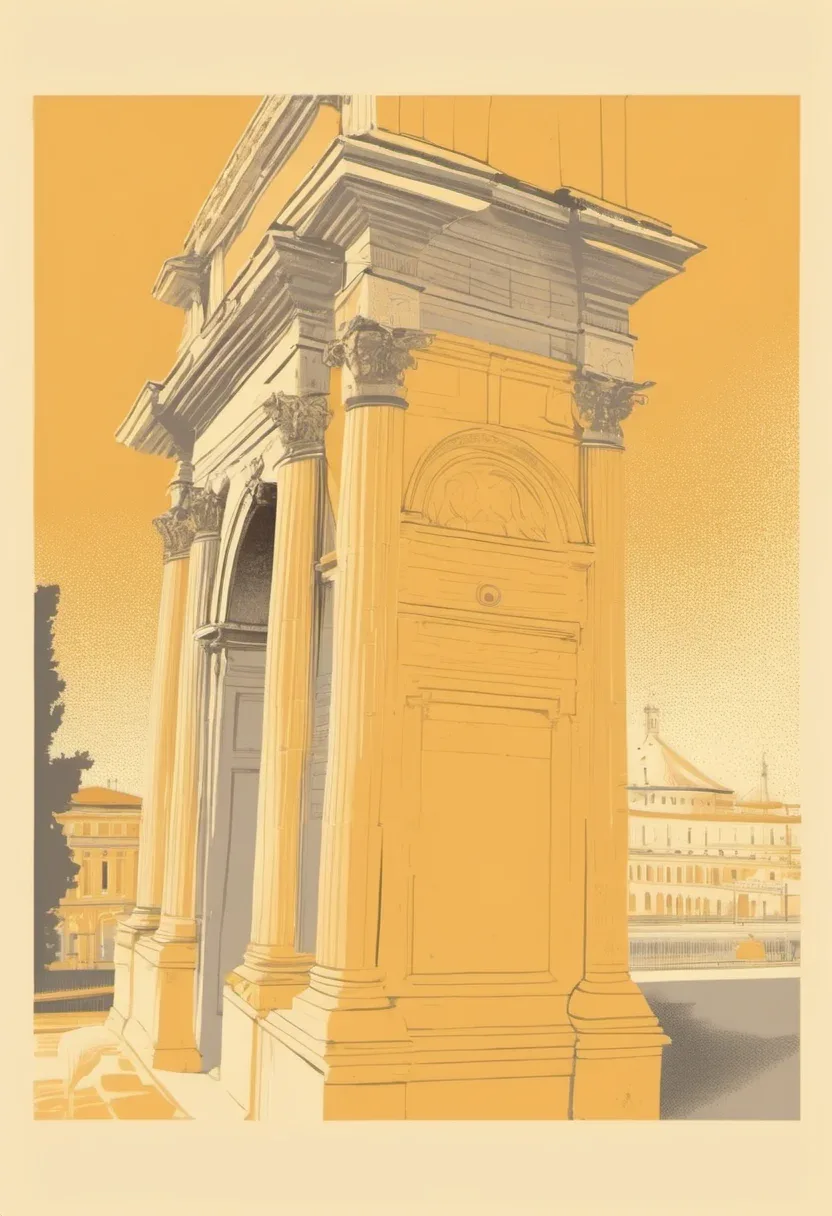
The arch has a single fornix flanked by two pairs of fluted Corinthian columns. Its slender shape and direct relationship with the water set it apart from other Roman triumphal arches. It is one of Ancona’s most recognised landmarks.
In recent years, the arch has been used as a stage. The Italian neofolk band Corde Oblique performed here, adding a modern layer to an ancient space. It is worth visiting at different times of day; the light changes the marble’s colour from white to warm gold.
The Arco di Traiano stands at the tip of Ancona’s harbour mole, a white marble exclamation against the blue of the Adriatic. Unlike the triumphal arches of Rome that sit within crowded forums, this one faces the sea directly. It was built to be seen from ships arriving in port.
The Roman Senate ordered its construction in the 2nd century AD to express gratitude to Emperor Trajan. He had paid for the expansion of Ancona’s harbour, making the approach to Italy safer for sailors. The inscription on the attic, still perfectly legible, records this gift.
Architecturally, the arch is defined by a single arched opening – a fornix – flanked by two pairs of fluted Corinthian columns. The columns are carved from Proconnesian marble, a white stone shot through with subtle grey veins. The proportions are unusually slender for a Roman arch, giving it an almost ethereal verticality.
The arch is attributed to Apollodoro di Damasco, the Syrian architect who designed Trajan’s Forum and the eponymous column in Rome. The attribution is not proven, but the quality of the design supports the connection. The monument’s direct relationship with the sea is its most distinctive feature; it seems to rise from the water itself.
For Ancona, the arch is a defining symbol. It appears on city emblems and postcards. Locals gather on the mole in the evening to watch the sun set behind its marble shape. The arch is woven into the daily life of the port.
Recently, the arch has taken on a new role as a concert venue. The Italian band Corde Oblique – an ethereal neofolk project led by the art historian Riccardo Prencipe – performed beneath its fornix. The band’s music, which often draws on Italian art history and southern landscapes, felt at home under the ancient stone.
Visiting the arch is simple. You walk out along the pier, the sound of water and rigging all around. The marble is cool to the touch. The inscription is easy to read, even for non-Latinists. At night, lights illuminate the arch, and it becomes a beacon for the harbour.
The Arco di Traiano endures not as a museum piece but as a living monument. It marks a moment of imperial generosity, a feat of engineering, and – now – a stage for contemporary culture. Stand beneath it and you are connected to two millennia of arrivals and departures.