Museo della Specola
Two hundred and seventy-two steps above your head, a lead ball once fell straight down a spiral staircase and landed four and a half millimetres off centre. That tiny drift, measured in 1790, was proof the earth spins on its axis, six decades before Paris got its famous pendulum.
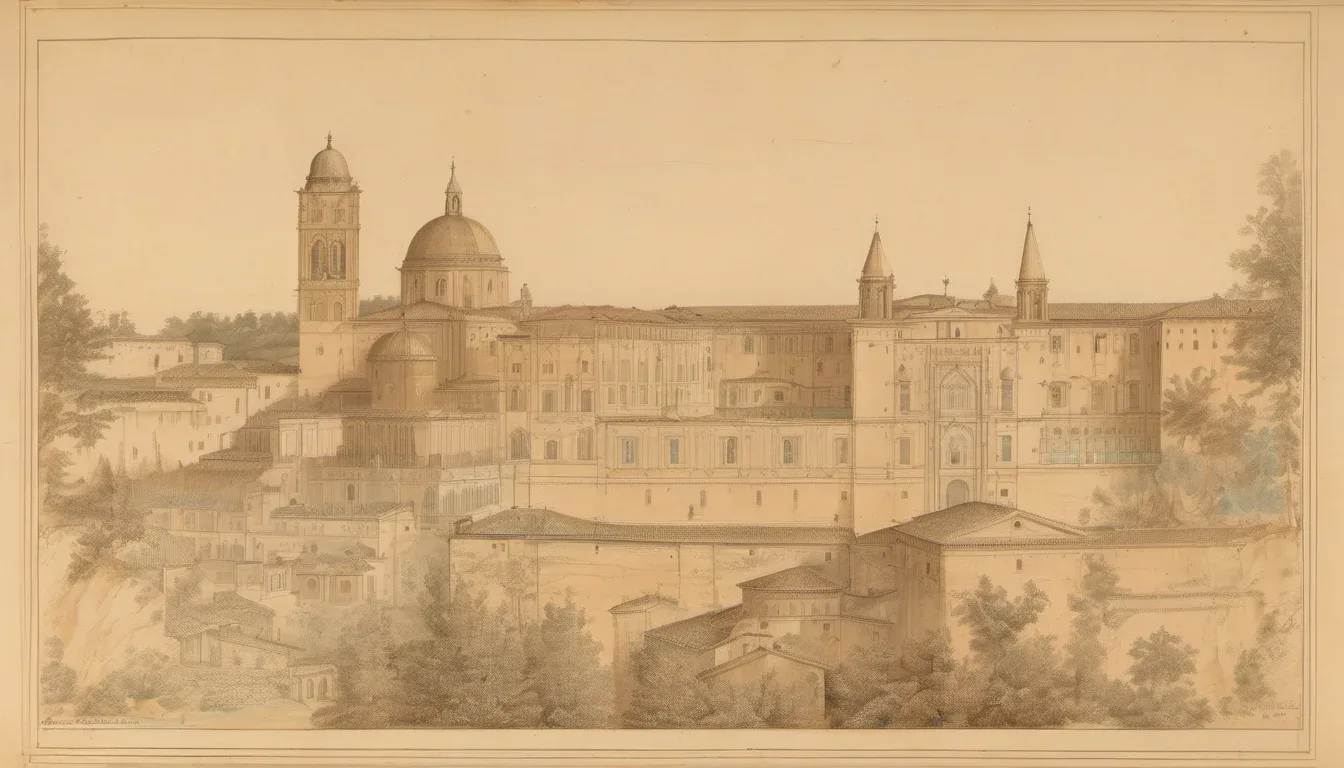
You are standing beneath the tower of the Museo della Specola, a cylindrical brick shaft rising twenty-nine metres from the roof of Palazzo Poggi. Built between 1712 and 1726, it was the crowning piece of an audacious idea. Count Luigi Ferdinando Marsili convinced Bologna's senate to fold its entire scientific establishment, anatomy, chemistry, physics, astronomy, into one public Institute of Sciences, with a working observatory bolted on top. No church funded it, no royal court. A city backing pure research, in the middle of the Enlightenment.
Inside, four floors climb past sundials, brass quadrants and globes charting a sky still being argued over. The first director, Eustachio Manfredi, spent his career tracking the faint wobble of starlight. Two centuries later, Guido Horn d'Arturo built something genuinely new here: the first segmented telescope mirror in history, decades before Keck or the Very Large Telescope made the idea famous.
Until last year, scaffolding had wrapped the tower for twenty-two years, first for slow decay, then for cracks torn open by the 2012 earthquake. It only came down in 2025, so the brick and stone in front of you is, in a real sense, freshly seen.
Climb it, if your knees allow: two hundred and seventy-two spiralling steps to a terrace with arguably the best rooftop view in Bologna. The same staircase where, one afternoon in 1790, a falling ball quietly rewrote what people knew about the ground beneath their feet.
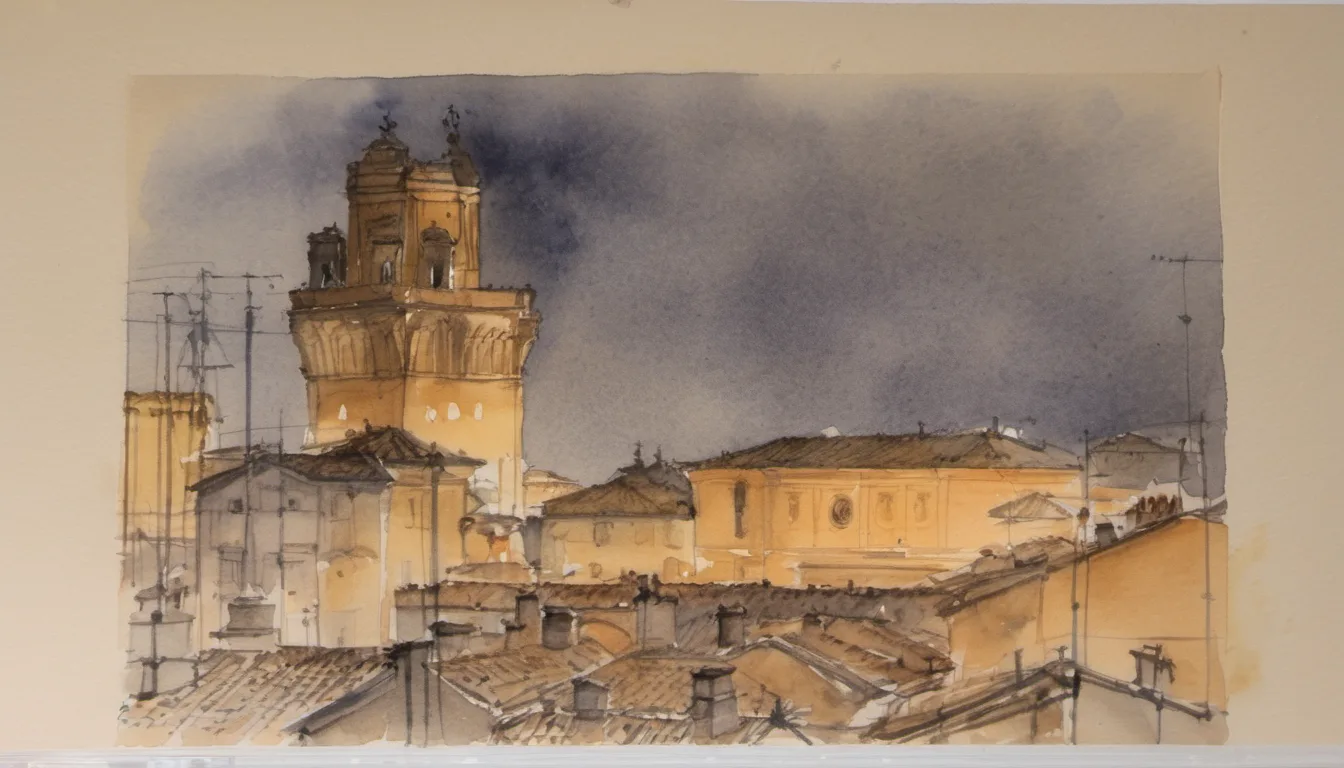
Look up at that cylindrical tower crowning the roofline. For twenty-two years it stood behind scaffolding, an itch nobody could quite scratch. That scaffolding came down only in the summer of 2025. What faces you now, brick and stone catching the light again, is close to what Bologna's professors saw when it was finished in 1726.
The tower exists because one man wanted a very particular kind of institution. Count Luigi Ferdinando Marsili, soldier, naturalist, obsessive collector of maps and manuscripts, had been captured and enslaved by Ottoman forces in 1683 during the siege of Vienna, ransomed nine months later, and returned home determined to put knowledge on a sturdier footing. In 1711 he persuaded the Senate of Bologna to accept his library and cabinets as the seed of a new Institute of Sciences. Anatomy theatre, chemistry laboratory, physics cabinet, astronomy, all of it under one civic roof, answerable to the city rather than to Rome or to any prince. In an age when serious science mostly lived inside courts and monasteries, that was itself a quiet act of defiance.
Architect Giuseppe Antonio Torri drew up the tower in 1712. He died the following year, and Carlo Francesco Dotti saw the work through to completion in 1726. What they built was simple in plan and stubborn in execution: a cylindrical shaft rising twenty-nine metres above the older sixteenth-century palazzo beneath it, wrapped around a spiral staircase of two hundred and seventy-two steps. Four floors of the museum today climb that same stair, past sundials and solar instruments in the Sala della Meridiana, past a room of celestial and terrestrial globes, up to a lantern terrace with, arguably, the best unobstructed view in the city.
Its first director, Eustachio Manfredi, spent decades tracking the faint apparent wobble of fixed stars, work that fed directly into the century's great astronomical puzzle: does the earth really move, and if so, how would anyone ever catch it in starlight alone? Instruments arrived from well beyond Bologna to help answer such questions, among them a reflecting telescope built to Newton's own design, donated by Cardinal Gianantonio Davia, and a mural quadrant and transit instrument bought from London workshops in 1739. For over a century the observatory produced the Ephemerides Bononienses, star tables regarded as among the best in Europe, until the practice quietly stopped in 1844.
But the tower's single best story belongs to 1790, and to a professor named Giovanni Battista Guglielmini. How do you prove, with nothing but gravity and a plumb line, that the ground beneath you is spinning? Guglielmini's answer was elegant. Climb to the top of the open stairwell, drop a small lead sphere down its full height, and measure exactly where it lands. Earth's rotation, he reasoned, should nudge a falling object very slightly eastward as it falls. It did, by about four and a half millimetres, repeated and confirmed. It was one of the first experimental demonstrations of what physicists now call the Coriolis effect, some sixty years before Leon Foucault made the same point with a swinging pendulum in Paris.
The tower kept producing firsts. In 1952 its director, Guido Horn d'Arturo, built the earliest known segmented, or tessellated, telescope mirror, assembling one reflecting surface out of smaller pieces. The idea sounds unremarkable now only because it eventually became the basis for giant telescopes like Keck and the Very Large Telescope decades later. He tested it here, in an eighteenth-century observatory tower, long before anyone else thought to build a mirror that way.
The observatory itself moved out to the hills of Loiano in 1936, chasing darker skies and cleaner air. What remains on Via Zamboni is quieter: instruments behind glass, a stairwell that once carried a falling sphere and an argument about the shape of the world, and a tower that spent longer wrapped in scaffolding than most of its early astronomers spent alive, now finally uncovered, still pointing, on a clear night, at the same stars Manfredi once charted.