Baptistery of Parma
Look down before you look up. The marble band running around this building's base is carved with seventy-five creatures that never existed — unicorns, sirens, griffins, a whole medieval bestiary chiselled into pink Verona stone. Now look up. Outside, it's a plain eight-sided drum. Step through the doorway, and that geometry quietly changes: eight sides become sixteen.
One man is responsible for most of what you're standing in front of. Benedetto Antelami, sculptor and architect, signed his own work — an inscription on the north doorway announces, in Latin verse, that he began in 1196. He had about twenty years on site, carving prophets, apostles, and a cycle of the months, before the project outlived him. Summer and autumn were never carved at all.
Parma then spent three decades at war with the Holy Roman Emperor, and building simply stopped. When it resumed, masons from Lombardy raised the Gothic upper tiers and painted the dome overhead — sixteen ribs pulling the eye toward one small red circle, standing in for heaven. The whole building was finally consecrated in 1270, seventy-four years after the first stone.
On the south doorway, find a man sitting in a tree, calmly eating honey. He hasn't noticed the dragon waiting below, or the two mice gnawing through the branch that's holding him up — an old parable, and one historians now trace back to the life of the Buddha. The statues on the facade today are copies. The originals stand a few steps away, worn soft by eight centuries of weather, close enough to touch.
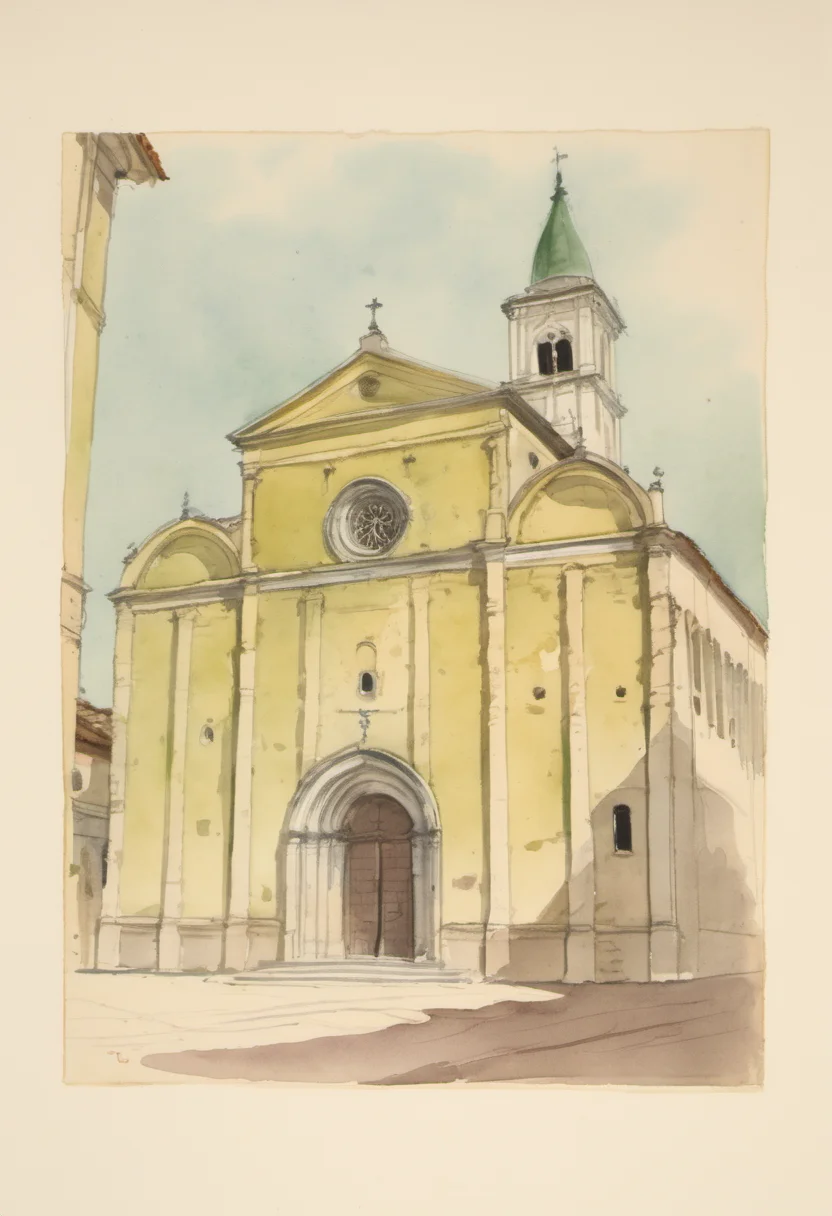
Stand back and count the sides: eight of them, wrapped in pink-veined Verona marble, rising in four tiers of arcaded loggias toward a crown of slender turrets. Now step through one of the three doorways. Inside, the geometry changes. The octagon dissolves into a drum of sixteen sides, and above it a painted dome pulls the eye straight up toward a single red circle at the summit. That shift, eight outside and sixteen within, was almost certainly deliberate: in medieval theology, baptism moved a soul out of the seven days of earthly time into an eighth, eternal one. The extra sides are the argument, built in stone.
Credit for most of what surrounds you belongs to one man. Benedetto Antelami arrived in Parma already known for a marble relief carved for the cathedral next door, and he was ambitious enough to sign his own building. Cut into the architrave of the north doorway, in Latin verse, is a small act of self-promotion: begun in 1196, it says, by this sculptor Benedetto. Few medieval artists dared name themselves at all.
He had roughly twenty years on site, enough to finish the lower two galleries, the three portals, and most of a frieze of some seventy-five carved panels running around the base: real animals tangled up with unicorns, griffins, sirens, centaurs, a bestiary that had little to do with scripture and everything to do with a medieval audience trained to read moral lessons into monsters. Then the work stopped.
Parma spent much of the thirteenth century at war with the Holy Roman Emperor Frederick the Second, and for roughly three decades the baptistery sat half finished in the piazza. When building resumed, Lombard masons, the Maestri Campionesi, finished the job, raising the Gothic upper tiers and painting the dome in a Byzantine-influenced style so different from Antelami's sculpture that historians still argue over who painted it; one candidate signed himself only Grisopolo, painter of Parma. Consecration finally came on the twenty-fifth of May, 1270, seventy-four years after Antelami cut the first stone.
Look, too, for the twelve months and two seasons carved into the first interior gallery, about fifteen metres up. It is another Antelami project left unfinished. Summer and autumn are missing. Nobody knows why for certain; the likeliest explanation is that Antelami died, or simply moved on, before completing a cycle he clearly meant to finish, a rare thing to find in medieval art: an ambitious, famous project abandoned mid-thought.
On the south doorway, find the small relief of a man sitting calmly in a tree, eating honey from its branches. He hasn't noticed the dragon waiting at the roots, or the two mice, one dark and one light, steadily gnawing through the branch that's holding him up. It is the parable of Barlaam and Josaphat, told across Christian Europe for centuries as devotional literature. What most visitors never learn is where the story came from. Strip away the Christian framing, and the plot is a retelling of the life of the Buddha, carried west through Arabic and Georgian translations centuries before it reached a sculptor working in northern Italy. A Buddhist parable, on a Catholic baptistery, carved by a craftsman who likely never knew its origin.
One argument among scholars is still unresolved: whether the building was oriented on purpose to catch sunlight on particular feast days, with a beam supposedly crossing the baptismal font each year around the twenty-fourth of June, the feast of Saint John. Suggestive, unproven, and possibly both. What is certain is what's missing from the facade: the statues that once filled its niches, Solomon and the Queen of Sheba among them, two archangels too, have all been moved indoors for their own protection. What stands outside today is a faithful copy. The originals, softened by eight centuries of Parma weather, wait a few steps away, close enough that you could, if they weren't behind glass, still reach out and touch the marble Antelami actually carved.