Duomo di Fermo
Fermo’s cathedral sits on a hill that has known worship long before Christianity. Archaeological digs have uncovered a pagan temple beneath the nave. The first church here was razed in 1176 during Frederick I’s campaign. What stands today began rising in 1227 under Giorgio da Como.
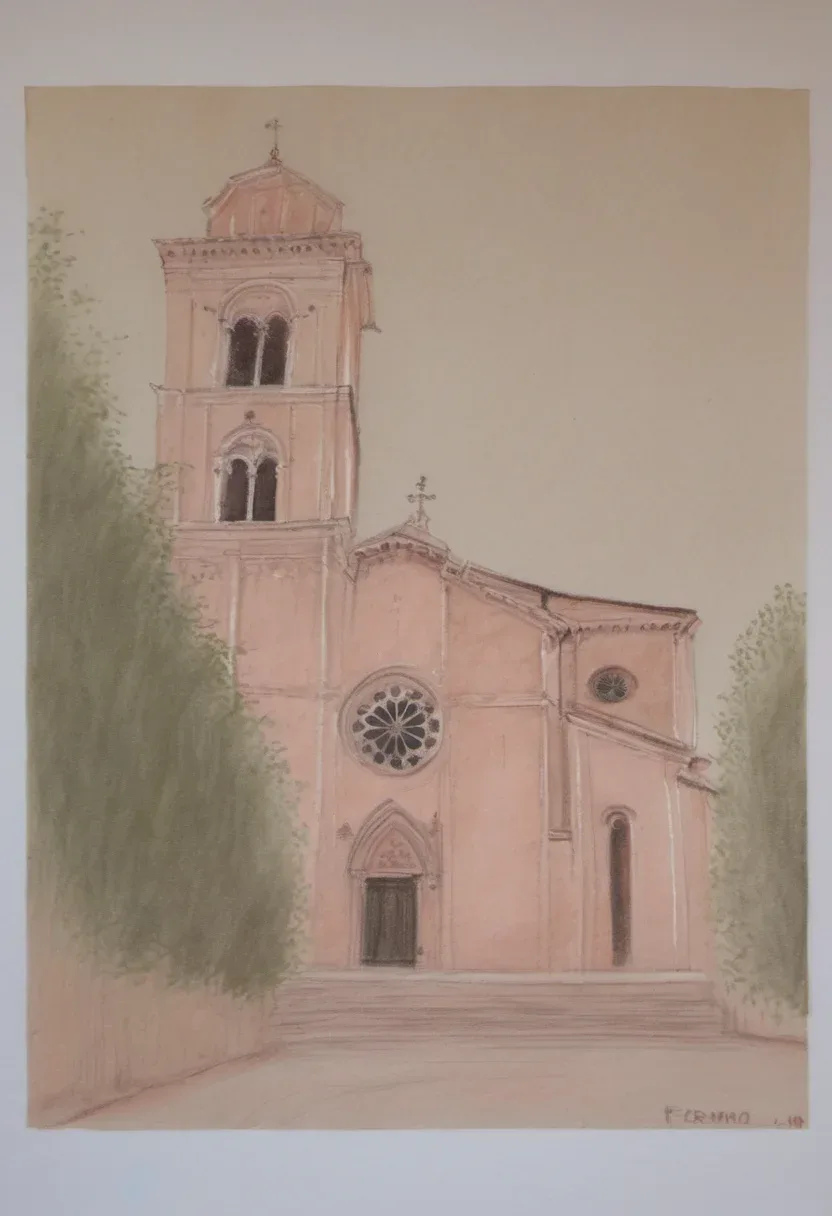
The façade is a rare blend of Romanesque and Gothic, built in pale Istrian stone. The rose window, carved by Giacomo Palmieri in 1348, draws the eye. Below the portal niche, a bronze Madonna of the Assumption by Nunzio Ucinelli watches those who enter.
Inside, the Neoclassical layout dates to an 18th-century refurbishment by Cosimo Morelli. The crypt holds a 3rd- to 4th-century paleo-Christian sarcophagus. A Byzantine-style icon donated by Giacomo della Marca sits nearby. The bronze doors were completed only in 1980 by Aldo Sergiacomi.
Fermo itself was a Roman colony and capital of the Piceni. Its archdiocese was elevated by Pope Sixtus V in 1589. The cathedral remains the seat of the metropolitan archbishop, a quiet power in the Marche hills.
Fermo is not a name that trips off the tongue of most travellers. Yet this hilltop city in the Marche was once a beating heart of the Piceni, later a Roman colony, and eventually the capital of a medieval county that stretched from Monte Conero almost to Chieti. Its cathedral, the Duomo di Fermo, holds that long memory in stone.
Archaeology has confirmed that the site was sacred before Christianity: a pagan temple stood here. The first Christian church was built on the foundations, but it did not survive the campaign of Frederick I, Holy Roman Emperor, who destroyed it in 1176. Half a century later, in 1227, reconstruction began under the patronage of Giorgio da Como.
That rebuilding spanned decades and produced the mixed character of the façade. Romanesque solidity meets Gothic verticality, all executed in Istrian stone from across the Adriatic. The rose window, carved by Giacomo Palmieri in 1348, is the crowning detail. The portal’s bronze statue of the Madonna of the Assumption is a later addition by Nunzio Ucinelli.
Step through the doorway and the atrium reveals 14th-century frescoes and the funeral monument of Giovanni Visconti d’Oleggio. The base of the bell-tower dates from the early church, a silent nod to the building’s medieval origins. But the interior is predominantly Neoclassical, the result of a thorough refurbishment between 1781 and 1789 by architect Cosimo Morelli.
The crypt is the cathedral’s hidden heart. Here lies a paleo-Christian sarcophagus from the 3rd or 4th century, preserved in a 13th-century space. A Byzantine-style icon, donated by Giacomo della Marca, adds a note of Eastern mysticism. The bronze doors of the main entrance are modern – completed in 1980 by Aldo Sergiacomi – but they feel ancient in their weight and simplicity.
Fermo’s archdiocese was elevated to metropolitan status by Pope Sixtus V in 1589, and the cathedral has remained the archiepiscopal seat ever since. The city’s history as a capital of the Marca Fermana, and later the Comitato fermano, gives the cathedral a gravitas that belies its current quiet profile. The province of Fermo itself was re-established only in 2009, after more than a century of being merged with Ascoli Piceno.
The Duomo is not on the tourist trail. It does not appear in glossy guides. But for those who climb the hill and push open the bronze doors, there is a palpable sense of time compressed – from pagan altar to Romanesque nave, from Baroque reordering to the quiet resonance of a working cathedral in a proud, forgotten city.